
What maintenance requirements and aftercare services will support the long-term performance of my stairlift in a split-level home?
A stairlift in a split-level home needs regular servicing and prompt repairs to maintain safe, reliable operation across its rails, landings and drive system. Professional aftercare should include safety checks, battery and charging checks, cleaning and adjustment, as well as responsive breakdown support and advice on everyday care.
Long-term stairlift performance in a split-level home depends on routine user checks, servicing in line with the manufacturer’s guidance and prompt attention to faults. A professional aftercare plan should cover the complete system, including the rail, drive unit, seat, controls, safety equipment, charging points and every landing or transition where the staircase changes direction or level.
Split-level installations can place additional demands on a stairlift because the rail may include bends, joins, changes in gradient, intermediate landings or more than one charging position. If the home uses separate lifts for different flights, each unit requires its own checks and service history. If it uses a continuous or specially configured system, the connections and transitions between sections need particular attention.
What routine servicing should include
- Rail and fixing inspection: The engineer checks that the rail remains secure, correctly aligned and free from damage. Brackets, joints and fixings are inspected because movement or misalignment can affect smooth travel, particularly around landings and bends.
- Drive and moving parts: The motor, gearbox, rollers, drive components and other mechanical parts are checked for wear, unusual noise and correct operation. Components may be cleaned, lubricated or adjusted where the manufacturer permits.
- Seat and transfer features: The seat swivel, armrests, footrest, seat belt, harness if fitted and any powered or manual folding mechanisms are tested. These features must lock securely and operate consistently at the points where you get on or off the lift.
- Safety systems: Sensors, obstruction detection, brakes, limit controls, emergency stop controls and travel controls are tested. The engineer should also confirm that the lift stops correctly at each intended landing and that safety edges respond as designed.
- Electrical system: Wiring, connectors, hand controls, remote controls and charging contacts are inspected. The service should confirm that the lift charges correctly at all designated parking positions.
- Battery condition: Batteries are tested for charging performance and signs of deterioration. A stairlift that works while plugged into the mains but travels poorly away from the charging point may have a battery or charging fault that needs attention.
Battery and charging care
Most stairlifts use rechargeable batteries and are designed to remain connected to their charger when parked. Follow the instructions provided for your particular model rather than switching the power off routinely. If the lift is left away from a charging point, the batteries can discharge and may eventually fail to recover. In a split-level home, check that the lift reaches and remains at the correct charging position on each relevant landing or parking area.
Keep charging contacts and the area around the charger clean and unobstructed. Do not use unapproved chargers, attempt to open the battery compartment or replace batteries without suitable advice. Reduced travel distance, slower movement, repeated low-battery warnings or failure to charge should be reported before the lift stops operating.
Everyday checks for the user
- Keep the stairs, landings and rail path clear of objects, trailing cables, furniture and loose floor coverings.
- Wipe the seat, armrests, controls and accessible surfaces with a suitable product, keeping liquid away from electrical components, switches and charging points.
- Check visually for loose covers, damaged upholstery, unusual marks, oil or grease, and changes in the rail or its fixings.
- Listen for new noises and note any juddering, hesitation, unexpected stopping or change in speed.
- Make sure the seat belt, swivel lock, footrest and armrests are used and secured as instructed.
- Keep remote controls available and replace their batteries if they become intermittent.
Do not continue using the stairlift if it stops unexpectedly, travels unevenly, gives a fault indication, emits a burning smell or has damaged safety equipment. Switch it off if the instructions tell you to do so, keep the staircase clear and contact the aftercare team. Avoid attempting to bypass a sensor, force the seat or rail, adjust electrical parts or carry out an improvised repair.
Why landings and transitions need special attention
On a split-level installation, the engineer should observe the lift through the full route rather than testing only a single straight section. This includes acceleration and stopping, entry and exit at each landing, movement around bends, alignment with transfer areas and the operation of any folding or hinged rail section. Where separate stairlifts are installed, the assessment should also consider the handover between flights so that controls, parking positions and transfer spaces remain practical and safe.
Changes to the home can affect performance. New flooring, decorating, furniture, stair runners, handrails or alterations to a landing may reduce clearance or interfere with the rail, sensors or seat movement. Tell the service team about any changes before using the lift if they alter the staircase or access area. The same applies if the user’s mobility, seating position or transfer method has changed.
Useful aftercare services
- Planned servicing: A scheduled inspection identifies wear and charging problems before they develop into a breakdown. The correct interval depends on the model, usage, environment and manufacturer’s instructions.
- Breakdown assistance: A reliable service should provide a clear way to report faults, explain basic safe steps over the telephone and arrange an appropriate engineer visit when remote help is not sufficient.
- Repairs and replacement parts: The provider should diagnose the cause of a fault, explain any recommended repair and use compatible parts. Replacing a battery without checking the charger or wiring may not resolve the underlying problem.
- Safety and usage advice: Engineers can review parking, charging, transfers and controls, and can explain any features that are particularly important on a multi-level route.
- Service records: Keep reports showing inspections, repairs, battery changes and outstanding recommendations. These records help identify recurring issues and provide useful information if the lift is later relocated, upgraded or assessed by another engineer.
When arranging a service, describe the symptoms accurately and say where they occur: for example, on a particular flight, near a landing, at a charging point or during a transfer. Mention warning lights, unusual sounds, recent building work and whether the problem affects one control or both. This helps the engineer bring suitable parts and assess the complete split-level route.
Regular care does not remove the need for professional inspection. A stairlift is a safety-critical mobility product, so servicing, repairs and battery replacement should be completed by a suitably trained technician in accordance with the manufacturer’s requirements. If your split-level layout has changed or the lift no longer feels as smooth or predictable as it did after installation, arrange an assessment rather than waiting for a complete failure.
Professional servicing should test the stairlift across the complete split-level route, not just along one section of rail. The engineer should check smooth travel through bends, joins, changes in gradient and intermediate landings, together with safe stopping, transfer space and charging at each designated parking position.
This is particularly important where the installation includes separate lifts for different flights or a folding rail section. Report any hesitation, juddering, unusual noise, unexpected stopping or difficulty reaching a landing, and mention any changes to flooring, furniture, handrails or the user’s transfer method. These details help the engineer assess whether the issue relates to the drive system, alignment, clearance, controls or charging equipment.
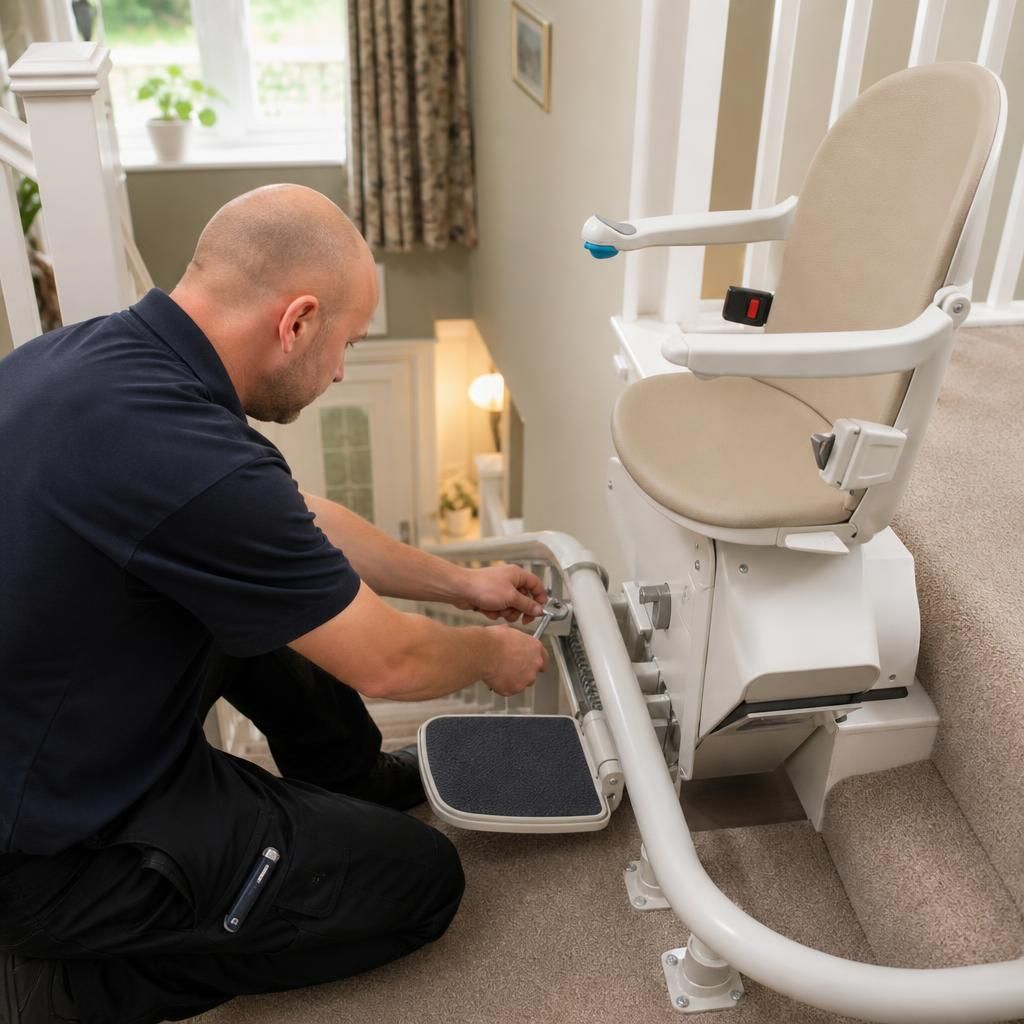
Arrange split-level stairlift servicing and support
Arrange a professional service or discuss a fault with our stairlift support team. We can help assess the complete split-level route, including landings, charging points and transfer areas, and advise on the appropriate next step.