
What are the key benefits of stairlifts for split-level homes?
Stairlifts for split-level homes provide safer, easier access between floors where stairs, landings or changes in direction make independent movement difficult. A tailored installation can reduce the risk of falls, conserve energy and help you remain independent while using the available staircase layout effectively.
Stairlifts for split-level homes provide safer, more consistent access between floors where stairs are divided by landings, change direction or include several short flights. A correctly assessed and fitted stairlift can reduce the need to climb, lower the risk of losing balance and help you continue using all accessible areas of your home without moving to a single-level property.
Unlike a straightforward staircase, a split-level layout may require the stairlift to negotiate corners, intermediate landings, varying gradients or more than one flight. The main benefits therefore depend on choosing a system and rail design that match the exact route, rather than treating the staircase as a standard straight installation.
Improved safety on challenging stairs
A stairlift provides a controlled way to travel between levels while seated. This can be particularly useful where a split-level staircase is narrow, steep, winding or interrupted by a landing. Using a stairlift may reduce the risks associated with tiredness, poor balance, painful joints or carrying items on the stairs.
Safety features can include a seat belt, swivel seat, obstruction sensors and controls that are easy to operate. Depending on the layout and the user’s mobility, powered swivelling, a powered footrest or hinged sections may also make getting on and off easier. These features should be selected during the assessment, as the most suitable arrangement depends on the staircase, available space and the user’s ability to transfer safely.
More independence throughout the home
In a split-level property, essential rooms may be distributed across several levels rather than concentrated on one floor. A suitable stairlift can make it easier to reach bedrooms, bathrooms, living areas and storage spaces without relying on another person each time the stairs need to be used.
This can make everyday routines more manageable and allow you to decide when and where you move around your home. It may also help adult children or other carers by reducing the need to provide physical support on the stairs. A stairlift does not remove the need to take care when transferring at the top or bottom, but it can make the main journey between levels more predictable and less physically demanding.
Access across multiple landings
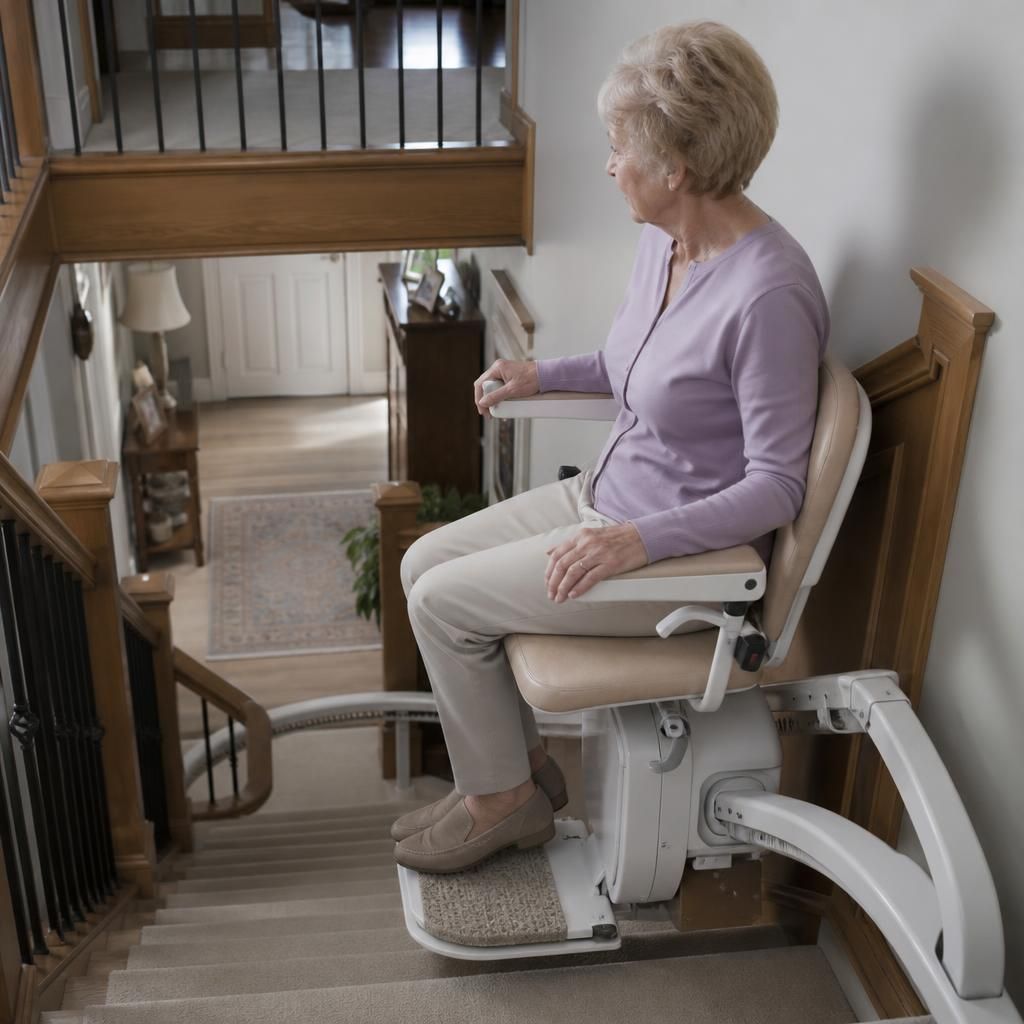
One of the most important benefits of a tailored installation is that it can accommodate the route through a split-level home. A curved stairlift may be designed to follow bends and changes in direction, including movement around an intermediate landing. In some homes, separate straight stairlifts may be more practical, with a safe transfer area between flights.
The correct solution depends on the shape and length of the stairs, the position of doors and hallways, the available landing space and whether the user can transfer between lifts. A home visit is needed to establish whether one continuous system, separate lifts or another arrangement offers the safest and most convenient access.
Less effort and greater comfort
Climbing several flights or repeatedly using short stairs throughout the day can cause fatigue, breathlessness or discomfort, even where a person can still manage the stairs slowly. A stairlift allows the user to conserve energy for other activities and avoid aggravating existing pain in the knees, hips, back or ankles.
Comfort is affected by more than the seat itself. The rail position, travel speed, footrest, armrests and swivel direction all need to suit the user and the staircase. On a tight split-level layout, a compact seat or a suitable parking position may also help preserve usable space for other people walking through the area.
Continued use of the existing home
Installing a stairlift can provide an alternative to restricting daily life to one level or considering a move solely because the stairs have become difficult. It can also support changing mobility needs, provided the design is reviewed carefully and the user can operate the controls and transfer safely.
Most stairlifts are fitted to the stairs rather than fixed directly to the wall, although the installation method must be confirmed during the survey. A professional assessment should consider stair construction, access at each landing, electrical requirements, parking points and any obstruction to doors or walkways. In some cases, small adjustments to furniture or the surrounding area may be recommended to create safer entry and exit points.
A solution matched to the user and property
The benefit of a stairlift in a split-level home is greatest when the equipment is chosen for both the staircase and the person using it. An assessment should consider whether the user can sit upright, bend their knees, operate the controls, use the seat belt and transfer at each required point. It should also account for whether another household member needs to use the stairs normally.
A tailored recommendation may include a curved, straight or reconditioned stairlift, subject to the condition of the equipment and suitability of the route. Features such as remote controls can allow the lift to be called to another landing, while appropriate parking positions can help keep steps and doorways clear. These details are particularly valuable where several people share a compact split-level home.
Overall, the key benefits are safer movement, reduced physical strain, improved independence and better access to the full home. Because split-level layouts vary considerably, the safest result comes from a detailed survey that maps every flight and landing, identifies transfer requirements and confirms how the stairlift will be used in everyday conditions.
A key benefit of a stairlift in a split-level home is safer access across several short flights and landings. Rather than requiring you to climb each section, a tailored system can follow a bend or change of direction, or use separate lifts where transferring between flights is safe and practical.
The suitable arrangement depends on the staircase layout, landing space, door positions and your ability to get on and off the lift. During the assessment, these points are checked alongside features such as a swivel seat, seat belt and obstruction sensors. This helps ensure the stairlift improves access without blocking a walkway or creating an unsafe transfer point.
Arrange a split-level stairlift assessment
Arrange a split-level stairlift assessment with Independent Stairlifts to review your staircase layout, landings and transfer points. We can help identify a suitable solution for your home and mobility needs.