
Will installing a stair lift cause damage to my existing staircase or home decor?
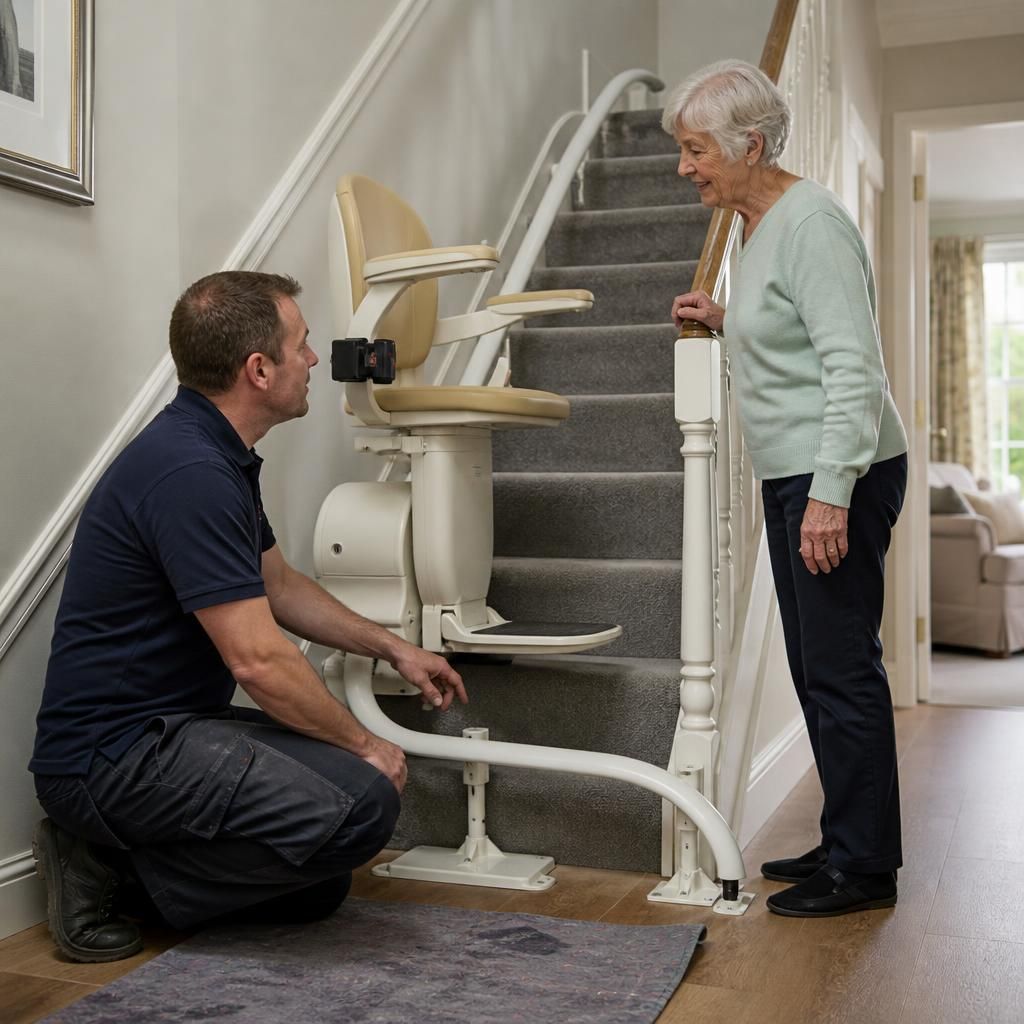
Professionally installed stairlifts are designed to cause minimal impact to your staircase and home décor. The rail is normally secured to the stair treads rather than the wall, avoiding major structural work; any fixings or minor marks can usually be removed or made good if the stairlift is later taken out.
A properly specified and professionally installed stairlift should cause minimal damage to your staircase or home décor. In most installations, the rail is fixed to the stair treads rather than the wall, so there is usually no need for major structural work, extensive building alterations or removal of the banister. Any holes left by the fixings can generally be filled and made good if the stairlift is removed, although the finish may not be completely invisible.
For a split-level staircase, the installation is planned around each flight, landing and change in direction. The rail may use separate sections, supporting brackets or a carefully designed continuous route, depending on the layout. A survey is important because the fixing method must suit the construction and condition of every part of the staircase, including landings and any areas where the rail passes close to walls, doors or furniture.
How the staircase is protected
- Fixings are normally placed into the stair treads or other suitable structural surfaces, rather than relying on plasterboard or decorative wall coverings.
- The installer checks that the treads, risers, landing and supporting structure can accept the proposed fixings without compromising the staircase.
- Rails and brackets are positioned to preserve usable access and avoid unnecessary contact with walls, skirting boards and handrails.
- Protective coverings are used during the work to reduce the risk of scuffs, dust and accidental marks to flooring and furnishings.
- Equipment is tested after installation to confirm that it operates safely without catching on surrounding surfaces.
Some staircases require a different approach. For example, a staircase with particularly narrow treads, unusual construction, loose flooring or a non-standard landing may need additional supports or a customised rail arrangement. If a wall is used for support, this should be discussed during the survey, as it can involve wall fixings and small holes. A competent installer will explain why that method is necessary before work begins.
What happens to carpets and flooring?
Most stairlifts can be installed over carpet, provided the carpet and underlay are secure. The installer may need to make small, precise openings for the tread fixings. These are normally concealed by the brackets, but carpet can sometimes show minor marks when the equipment is removed. Loose rugs, runners or floor coverings around the landing may need to be moved temporarily, and any flooring that is already lifting or damaged should be pointed out before installation.
The staircase does not usually need to be stripped back or redecorated. Installers should avoid cutting carpet unnecessarily and should not remove skirting boards unless the design and site conditions make this unavoidable. If any alteration is proposed, ask what will be changed, why it is required and whether it can be restored later.
Could the walls, paintwork or décor be damaged?
There may be minor contact marks or small fixing holes if a rail, bracket or electrical cable has to be attached near a wall. These are different from the substantial structural damage sometimes associated with major building work. Careful positioning and protection of the work area help to limit this risk, but no installation should promise that removal will leave no trace at all.
After a stairlift is removed, the usual making-good work may include filling screw holes, touching up paintwork, repairing small carpet openings and removing cable clips or other fittings. The quality of the result depends on the age and condition of the décor, the type of paint or wallpaper, the carpet and how long the equipment has been installed. Matching a faded paint colour or discontinued wallpaper can be difficult, so restoration should be discussed separately if appearance is important.
What about electrical work?
A stairlift needs a suitable electrical supply. In many homes, the supply can be installed discreetly near the top or bottom of the staircase, with the cable routed to minimise its visibility and avoid trip hazards. The installer should identify the proposed route during the assessment and ensure that any electrical work is completed safely and in accordance with the relevant requirements. Do not attempt to alter the supply or conceal cables yourself.
How the installation is kept orderly
- The surveyor assesses the staircase, landing, walls, flooring, power supply and surrounding décor.
- The proposed rail route and fixing points are agreed, including any areas where access or furniture may be affected.
- Flooring and nearby surfaces are protected before components are brought into the home.
- The rail, brackets, seat and controls are installed with the minimum practical alteration to the property.
- The system is checked, tested and demonstrated, and the work area is cleared.
Installation can still cause temporary disruption. You may need to clear the stairs and nearby landing, keep children and pets away from the work area, and avoid using the staircase while components are being fitted. A split-level layout can take more planning than a simple straight flight because the installer must account for each change in elevation and the turning or transition points between flights.
If your staircase is listed, unusually constructed, already weakened or covered by a sensitive finish, raise this before agreeing to the installation. Photographs and a detailed survey can help identify risks, but the final fixing method should be based on an inspection of the property. Ask for any necessary alterations to be recorded clearly, together with what will happen if the stairlift is later removed.
In practical terms, the most common impact is a small number of fixing points in the treads, with limited disturbance to surrounding décor. Professional surveying, suitable equipment, careful protection and accurate installation are the main safeguards against avoidable damage. Where a particular staircase or finish presents a risk, the correct response is to adapt the design or explain the limitation before installation, rather than proceed without addressing it.
A professionally installed stairlift is usually fixed to the stair treads, rather than the wall, so it normally causes minimal disturbance to the staircase and surrounding décor. The installer positions the rail and brackets to avoid unnecessary contact with walls, skirting boards and handrails, while protecting nearby flooring and furnishings during the work.
Small fixing holes or marks may remain if the stairlift is removed, particularly where it has been installed over carpet or close to a wall. These can usually be filled or repaired, although an exact match may not be possible with older paint, wallpaper or flooring. A detailed survey should identify the proposed fixing points and any restoration needed before installation goes ahead.
Book a Staircase Assessment Before Installation
Book a professional staircase assessment to confirm the safest fixing method and identify any potential impact on your staircase, flooring or décor before installation.