
What is the installation process for a split-level stair lift, and how long does it typically take?
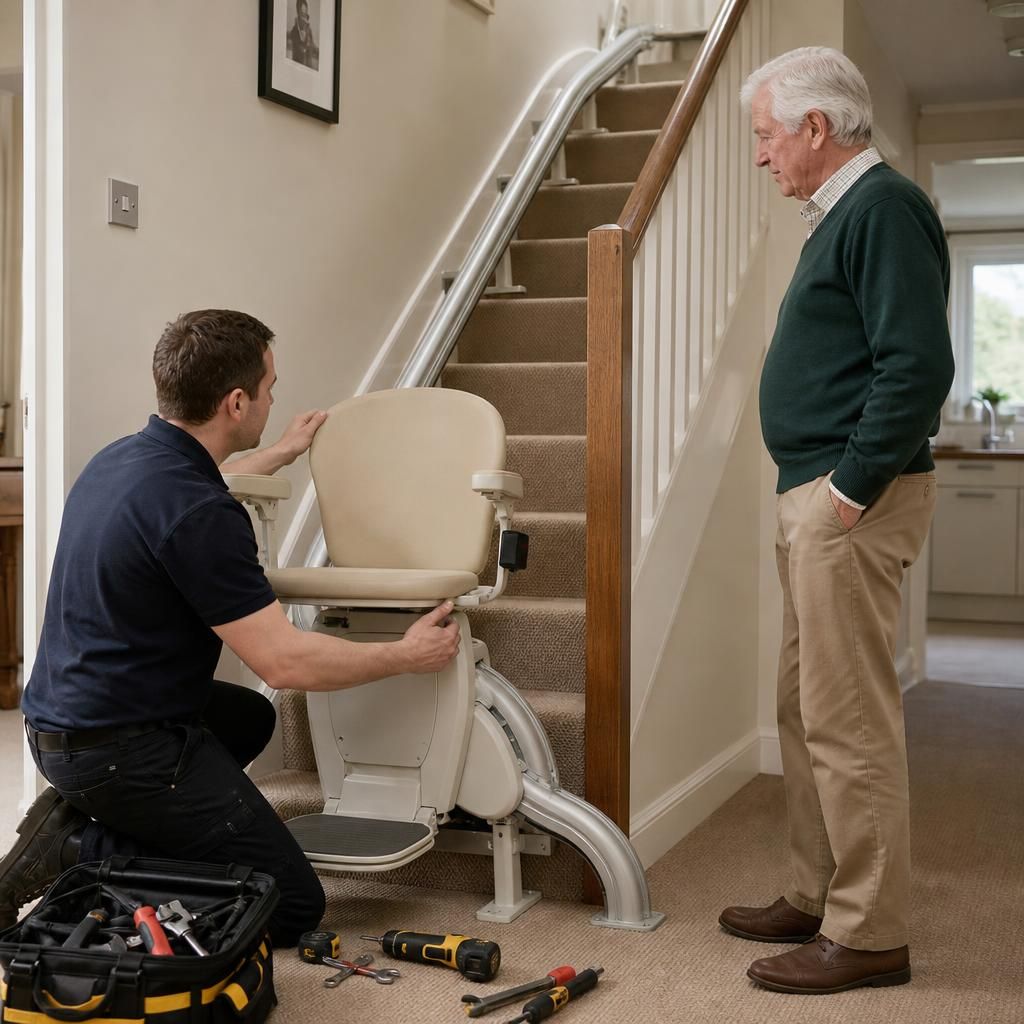
Installation of a split-level stair lift usually involves a home assessment, precise measuring, bespoke rail manufacture, fitting and safety testing. A straightforward installation may be completed in a day, while more complex layouts can take longer if additional rail sections, landings or preparation work are required.
A split-level stair lift is installed through a planned process of assessment, measurement, bespoke rail design, manufacture, fitting and safety testing. A relatively straightforward installation may be completed in a day, while a more complex staircase with several flights, intermediate landings, tight turns or additional electrical work may require longer or a separate visit.
The process normally begins with a home assessment. An installer examines the full staircase, including each change in direction, landing and floor elevation. They assess the available stair width, headroom, access at the top and bottom, suitable parking positions for the seat and any points where the user may need to transfer. The position of doors, radiators, bannisters and other household features is also considered.
For a split-level layout, accurate surveying is particularly important because the rail must follow more than one flight or connect separate sections safely. Measurements and photographs or digital survey information may be used to design a rail that follows the staircase closely while preserving practical access for other household members.
Once the design has been agreed, the rail is manufactured or prepared to match the staircase. Curves, landings and changes in elevation generally require bespoke components rather than a standard straight rail. The installation date can therefore depend on the complexity of the design and the time needed to prepare the equipment.
On the fitting day, the installer will usually:
- Protect relevant flooring, walls and furnishings where necessary.
- Position and secure the rail to the stair treads or other approved fixing points, rather than relying on the wall.
- Fit the carriage, seat, footrest, armrests and controls.
- Install charging points and connect any required electrical components.
- Check that the lift parks correctly at the top, bottom and any intermediate section.
- Test the safety sensors, seat belt, swivel mechanism, controls and emergency features.
Most stairlift rails are fixed to the stairs, so installation does not normally require major structural alterations to the staircase or surrounding walls. There may be drilling into the stair treads for the brackets, and minor preparation may be needed to clear obstructions or provide a suitable electrical supply. The installer should explain any required work before fitting begins.
The final stage is commissioning and handover. The completed lift is run repeatedly along its full route to confirm smooth travel, reliable stopping and correct operation at each level. The user is shown how to use the controls, seat belt, swivel seat, charging position and manual lowering or emergency procedures where applicable. It is important that the user, and any regular carer or family member, has the opportunity to practise before the installer leaves.
Timing depends on the individual staircase. Factors that can extend the installation include:
- Several flights or more than one intermediate landing.
- Tight bends or unusual changes in direction.
- Limited clearance, restricted access or features that need to be moved temporarily.
- Additional charging, electrical or preparation work.
- A requirement for special seating, controls or other adaptations.
- Equipment that must be manufactured specifically for the property.
During fitting, expect some drilling, movement around the staircase and short periods when the stairs cannot be used safely. The household may also need to keep the route and nearby areas clear while the rail and lift are brought into position. A responsible installer will discuss access, protect the working area and explain when the staircase can be used again. Any likely disruption should be confirmed during the assessment rather than assumed.
After installation, keep the user manual and contact details available, and report unusual noises, jolting, charging problems or changes in braking performance promptly. The installation team can also explain the recommended servicing arrangements for the particular lift. For an accurate timescale, the most reliable approach is a stair survey, as the number of levels alone does not determine how long the work will take.
The installation time for a split-level stair lift is determined mainly by the staircase layout and the level of bespoke rail work required. A home assessment allows the installer to measure each flight, landing, turn and parking position before confirming the fitting schedule.
During installation, the rail is secured to the stair treads, then the carriage, seat, controls and charging points are fitted. The lift is tested across its full route, including changes in direction and any intermediate level, before the user is shown how to operate it safely.
A relatively straightforward split-level installation may be completed in a day. Several flights, tight turns, restricted access, electrical preparation or specially manufactured components can increase the timescale or require a separate visit. The staircase will be temporarily unavailable during some fitting work, so the installer should confirm access arrangements and the expected duration during the assessment.
Arrange Your Split-Level Stair Lift Assessment
Arrange your split-level stair lift assessment with Independent Stairlifts to confirm the most suitable design, installation requirements and expected timescale for your home.