
How is maintenance for split-level stair lifts managed over time?
Maintenance for split-level stair lifts is managed through scheduled servicing, safety checks and prompt repairs, with particular attention to the lift’s separate rail sections, transfer points, batteries and controls. Regular professional inspections help keep the system safe, reliable and correctly aligned as the staircase and equipment are used over time.
Maintenance for split-level stair lifts is managed through scheduled professional servicing, regular user checks and prompt attention to faults. Because these systems may include separate rail sections, transfer points, charging positions or more than one lift, servicing must confirm that every part works together safely and remains correctly aligned as the equipment is used over time.
Professional servicing and inspection
Your stair lift should be serviced in line with the manufacturer’s instructions and the maintenance schedule provided at installation. A service visit normally includes an inspection of the complete system, rather than just the seat or carriage. The engineer may check:
- the rails, brackets and fixings for movement, damage or alignment issues;
- joints, bends, transfer points and any interlocking sections;
- the carriage, drive mechanism, rollers and braking components;
- seat swivels, arms, footrest, seat belt and safety sensors;
- charging points, batteries, wiring and remote controls;
- limit switches, obstruction sensors and other safety devices; and
- the correct operation of each landing, parking and transfer position.
On a split-level installation, particular attention is needed where the route changes direction, crosses a landing or requires the user to move between separate sections. The engineer will check that the lift stops accurately, that any transfer mechanism operates as intended and that the controls prevent unsafe movement when the route is not correctly positioned.
How often should it be serviced?
The correct interval depends on the stair lift model, how frequently it is used, the installation environment and the manufacturer’s guidance. Many stair lifts are checked during a planned service each year, but the documentation supplied with your particular system takes priority. A service may be needed sooner if the lift is used heavily, has been exposed to damp or outdoor conditions, has been altered, or begins to show a change in performance.
Routine servicing should not be postponed because the lift still appears to be working. Wear can develop in components that are not visible during normal use, and a split-level system may continue to operate while a rail connection, charging point or safety sensor requires adjustment.
Checks you can make between services
Simple checks help identify problems early, but they do not replace professional servicing. Keep the rails and landing areas clear, and make sure the lift can reach its charging position fully. Check that the seat belt fastens, the arms and footrest move normally, and the lift starts and stops without unusual hesitation. Listen for new grinding, clicking or squealing sounds, and look for warning lights or error messages.
It is also useful to check that the lift is being left on charge as instructed. If the batteries repeatedly lose charge, the lift travels more slowly, or the charging indicator does not behave as expected, contact the service team rather than repeatedly resetting the equipment. Batteries are consumable components and may eventually need replacement, particularly where the lift is used regularly or is left unused for extended periods.
Cleaning and care
Wipe the seat, controls and accessible surfaces with a lightly damp cloth and use only cleaning products approved for the equipment. Keep liquid away from switches, charging contacts, motors and electrical connections. Do not oil the rails or apply lubricant unless the manufacturer specifically instructs you to do so. Incorrect lubrication can attract dirt or affect sensors, rollers and drive components.
Outdoor or damp installations need additional attention. Leaves, grit, moisture and temperature changes can affect the rail, charging points and controls. The equipment should be kept as clean and dry as the installation allows, with any protective covers used as directed. Report corrosion, water ingress or physical damage promptly.
When to arrange a repair
Stop using the lift and request advice if it stops unexpectedly, moves unevenly, fails to reach a landing, does not charge, produces an unfamiliar noise or displays a fault warning. The same applies if a transfer point does not release or lock correctly, a seat swivel behaves differently, or a safety belt, arm, footrest or sensor is damaged.
Do not bypass a safety switch, force a carriage past a stopping point or attempt to adjust the rail, drive unit or electrical system yourself. A split-level stair lift must be assessed as a complete installation, since a fault in one section can affect the safe use of another. If the lift has stopped between levels, follow the emergency instructions supplied with it and contact the appropriate support service.
Keeping maintenance records up to date
Keep the service documents, model information and emergency contact details where they can be found easily. A record of inspections, battery replacements, repairs and any changes to the installation helps an engineer diagnose recurring faults and confirms which components have been fitted. Tell the engineer about changes in use, unusual behaviour or changes to the staircase and surrounding area since the previous visit.
With servicing carried out to the recommended schedule, sensible cleaning and prompt reporting of faults, a split-level stair lift can remain dependable over many years. As components age, the most appropriate solution may be a battery change, replacement safety component, rail adjustment or a wider assessment of the installation. Arrange an inspection if performance has changed or if you are unsure whether the current maintenance plan remains suitable for your home.
Professional servicing is especially important at the transfer points and joints of a split-level stair lift. These areas must remain correctly aligned so the carriage stops accurately, locks securely and cannot move when a section is not in the safe position.
During a service visit, the engineer checks the rails, fixings, interlocks, stopping positions and related safety controls across the complete route. They can also identify wear, looseness or changes in performance that may not be obvious during everyday use. Keep the landing and transfer areas clear, report unusual movement or noise promptly, and do not attempt to adjust the rail or bypass a safety device yourself.
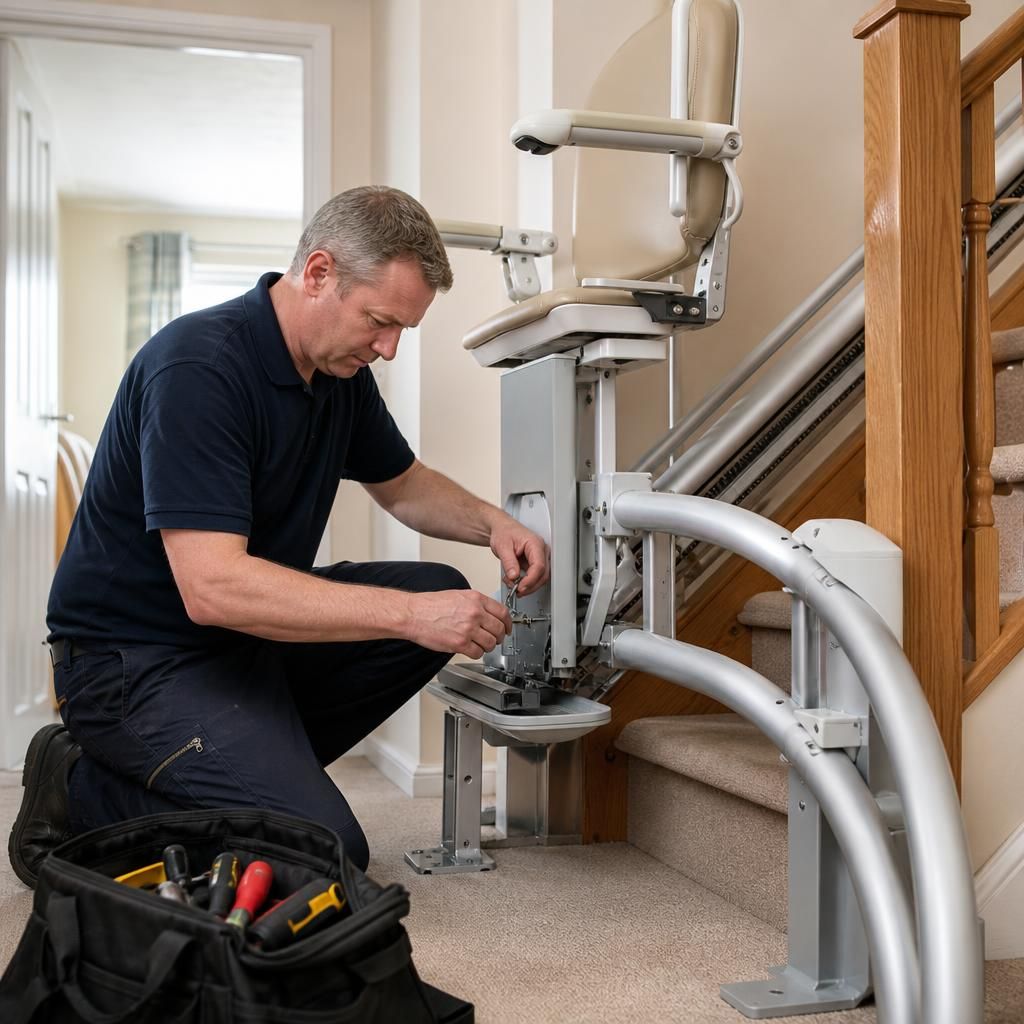
Arrange a maintenance check for your split-level stair lift
Contact Independent Stairlifts to arrange a maintenance check for your split-level stair lift. Our team can assess the complete route, including rails, transfer points, charging system and safety controls, and advise on any servicing or repairs required.