
What are the most important features to look for in a stairlift for seniors?
The most important stairlift features for seniors are dependable safety systems, comfortable seating, simple controls, smooth movement and battery backup for use during a power cut. The right model should also suit the staircase, support the user’s mobility needs and include practical options such as swivel seating, adjustable controls and easy-to-use safety sensors.
The most important features in a stairlift for seniors are reliable safety systems, comfortable and supportive seating, simple controls, smooth operation and dependable battery backup. The stairlift must also be correctly matched to the user, the staircase and the home, because a feature is only useful if the person can operate it confidently and use it safely every day.
Safety features
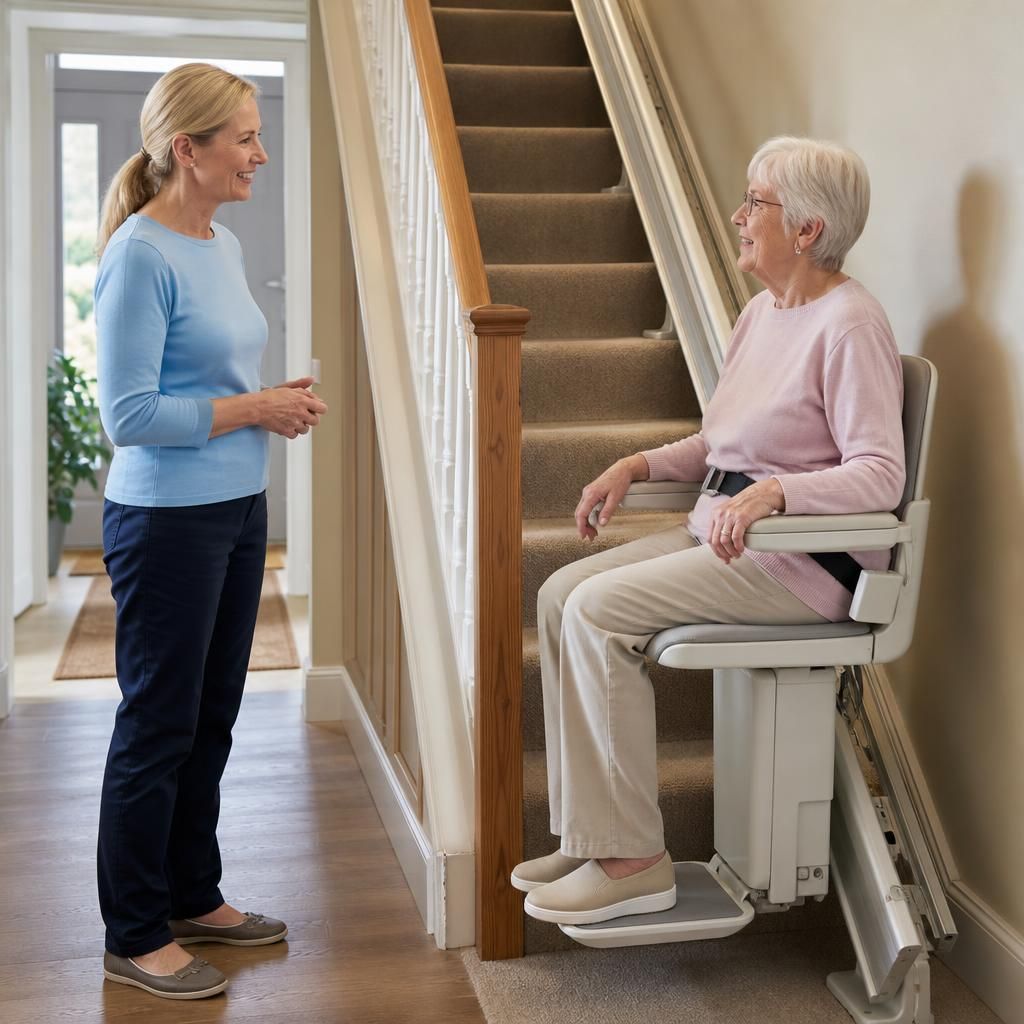
Safety should be the first consideration. Look for a stairlift with a secure seatbelt, stable armrests, a supportive backrest and a footrest that provides a firm platform for both feet. Some models offer different belt designs, such as a retractable or adjustable belt, which can make fastening easier for someone with limited movement or dexterity.
Safety sensors are also essential. Sensors around the footrest, carriage and other vulnerable areas should detect an obstruction and stop the lift before contact occurs. The stairlift should restart smoothly once the obstruction has been removed, rather than requiring complicated resetting procedures.
Other useful safety functions include a controlled start and stop, speed regulation, a manual emergency lowering option where appropriate, and diagnostic indicators that identify a fault. A clear alarm or emergency stop control can provide additional reassurance, although it should be easy to reach without being accidentally pressed during normal use.
Comfortable, supportive seating
A senior user may spend several minutes on the stairlift each time they use it, so the seat should provide suitable support without making it difficult to get on or off. Consider the seat depth, backrest angle, armrest height and the amount of cushioning. A seat that is too low may be difficult to rise from, while one that is too high can make access awkward.
A powered or manually operated swivel seat can turn towards the landing, helping the user get on and off without twisting towards the stairs. This is particularly useful for people with reduced balance, painful joints or restricted hip movement. Some stairlifts also have a powered swivel or powered footrest, which may be helpful where the user cannot easily operate these parts by hand.
The seat, armrests and footrest should be checked in relation to the user’s posture and clothing. A safe seating position keeps the user’s feet supported, their arms inside the armrests and the belt correctly secured throughout the journey.
Simple and accessible controls
Controls should be intuitive, clearly marked and positioned where the user can reach them without stretching. A joystick or button control on the armrest is common, but the best choice depends on the user’s hand strength, coordination and vision. Large, tactile controls may be easier for someone with arthritis or reduced eyesight.
Remote controls at the top and bottom of the staircase allow the stairlift to be called to the required landing. They should have an uncomplicated layout and clearly distinguishable buttons. If more than one person uses the stairlift, make sure each user can operate it safely and understands the controls.
It is also worth checking how easily the user can stop the stairlift and what happens if they release the control. A suitable model should stop in a controlled way when the control is released, rather than continuing to travel.
Battery backup and charging
A battery-powered stairlift should continue to operate during a mains power cut, provided its batteries are charged and maintained correctly. This prevents the user from being left upstairs or downstairs solely because of a temporary interruption to the electricity supply.
Check that the stairlift charges automatically when parked at its charging points. The user should know where these points are and should park the lift correctly after use. Battery condition, charging faults and low-charge warnings should be easy to identify. Batteries are consumable components, so they will eventually need replacement as part of normal servicing.
A suitable fit for the staircase and the user
The stairlift should be selected after assessing both the staircase and the person who will use it. Straight staircases may accommodate a standard rail, while a staircase with landings, bends or multiple flights usually requires a rail designed to follow its exact shape. Narrow stairs may need a compact seat, folding components or a rail position that preserves as much usable stair width as possible.
Measure the available space at the top and bottom landings, not just the width of the stairs. The user needs enough room to turn, release the belt and leave the seat safely. Consider doors, radiators, bannisters and other possible obstructions. A trained assessor should also check whether the lift can be parked away from a doorway or in a position that does not obstruct household access.
User suitability is equally important. The assessment should consider height, weight, balance, leg strength, flexibility, vision, memory and whether the user can sit upright and follow the operating instructions. If the user has a progressive condition, it is sensible to consider how their needs may change rather than selecting a model only for their current ability.
Practical design features
- Foldable components: A folding seat, arms or footrest can help preserve access to the stairs when the lift is parked.
- Swivel seating: This can make transfers at the landing safer and reduce twisting.
- Powered options: A powered swivel seat or footrest may be worthwhile when manual movement is difficult.
- Adjustable controls: Controls that can be positioned to suit the user can improve reach and comfort.
- Choice of parking positions: This may help keep hallways, doorways or landings clear.
- Suitable weight capacity: The stairlift must be rated for the user, with any mobility clothing or equipment taken into account.
- Quiet, smooth movement: A controlled ride can be more comfortable for users with pain, balance problems or anxiety about movement.
- Weather resistance: An outdoor stairlift needs materials and controls designed for exposure to changing weather conditions.
Ease of maintenance and support
A stairlift should have accessible service points, clear fault indicators and a documented maintenance routine. Regular servicing helps identify worn belts, rollers, batteries, sensors and other components before they affect safe operation. The user or family member should know how to report a fault and what to do if the stairlift stops away from a charging point.
Ask for clear instructions covering daily use, charging, cleaning, emergency procedures and safe parking. Do not use the stairlift if the belt, seat, footrest, controls or sensors appear damaged. A fault should be assessed by a qualified stairlift engineer rather than repaired by the user.
How to compare models
When comparing stairlifts, prioritise the features that address the user’s actual limitations. Someone with good hand control but restricted leg movement may mainly benefit from swivel seating and a powered footrest. Someone with weak grip may need large, easy-press controls and a simple belt mechanism. Someone sharing a narrow staircase may need a compact design with folding parts, while a complex staircase will require a correctly designed curved rail.
The most suitable stairlift is therefore not necessarily the model with the greatest number of options. It is the one that the senior user can board, secure, operate and leave safely, with features that remain practical as their mobility changes. A detailed home assessment and an opportunity to try the controls can help confirm that the chosen design is comfortable, accessible and appropriate.
The most useful stairlift features are those that match the senior user’s specific mobility needs, rather than simply the model with the longest feature list. During an assessment, consider whether the user can sit upright, fasten the belt, operate the control, keep their feet on the footrest and stand safely at the landing.
For example, swivel seating can help someone who struggles to turn, while powered options may be more suitable if hand strength or flexibility is limited. Large, simple controls can assist users with reduced dexterity or eyesight, and folding components may preserve access on a narrow staircase. Trying the controls and checking the transfer position at both ends of the stairs helps confirm that the stairlift will be practical for everyday use.
Book a personalised stairlift assessment
Book a personalised stairlift assessment to check which safety, comfort and accessibility features best suit the senior user and their staircase. Our team can discuss your needs and explain the most suitable options for your home.