
What are the key maintenance requirements for stairlifts used by seniors to ensure longevity and safety?
Key stairlift maintenance requirements include regular safety checks, professional servicing, prompt attention to unusual noises or movement, and keeping the track, seat and charging points clean and unobstructed. Following the manufacturer’s guidance and arranging repairs through a qualified stairlift engineer helps maintain safe operation, protect the battery and extend the lift’s working life.
Regular stairlift maintenance combines routine checks by the user with servicing by a qualified stairlift engineer. Keeping the track clear, checking the seat and safety controls, maintaining the batteries and arranging professional inspections in line with the manufacturer’s guidance helps an older user operate the lift safely and can extend its useful working life.
Carry out simple checks before use. The user, or a family member or carer, should look over the stairlift regularly and report anything unusual. Check that:
- the seat is properly positioned and locks securely where applicable;
- the arms, footrest, swivel seat and seat belt operate as intended;
- the track and steps are free from toys, clothing, furniture and other obstructions;
- the lift starts, stops and travels smoothly without unexpected jolting;
- the controls, remote controls and direction switches respond correctly; and
- there are no visible signs of damage, loose fittings, fluid contamination or frayed cables.
These checks should not involve removing covers or accessing electrical parts. If the lift does not behave normally, it should not be used until the cause has been assessed.
Keep the track and surrounding area clean. Dust and debris can affect the rollers, sensors or moving parts, particularly on an open staircase where the track is exposed. Wipe accessible surfaces with a soft, slightly damp cloth and follow the cleaning instructions supplied with the lift. Do not pour liquid onto the track, use abrasive products or apply household oil or grease unless the manufacturer specifically permits it. Incorrect lubrication can attract dirt or interfere with components that require specialist servicing.
The stairs should also remain clear around the lift. A senior user needs enough room to sit down, stand up and use the swivel mechanism safely. Items must not be stored on the steps, footrest or track, and pets should be kept clear while the lift is moving.
Maintain the charging system and batteries. Most stairlifts use rechargeable batteries and are designed to charge when parked at a designated charging point. The lift should normally be left at one of its charging positions when not in use, rather than stopped halfway along the staircase. Check that the charging points are clean and that the lift indicates that it is charging. A warning light, repeated low-battery message, slow movement or failure to complete a journey can indicate a charging or battery problem.
Batteries are consumable parts and eventually lose capacity. Their service life varies according to the model, usage, temperature and charging conditions, so replacement should be based on the manufacturer’s guidance and the engineer’s assessment. Do not attempt to replace batteries unless the equipment is specifically designed for safe user replacement. A stairlift that has been left unused for a prolonged period may also need checking before it is relied upon, as batteries can discharge while standing.
Arrange scheduled professional servicing. A qualified engineer should inspect the stairlift at the interval recommended for that model and usage pattern. The service may include checking the drive system, rail fixings, rollers, motor, brakes, sensors, seat mechanism, swivel lock, footrest, seat belt, controls, batteries and charging circuit. The engineer can also test safety cut-outs and confirm that the lift stops correctly at the top and bottom of the staircase.
There is no single servicing interval that applies to every stairlift. A lift used several times a day, installed outdoors, exposed to dust or moisture, or supporting a user with particular mobility needs may require closer monitoring. Follow the service plan provided at installation and retain the engineer’s report so that faults, repairs and battery changes can be tracked.
Respond promptly to warning signs. Stop using the stairlift and contact the service team if you notice:
- unusual grinding, clicking, squealing or banging noises;
- jerky, hesitant or unusually slow travel;
- the lift stopping unexpectedly or failing to reach a charging point;
- an alarm, error message or persistent warning light;
- a seat, armrest, footrest or swivel mechanism that feels loose;
- a seat belt or safety sensor that does not work reliably; or
- burning smells, smoke, visible electrical damage or signs of water ingress.
Do not bypass a safety sensor, force the seat or controls, continue travelling with a known fault or allow an unqualified person to repair the lift. Switching the power off may be appropriate if there is an electrical smell or visible damage, but the lift should then be left unused until it has been inspected. In an emergency, use the agreed alternative means of leaving the staircase and seek assistance rather than attempting a risky repair.
Use the stairlift as intended. Maintenance cannot compensate for unsafe use. The user should sit fully back in the seat, fasten the seat belt, keep hands and feet within the designated areas and avoid carrying loads that obstruct the controls or affect stability. Follow the stated user weight limit and do not allow more than the permitted number of people on the lift. Carers should make sure that the user understands the stop control, alarm and any manual lowering or emergency procedure provided for the model.
Give extra attention to outdoor and reconditioned stairlifts. Outdoor lifts need protection from rain, frost, dirt and prolonged exposure to sunlight, using the supplied cover or other approved protection. Keep drainage areas clear and report corrosion or water ingress promptly. A reconditioned stairlift should still receive the same routine cleaning, charging and safety checks as a new installation, with servicing based on its current condition, age and usage rather than appearance alone.
For an older user, the most useful maintenance arrangement is a clear routine: keep the staircase unobstructed, check the lift before use, leave it correctly positioned for charging, record any change in performance and book professional servicing when due. If the user has memory, sight, hearing or dexterity difficulties, a family member or carer should help with these checks and know how to report a fault. This approach supports dependable day-to-day operation without asking the user to carry out technical work.
Professional stairlift servicing is essential because important safety components cannot be assessed through a visual check alone. A qualified engineer can inspect the drive system, rail fixings, rollers, motor, brakes, sensors, seat mechanism, seat belt, batteries and charging circuit, then test that the lift starts, travels and stops correctly.
Arrange servicing at the interval recommended for the stairlift and its usage. More frequent checks may be appropriate for a lift used heavily or installed outdoors. Keep the service report and contact the service team promptly if you notice unusual noise, jerky movement, warning lights, charging problems or a loose safety component. Do not remove covers or attempt electrical repairs yourself.
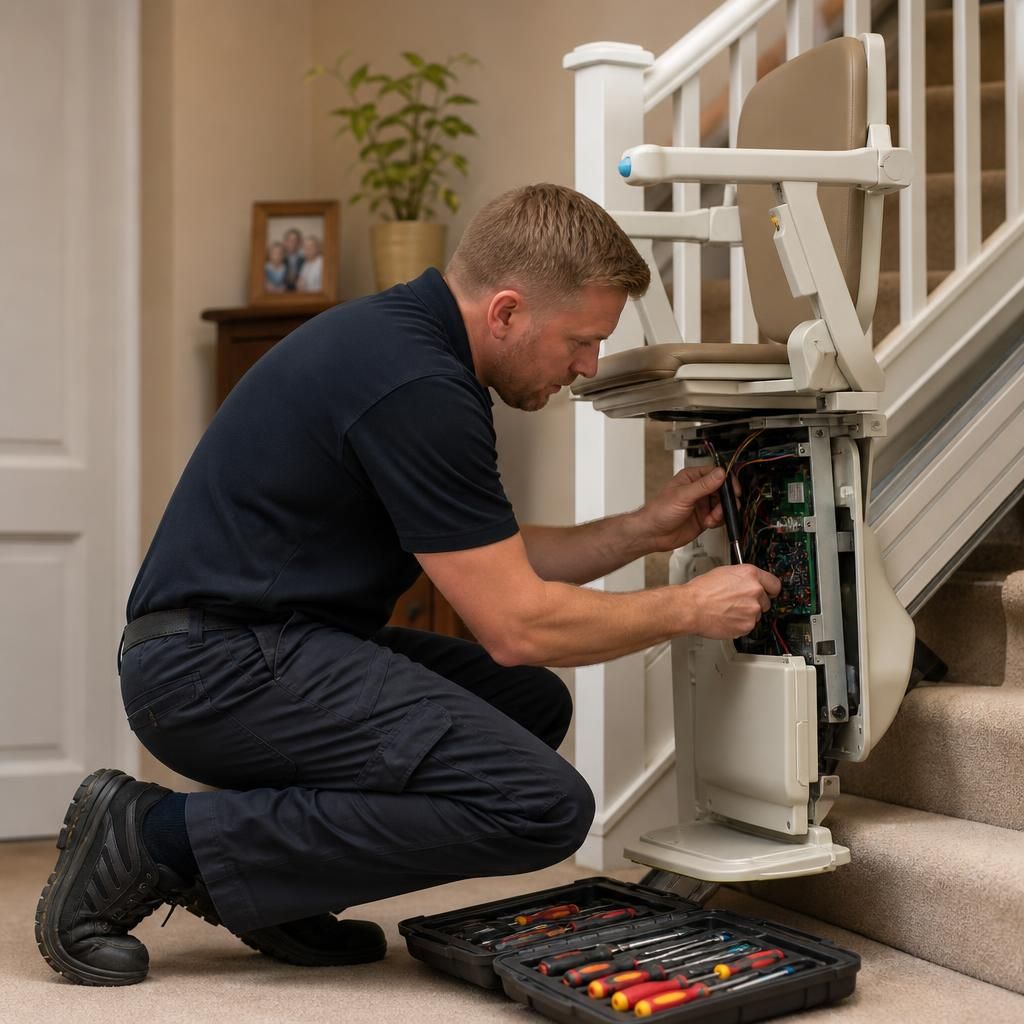
Arrange a professional stairlift maintenance check
Arrange a professional stairlift maintenance check with Independent Stairlifts to identify wear, confirm that safety components are working correctly and keep your lift reliable. Contact our service team to book an inspection in line with your stairlift model and usage.