
What are the benefits of choosing a reconditioned stairlift for senior users?
A reconditioned stairlift can provide senior users with safer, more affordable access between floors, while still offering dependable operation when professionally inspected, refurbished and installed. It may also reduce waiting time and provide a practical solution where a new stairlift is not necessary, although suitability and warranty support should be confirmed during the assessment.
A reconditioned stairlift can give a senior user safe, dependable access between floors at a lower purchase cost than a comparable new stairlift, provided it has been professionally inspected, refurbished, safety-checked and installed for the individual staircase. It can be a suitable choice when a reliable mobility solution is needed without paying for every feature of a new model, but the condition of the lift, warranty, aftercare and suitability of the installation should all be confirmed before purchase.
Lower initial cost
The main benefit of a reconditioned stairlift is usually the lower upfront price. A previously used lift may offer the essential functions needed for comfortable and safe stair travel without the cost associated with a brand-new unit. This can make stairlift access more achievable for households managing a fixed budget, particularly where the user needs a practical solution rather than the latest model or a wide range of optional features.
The total cost will depend on the staircase, the type of lift required and the work involved in preparing it for installation. A straight reconditioned stairlift is generally more straightforward to install than a curved model, because a curved stairlift requires a rail designed around the individual staircase. Additional factors can include removal of an existing lift, alterations to electrical supplies and any work needed to ensure clear access at the top and bottom of the stairs.
Access to professionally prepared equipment
A reputable reconditioned stairlift should not simply be a used stairlift taken from one home and installed in another. It should be assessed, cleaned, refurbished where necessary and tested before it is offered for reuse. Components such as the seat, controls, batteries, drive system, sensors, safety edges and charging equipment should be checked as part of the preparation process.
Professional preparation helps identify wear or faults before installation, although it does not make a used stairlift identical to a new one. Ask what inspection and refurbishment work has been completed, whether replacement parts have been fitted and how the lift will be tested in the home. Clear answers provide a better indication of the equipment’s condition than the word “reconditioned” alone.
Reliable day-to-day support
When a reconditioned stairlift is correctly matched to the user and the staircase, it can provide dependable daily assistance. It may reduce the need to climb stairs when pain, weakness, balance problems or fatigue make this difficult. This can help a senior user continue using bedrooms, bathrooms and other rooms on different floors instead of restricting their routine to one level.
Reliability depends on more than the age of the stairlift. Correct installation, battery condition, regular use, servicing and prompt attention to warning signs all affect performance. A suitable aftercare arrangement should explain who to contact if the lift stops working, what is covered by the warranty and whether repairs or replacement parts are available.
A practical option for temporary or changing needs
Reconditioned equipment can be appropriate where the user’s needs may change or where a stairlift is required quickly for a limited period. For example, it may help someone recovering from an operation or managing a condition that has temporarily made the stairs unsafe. In these circumstances, a lower-cost option may be more proportionate than investing in a new lift with features that may not be needed in the longer term.
However, a temporary need should still be assessed carefully. Removing a stairlift later can leave fixing points or require arrangements for its collection. Discuss the likely duration of use and any removal terms before installation, especially if the lift is being rented or supplied under a separate agreement.
Suitable features without unnecessary complexity
Many senior users need straightforward controls and consistent support rather than advanced technology. A reconditioned stairlift may provide the core features required for safe use, including a secure seat belt, armrests, a swivel seat, obstruction sensors, a manual or powered footrest and controls positioned for easy reach. The right specification depends on the user’s strength, balance, flexibility, eyesight and ability to operate the controls.
Keeping the design simple can be helpful for a person who is unfamiliar with stairlift operation or who finds multiple controls confusing. A practical assessment should consider whether the user can transfer on and off the seat safely, reach the controls, fasten the seat belt and respond to audible or visual warnings. A model should not be selected on price alone if its seat, armrests or controls are unsuitable.
Potentially faster availability
A reconditioned stairlift may be available sooner than a new bespoke model, particularly where a standard straight staircase is involved and a suitable unit is already in stock. This can be useful when stair use has become unsafe and the household needs a solution without an extended lead time.
Availability is not guaranteed, and a reconditioned lift still needs to be matched to the staircase and prepared for installation. Curved, narrow or unusual staircases may require a different approach, because the rail and parking positions must suit the specific layout. A faster installation should never replace a proper survey and safety check.
Reduced environmental impact
Reusing a serviceable stairlift can extend the working life of its components and reduce the need to manufacture and dispose of another complete unit. This is a practical environmental benefit, provided the lift is refurbished to an appropriate standard and remains suitable for safe use. Reuse should not involve compromising on worn parts, battery condition or safety testing.
What to check before choosing one
- Assessment of the staircase: confirm that the proposed lift suits the width, bends, landings, doorways and parking areas in the home.
- Assessment of the user: check that the seat height, seat width, controls, footrest, belt and swivel mechanism are appropriate for the senior user’s mobility and dexterity.
- Condition and preparation: ask what has been inspected, cleaned, repaired or replaced and whether the complete system has been function-tested.
- Battery and charging performance: establish whether the batteries are in suitable condition and where the lift will charge when parked.
- Warranty terms: confirm the length of cover, which parts and labour are included, and what exclusions or call-out conditions apply.
- Service and repairs: make sure there is a clear process for reporting a fault and obtaining technical assistance after installation.
- Electrical and installation standards: use a competent installer who can complete the work safely and provide operating guidance.
- Future suitability: consider whether the user’s mobility is likely to change and whether the selected design can continue to meet their needs.
Reconditioned compared with new
A new stairlift may provide a wider choice of models, colours, specifications and optional features, and it can be preferable where the user has particular clinical or access requirements. A reconditioned stairlift may offer better value where a standard specification is sufficient and the available model is in good condition. Neither option is automatically safer: safety depends on appropriate design, professional installation, correct use and ongoing maintenance.
A home assessment is therefore the most reliable way to compare the options. The assessment should look at the staircase as well as the user, explain any limitations and set out the expected price, installation arrangements, warranty and aftercare. If the senior user has difficulty standing, transferring or using the controls, mention this before the model is selected so the installation can be planned around those needs.
In summary, choosing a reconditioned stairlift can provide affordable, prompt and practical support for safer movement around the home. It is most appropriate when the equipment has been properly refurbished, the model fits the staircase and the user, and dependable warranty and repair support are available. A personalised assessment allows you to establish whether a reconditioned lift offers the right balance of safety, comfort, condition and cost for the senior user.
A reconditioned stairlift is a previously used lift that has been inspected, refurbished and safety-tested before being installed for another user. Its main benefit for a senior user is access to essential parts of the home at a lower cost, without necessarily compromising day-to-day reliability when the equipment is suitable and professionally prepared.
Before choosing one, ask what has been checked or replaced, including the batteries, drive system, controls, sensors, seat belt and charging equipment. The lift should also be assessed against the user’s needs, including their ability to transfer onto the seat, fasten the belt and operate the controls. Confirm the warranty, servicing arrangements and repair support so that the lower purchase price does not come at the expense of dependable aftercare.
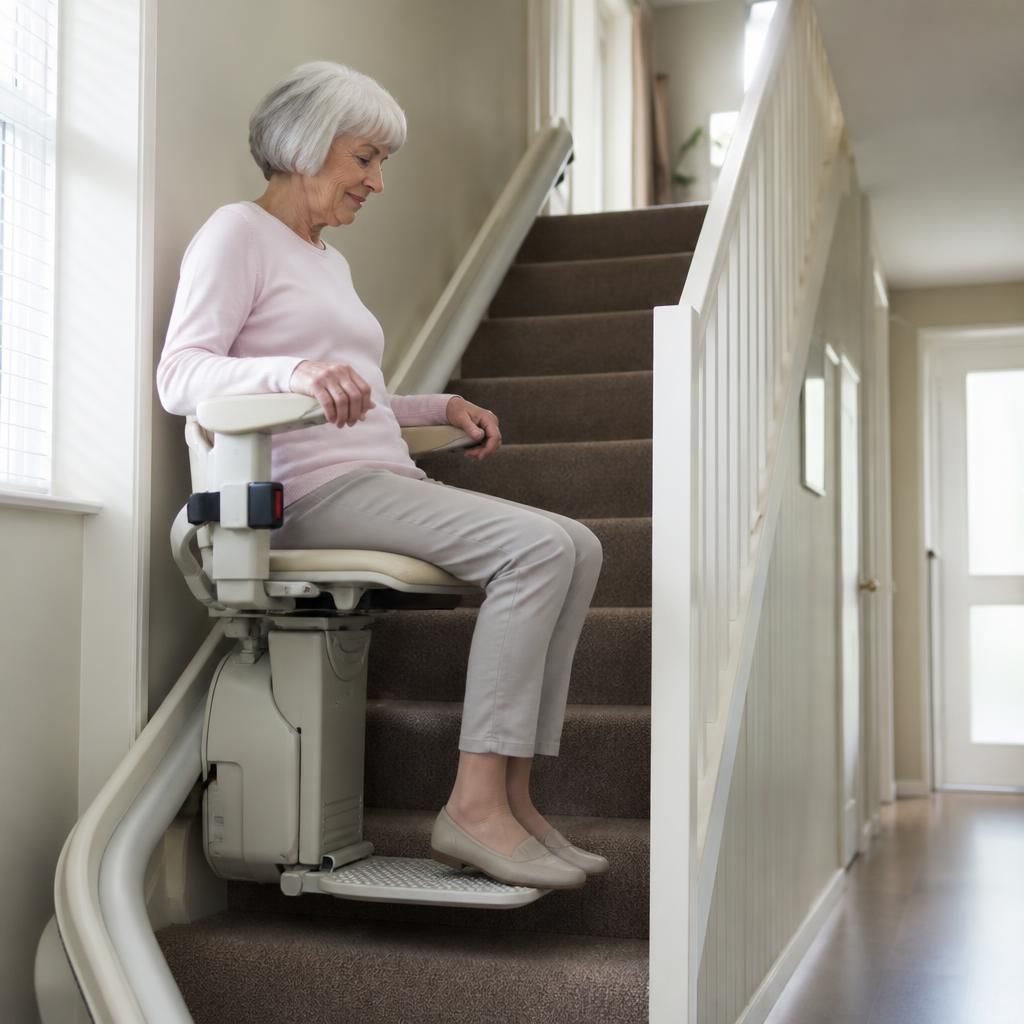
Arrange Your Reconditioned Stairlift Assessment
Arrange a personalised assessment to confirm whether a reconditioned stairlift is suitable for the senior user, staircase and budget. We can explain the available options, warranty cover and aftercare before installation.