
What maintenance and aftercare services are essential for ensuring the longevity and reliability of my stairlift?
Essential stairlift aftercare includes scheduled servicing, safety inspections, battery checks, cleaning of the track and seat, and prompt repairs by a qualified engineer. Regular user checks and reporting unusual noises, movement or loss of power early can help maintain safe, reliable operation and extend the stairlift’s working life.
Essential stairlift aftercare consists of scheduled servicing, safety inspections, battery and charging checks, cleaning, adjustment and prompt repairs by a qualified engineer. Together with sensible checks by the user, these services help identify wear before it affects safe operation, reduce avoidable breakdowns and protect the stairlift’s working life.
Scheduled professional servicing should follow the interval recommended by the manufacturer, installer or service agreement. A service normally includes an inspection of the lift’s mechanical, electrical and safety systems, followed by cleaning, adjustment and replacement of worn consumable parts where necessary. The engineer should also test the stairlift through its full travel, including its operation at the top and bottom of the staircase, rather than assessing it only while stationary.
During a service, the engineer will usually check the following:
- The rail or track is secure, correctly aligned and free from obstructions.
- The motor, gearbox, drive system and safety sensors operate correctly.
- The seat, swivel mechanism, armrests, footrest and seat belt remain secure.
- Safety edges and obstruction sensors stop the lift as intended.
- Charging points, batteries, wiring and electrical connections are in good condition.
- Controls, remote controls, warning lights and audible alarms work properly.
- Folding or hinged sections of track move safely and lock into position where fitted.
- The stairlift starts, stops and travels smoothly without excessive noise, jolting or unexpected movement.
Battery and charging maintenance is particularly important because most domestic stairlifts use rechargeable batteries. The lift should normally be left at its designated charging point when not in use, in line with the manufacturer’s instructions. A battery that is repeatedly allowed to discharge fully, left unused for long periods or showing signs of reduced capacity may fail to provide reliable travel, especially during a power cut. Batteries are service items and will eventually need replacement; an engineer can test their condition rather than relying only on the charging light.
Do not disconnect, modify or replace the battery or charger unless the work is approved for that stairlift and carried out by a suitably qualified person. Keep the charging contacts clean and report warning lights, repeated low-battery messages or a lift that stops before completing its journey.
Cleaning and visual checks should form part of routine care. Keep the rail, seat, footrest and controls free from dust, grit, pet hair and spilled liquids. Use only the cleaning methods recommended for the model, and do not spray liquid into controls, switches, charging points or electrical components. Check that coats, shopping bags, walking aids and other items cannot catch on the stairlift or obstruct its route. The stairs and landing should also remain clear so the user can get on and off safely.
Some rails require specific lubrication or adjustment, while others are designed to operate without user-applied lubricant. Do not oil the track or apply household products unless the manufacturer’s instructions specifically permit it. Incorrect lubrication can attract dirt, affect sensors or interfere with the drive mechanism. Rail cleaning, lubrication and technical adjustments are best included in a professional service.
Prompt fault reporting prevents minor issues becoming more disruptive or expensive. Contact the aftercare team or a qualified stairlift engineer if you notice unusual grinding, clicking or squeaking; jerky travel; slower movement; a burning smell; repeated stopping; failure to charge; loose components; a seat or footrest that does not lock securely; or a safety belt, sensor or control that does not work as expected. If the stairlift becomes unsafe, stop using it, switch it off if instructed by the manufacturer and keep the staircase clear until it has been assessed.
Do not continue using a stairlift that has developed a significant fault simply because it still completes a journey. Bypassing a safety feature, forcing a seat or footrest, using an unsuitable charger or attempting an electrical repair can create additional risks and may invalidate warranty or service arrangements.
User checks between services are useful, but they do not replace an engineer’s inspection. Before use, check that the seat is in the correct position, the belt fastens securely, the footrest is clear and the track is unobstructed. Make sure the seat swivels and locks as intended, where that feature is fitted. Watch and listen for changes in performance, and report them rather than waiting for the next planned appointment.
Records and planned aftercare also support reliable ownership. Keep the installation and service documents, model details, engineer reports and battery replacement information in an accessible place. A record helps an engineer understand previous work and confirms when routine maintenance is due. If the stairlift is covered by a warranty or service plan, check what is included, such as labour, replacement parts, battery coverage, call-outs and out-of-hours assistance. Terms can differ, particularly for reconditioned stairlifts, so confirm the arrangements supplied with your lift.
For stairlifts used outdoors or in areas exposed to damp, dust or temperature changes, aftercare may need to be more frequent or specialised. Protective covers should be used only where suitable and should not trap moisture. A bespoke or curved stairlift may also require checks of charging points, joints, hinged rails and other model-specific components in addition to the standard safety inspection.
The most effective approach is to combine the manufacturer’s servicing schedule with good daily use: leave the lift charging as instructed, keep the track and controls clean, avoid overloading or carrying unsecured items, report changes promptly and arrange repairs through a qualified engineer. This routine helps maintain safe operation and gives the stairlift the best opportunity to remain dependable for years.
Regular professional servicing is essential for checking the parts that are not reliably assessed during everyday use, particularly the drive system, safety sensors, charging circuit and batteries. An engineer should test the stairlift through its full journey, inspect the rail and fittings, and confirm that the seat, belt, footrest and controls operate securely.
Battery and charging checks are especially important. Leave the stairlift at its designated charging point when it is not in use, as recommended for the model, and report warning lights, repeated low-battery messages or reduced travel. Batteries gradually lose capacity and may need replacement; do not attempt to change them or alter the charger without qualified advice.
Between services, keep the rail and controls clean and the staircase clear. Report unusual noises, jerky movement, repeated stopping or any loose component promptly rather than waiting for the next scheduled visit. Early attention can prevent a minor adjustment or worn part from developing into a more disruptive fault.
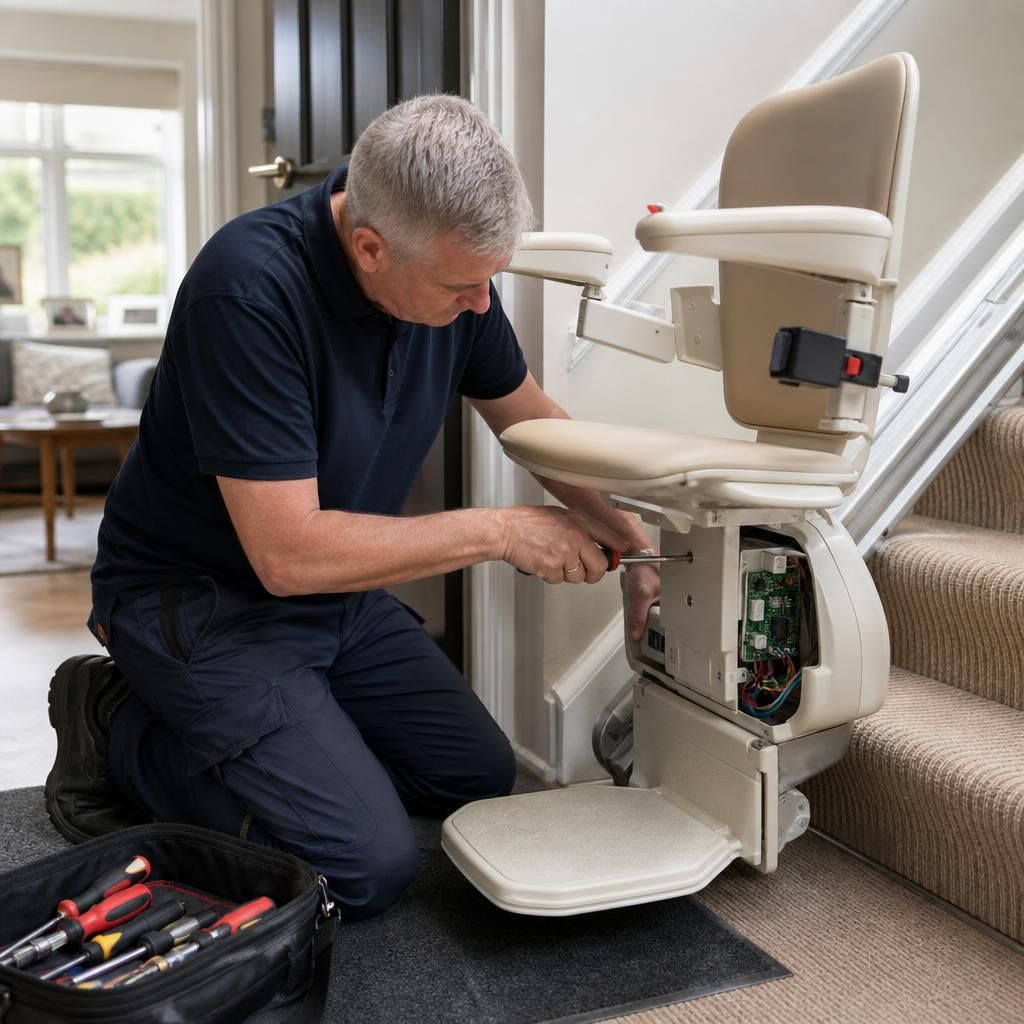
Arrange Your Stairlift Service or Aftercare Support
If your stairlift is due a service or showing changes in noise, movement, charging or safety operation, contact Independent Stairlifts to arrange qualified aftercare support. Please have your stairlift model and details of any fault available when you get in touch.