
What are the benefits of choosing reconditioned stairlifts for seniors?
Reconditioned stairlifts can provide safe, comfortable access at a lower cost than a new model, while making use of professionally inspected and refurbished equipment. When supplied, fitted and supported by a reputable installer, they can offer reliable performance, appropriate safety features and quicker availability, provided the stairlift is correctly matched to the user and staircase.
Reconditioned stairlifts can give seniors safe, dependable access between floors at a lower purchase cost than many new stairlifts. A suitable reconditioned model is professionally inspected, refurbished where necessary, safety-tested and installed to match both the user and the staircase. The quality of the assessment, refurbishment and aftercare is therefore just as important as the fact that the stairlift has been previously used.
Lower initial cost
The main advantage of a reconditioned stairlift is usually the lower upfront cost. This can make essential access equipment more affordable for an older person, particularly where the household needs to manage other expenses such as care, home adaptations or mobility equipment. The final price depends on the stair configuration, the model selected, installation requirements and any additional features needed for comfort or safety.
A lower purchase price should not mean accepting unsuitable equipment. The stairlift still needs to be correctly assessed, installed and supported. A reputable provider should explain what is included in the price, including installation, warranty cover, servicing arrangements and any potential removal or alteration costs.
Professionally checked and refurbished equipment
Reconditioned stairlifts are not simply second-hand units taken from one property and fitted in another. Before re-use, a suitable stairlift should be examined, cleaned and tested, with worn or defective components repaired or replaced as required. Its electrical systems, drive mechanism, controls, batteries, safety sensors, seat and carriage should all be checked as part of the preparation process.
The exact refurbishment process can vary between suppliers and models, so it is sensible to ask what inspections have been completed. You should also confirm whether the stairlift is supplied with a written warranty and who will deal with faults after installation.
Reliable safety features
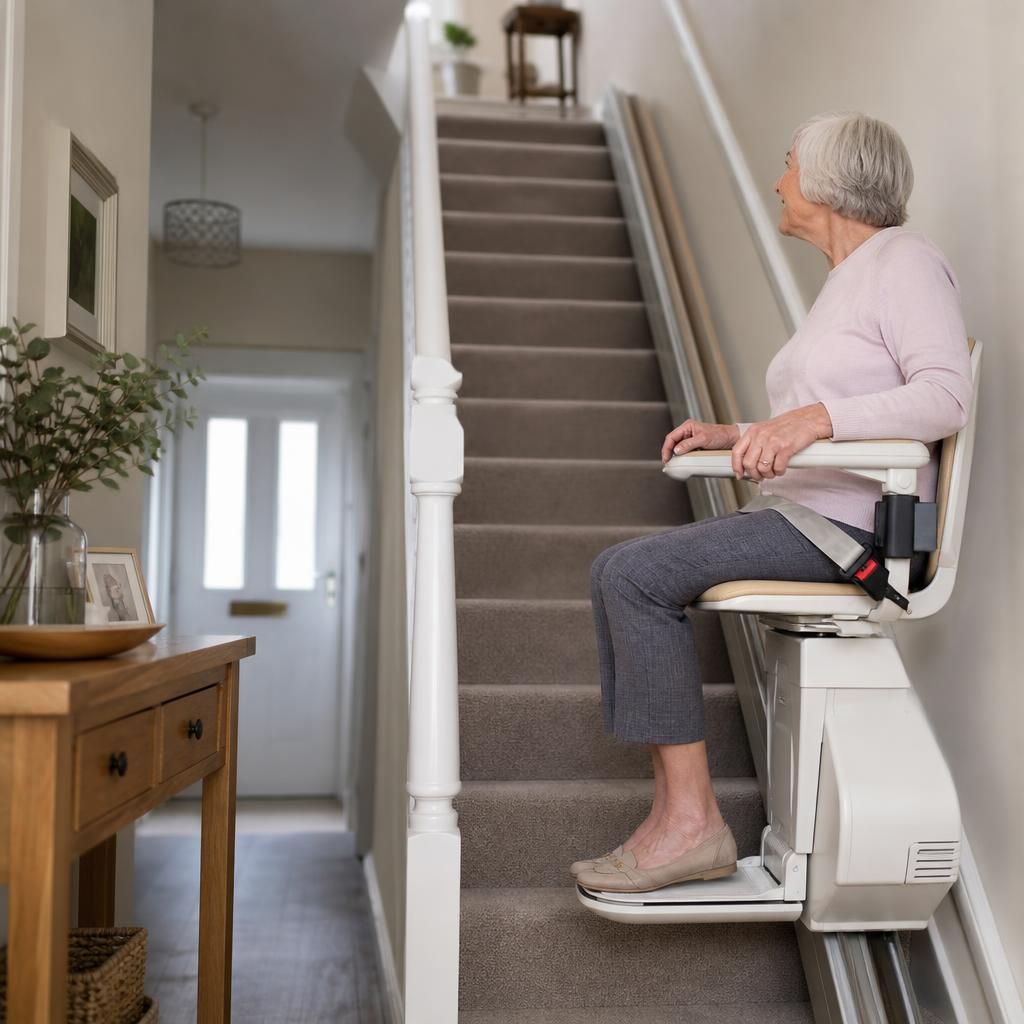
A reconditioned stairlift can include the essential safety features found on a new model. These may include a seat belt, swivel seat, obstruction sensors, braking systems, diagnostic controls and battery backup for use during a power interruption. The appropriate features depend on the user’s mobility, balance, strength, eyesight and ability to operate the controls safely.
Safety depends on more than the stairlift itself. The seat must be positioned correctly, the user must be able to transfer on and off it safely, and the controls must be within comfortable reach. An assessment should consider the whole journey, including the approach to the stairs, landings and the point where the user will leave the seat.
Quicker availability in some cases
Because reconditioned stairlifts may already be available, they can sometimes be supplied and installed sooner than a new stairlift that needs to be ordered or manufactured. This can be useful when a senior’s mobility has changed unexpectedly or when access to an upper floor is urgently needed.
Availability is not guaranteed, particularly for unusual staircases or specialist requirements. A curved staircase, narrow landing, unusually steep flight or need for a powered hinge rail may limit the available choices. The installer should confirm whether the proposed model is genuinely suitable rather than prioritising speed of installation.
Suitable options for different staircases
Reconditioned stairlifts are available for many standard straight staircases, and some previously used components can also be incorporated into bespoke curved installations. A straight stairlift may be suitable where the stairs run directly from one level to another without a bend or intermediate landing. Curved stairlifts are designed around the individual staircase and may require more detailed planning.
Outdoor stairlifts and models for more challenging layouts may also be available, although the choice can be more limited. The condition of the staircase, available parking space, exposure to weather and the user’s transfer needs must all be considered before a recommendation is made.
Comfort without unnecessary specification
A reconditioned stairlift can provide practical comfort without paying for features that the user will not use. Depending on the model, useful options may include a padded seat, adjustable armrests, a swivel mechanism, easy-to-operate controls and a foldable design that leaves more room on the stairs.
Features should be selected according to the senior’s abilities rather than treated as optional extras without purpose. For example, a powered swivel seat may assist someone who finds turning difficult, while a slimline or folding design can help other household members use the staircase. A home assessment helps identify which features are genuinely beneficial.
A more sustainable choice
Reconditioning allows usable equipment and components to remain in service rather than being discarded when a previous installation is no longer required. This can reduce unnecessary waste and make better use of materials already manufactured. It does not remove the need for responsible recycling: parts that are beyond safe use should be replaced and disposed of appropriately.
What to check before choosing one
- Whether the stairlift has been inspected, refurbished and safety-tested by a competent technician.
- Whether the proposed model is suitable for the user’s weight, posture, mobility and ability to transfer.
- Whether the rail and seat configuration fit the staircase, landings, doors and available walking space.
- Which safety and comfort features are included, and which are optional.
- What warranty is provided, what it covers and how faults are reported.
- Whether installation, demonstration, servicing and future call-outs are included or charged separately.
- Whether replacement batteries and other parts remain available for the model.
- Whether the stairlift can be removed or adapted later if the user’s circumstances change.
Understanding the limitations
Reconditioned does not automatically mean suitable, risk-free or equivalent to a new stairlift. The age, condition and previous use of the equipment can vary. Some models may have cosmetic wear, and a previously used stairlift may not offer every current design feature. The important considerations are its mechanical condition, safety performance, suitability and the quality of ongoing support.
It is also worth checking the terms of any service agreement. Batteries, call-outs, accidental damage and adaptations to the staircase may be treated differently under the warranty. Clear information before installation helps avoid unexpected costs later.
Professional installation and aftercare remain essential
Correct installation is necessary for safe and reliable operation. The installer should secure the rail appropriately, check clearances, test the controls and sensors, and demonstrate safe use to the senior and anyone helping with their care. The user should know how to fasten the belt, operate the controls, swivel the seat and respond if the stairlift stops.
Regular servicing can identify wear, battery deterioration and developing faults before they affect reliability. Keep the stairlift clean and free from obstructions, follow the operating instructions and report unusual noises, jerky movement, repeated stopping or reduced battery performance promptly.
For many seniors, a reconditioned stairlift is a practical balance between cost, safety and availability. The best choice is not simply the least expensive model; it is a properly refurbished stairlift that matches the person, the staircase and the expected level of use, with dependable installation, warranty protection and aftercare.
A reconditioned stairlift is a previously used unit that has been inspected, cleaned, repaired where necessary and safety-tested before being installed for another user. Its suitability depends on the quality of the refurbishment and how well the stairlift matches the senior’s mobility needs and staircase.
A competent technician should check the drive system, batteries, controls, safety sensors, seat, carriage and braking system. Any worn or defective components should be replaced before installation. The installer should also confirm that the seat position, rail layout, controls and transfer points are safe and comfortable for the user.
Before agreeing to a reconditioned stairlift, ask what work has been completed, which warranty is included and how faults will be handled. Professional installation, a clear demonstration and ongoing servicing are essential for reliable operation, particularly if the senior has limited balance, strength or confidence.
Arrange Your Reconditioned Stairlift Assessment
Arrange your reconditioned stairlift assessment to discuss your senior’s mobility needs, staircase and suitable available options. We can explain the refurbishment, installation, warranty and aftercare included before you decide.