
What should I do if I notice a decrease in the speed or performance of my stairlift?
A noticeable decrease in stairlift speed or performance may indicate a low battery, charging problem, obstruction or developing mechanical fault. Stop using the lift if it is jerking, stopping unexpectedly or behaving unusually, check that it is correctly parked and charging, and contact Independent Stairlifts for professional advice if the problem continues.
A decrease in stairlift speed or performance is usually linked to a low or poorly charged battery, an interruption to the charging supply, an obstruction, or a developing mechanical or electrical fault. Stop using the stairlift if it is jerking, stopping unexpectedly, travelling unevenly or behaving differently from normal. If the problem continues after basic checks, contact Independent Stairlifts for professional advice and avoid attempting a repair yourself.
First, note exactly what has changed. A lift that is consistently slower may have a different cause from one that only slows, stops or struggles at a particular point on the rail. Pay attention to whether:
- the lift is slow in both directions or only when travelling up or down;
- it starts normally but loses speed during the journey;
- the problem occurs every time or only occasionally;
- there are warning lights, audible alerts or messages on the display;
- the lift makes unusual noises, vibrates or moves with a jerk; or
- the problem began after a power cut, cleaning, a change in room temperature or an impact near the rail.
This information will help an engineer identify whether the issue is more likely to involve the batteries, charger, controls, drive system or safety sensors.
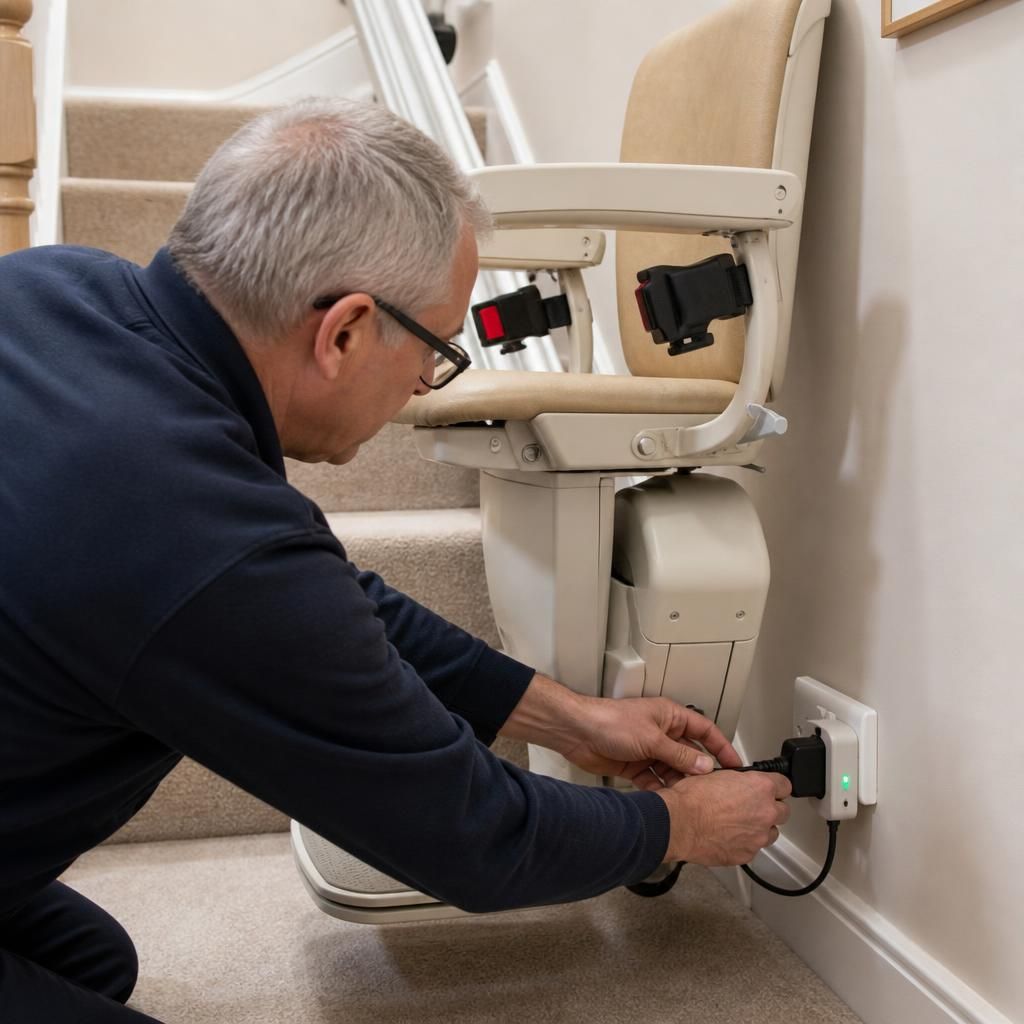
Check that the stairlift is charging correctly. Stairlift batteries can gradually lose capacity, particularly as they age. The lift may still operate but travel more slowly, stop before reaching the top or bottom, or sound an alert when under load. Confirm that the lift is parked in its designated charging position and that the charger is connected to the mains. If your model has a power switch or isolation switch, check that it has not been turned off accidentally.
Look for the charging indicator or other normal status signal described in your user information. Do not rely solely on the fact that the stairlift moves: a lift can have enough stored power for limited movement without charging properly. If there has been a power cut, allow the supply to return and check whether the normal charging indication resumes. Do not remove covers or try to test, replace or recharge internal batteries unless this is specifically authorised by the manufacturer and carried out by a suitably competent person.
Carry out a safe visual check for obstructions. Check the rail, footrest area, seat, arms and surrounding stairs for objects that could interfere with movement. Make sure clothing, bags, pets and other items are clear of the lift. If the stairlift has hinged or folding sections, check that they appear to be in their normal position. Never reach into the mechanism or place your hands near moving parts while the lift is operating.
Do not continue making journeys to see whether the stairlift improves. If it stops, judders, reverses unexpectedly or emits a burning smell, switch it off if it is safe to do so and keep it out of use. Do not bypass a safety sensor, hold down a control to override a fault, lubricate parts without instruction or attempt to adjust the rail, motor or gearbox. These actions can create a safety risk and may make the underlying fault harder to diagnose.
Some performance changes need prompt professional attention. Contact Independent Stairlifts if the lift remains slow after confirming that it is correctly parked and charging, or if the battery does not appear to hold its charge. An engineer may need to assess the batteries, charging contacts, charger, drive components, rail condition, controls and safety circuits. A service can also identify wear or contamination that is affecting movement before it develops into a complete breakdown.
Arrange advice without delay if the stairlift:
- stops between floors or fails to complete its journey;
- moves in a jerky, hesitant or uneven manner;
- has a burning smell, smoke, excessive heat or damaged wiring;
- shows a persistent fault warning or audible alarm;
- runs noticeably slower when carrying the user; or
- has recently been exposed to water, impact or another event that could have caused damage.
If you are on the stairlift when it stops, remain seated with the seat belt fastened if fitted and follow the instructions supplied for your model. Do not attempt to climb down the stairs while carrying or supporting yourself on the lift. If you cannot operate it safely, ask someone nearby for assistance and contact Independent Stairlifts or the relevant support service. If there is smoke, a burning smell or an immediate electrical danger, move away when safe and seek urgent assistance.
When reporting the issue, provide the stairlift model if known, where it stops, whether it is charging, any warning indicators and any unusual sounds or movements. Mention whether the problem is gradual or sudden and whether it affects every journey. Clear information helps the service team prepare appropriately and decide whether the lift should remain out of use until it has been inspected.
Regular servicing and timely battery replacement can help maintain consistent performance, but they cannot prevent every fault. Any persistent decrease in speed should therefore be treated as a maintenance issue rather than something to work around. A professional assessment is the safest way to restore reliable operation and confirm that the stairlift’s safety systems are functioning correctly.
A stairlift that has become noticeably slower may not be charging correctly. Check that it is parked in its designated charging position, connected to the mains and showing its usual charging indicator. If the lift has a power or isolation switch, make sure it has not been turned off accidentally.
A lift can still move with limited battery power even when charging has failed, so movement alone does not confirm that the charging system is working. If the stairlift remains slow, stops during a journey or the battery does not hold its charge, stop using it and contact Independent Stairlifts for advice. Do not remove covers or attempt to replace batteries, alter the charger or adjust the mechanism yourself.
Need Help With a Slower Stairlift?
If your stairlift remains slow or its performance has changed, stop using it if it is jerking, stopping or behaving unusually, and contact Independent Stairlifts for professional advice.