
What are the signs that my stairlift might need servicing beyond regular maintenance?
Signs that your stairlift needs servicing beyond routine maintenance include unusual noises, jerky or slower movement, unexpected stopping, unreliable controls, charging problems or safety sensors that do not respond correctly. Stop using it if it behaves unpredictably and arrange a professional inspection, particularly if the lift stops between floors or shows a fault warning.
A stairlift may need servicing beyond its regular maintenance when its performance, controls or safety features change. Warning signs include unusual noises, jerky or slower movement, unexpected stops, charging problems, unreliable controls, repeated fault messages, or sensors that do not respond correctly. These symptoms can indicate wear, an electrical fault, a battery problem or an issue with the drive system that requires professional diagnosis.
Arrange a professional inspection if you notice any of the following:
- Jerky, hesitant or uneven travel: The stairlift should move smoothly from the bottom to the top of the rail. Juddering, surging, hesitation or a noticeable change in speed may indicate a problem with the motor, drive mechanism, batteries, rail or control system.
- Unusual noises: Grinding, clicking, squealing, knocking or repeated buzzing should not be ignored, particularly if the noise is new or becomes louder during travel. Some sounds may be caused by an obstruction, but persistent noise can indicate mechanical wear or a component that needs adjustment.
- Unexpected stopping: A stairlift that stops part-way along the stairs, stops at the wrong position or requires repeated attempts to complete a journey needs attention. Do not assume that switching it off and on has resolved the underlying fault.
- Reduced speed or performance: Slower travel, difficulty starting or a lift that struggles on part of the rail may point to weakening batteries, a drive problem or an electrical issue. Continued use can place additional strain on the system.
- Charging difficulties: If the stairlift does not charge when parked correctly, loses power quickly or repeatedly reports a low battery, the charging points, batteries or charger may need testing. Keeping the lift on its designated charging point when it is not in use can help, but it will not correct a failed battery or charging fault.
- Unreliable controls: Delayed responses, intermittent operation, a handset that works only from certain positions or controls that do not respond consistently should be checked. This applies to the arm controls, remote controls and any call or send switches.
- Safety sensors or safety edges not working correctly: These features should stop or prevent movement when they detect an obstruction. If the lift continues moving, stops without an obvious obstruction, or repeatedly displays a sensor fault, stop using it and arrange an urgent inspection.
- Seat, swivel or restraint problems: A seat that does not lock securely, a swivel mechanism that feels loose, a footrest that moves unexpectedly or a safety belt that will not fasten properly can affect safe transfers. Do not use the lift until the problem has been assessed.
- Visible damage or looseness: Report damaged wiring, exposed components, fluid or debris near the rail, loose fittings, unusual movement in the seat or any change in the way the lift meets the top or bottom landing.
- Repeated fault warnings: A fault code or warning light that returns after a reset is a sign that the cause needs investigating. Make a note of the message and when it appears, as this can help the engineer identify the problem.
Regular maintenance helps identify wear and keep the stairlift operating correctly, but it cannot prevent every fault. Batteries, switches, sensors, drive components and electrical connections can deteriorate between planned visits. Changes in the home environment, such as an obstruction on the stairs, a moved charging point or damp affecting an outdoor stairlift, can also affect operation.
If the stairlift behaves unpredictably, stops between floors, emits a burning smell, shows exposed wiring or has a safety feature that is not working, stop using it immediately. If you are safely positioned on a landing, leave the stairlift there and contact a qualified stairlift engineer. If you are stranded on the stairs, use the supplied emergency procedure or communication method, if it is safe to do so, and seek assistance. Do not attempt to climb around the lift or dismantle it.
You can carry out simple user checks, such as removing an obvious obstruction, ensuring the seat is correctly positioned, checking that the power supply has not been switched off and confirming that the lift is parked on its charging point. Do not remove covers, bypass sensors, alter wiring or replace parts yourself. A professional can test the batteries, charger, motor, safety circuits, rail and controls, then determine whether adjustment, repair or replacement is appropriate.
When reporting a problem, describe what happened, where on the stairs it occurred, whether the lift was carrying a passenger, any warning message shown and whether the issue is intermittent. This information helps the engineer prepare for the visit and assess how urgently the stairlift needs attention.
Signs that a stairlift needs servicing beyond routine maintenance include unexpected stopping, jerky movement, unusual noises, charging problems or changes in its safety features. These faults can develop between scheduled visits and should be assessed by a qualified stairlift engineer rather than ignored.
Stop using the stairlift and arrange an urgent inspection if it moves unpredictably, stops between floors, gives a repeated fault warning, emits a burning smell, has exposed wiring or continues moving when a safety sensor detects an obstruction. Do not bypass sensors, remove covers or attempt electrical repairs. If the lift is safely positioned on a landing, leave it there and contact us for advice. If you are stranded on the stairs, follow the supplied emergency procedure if it is safe to do so and seek assistance.
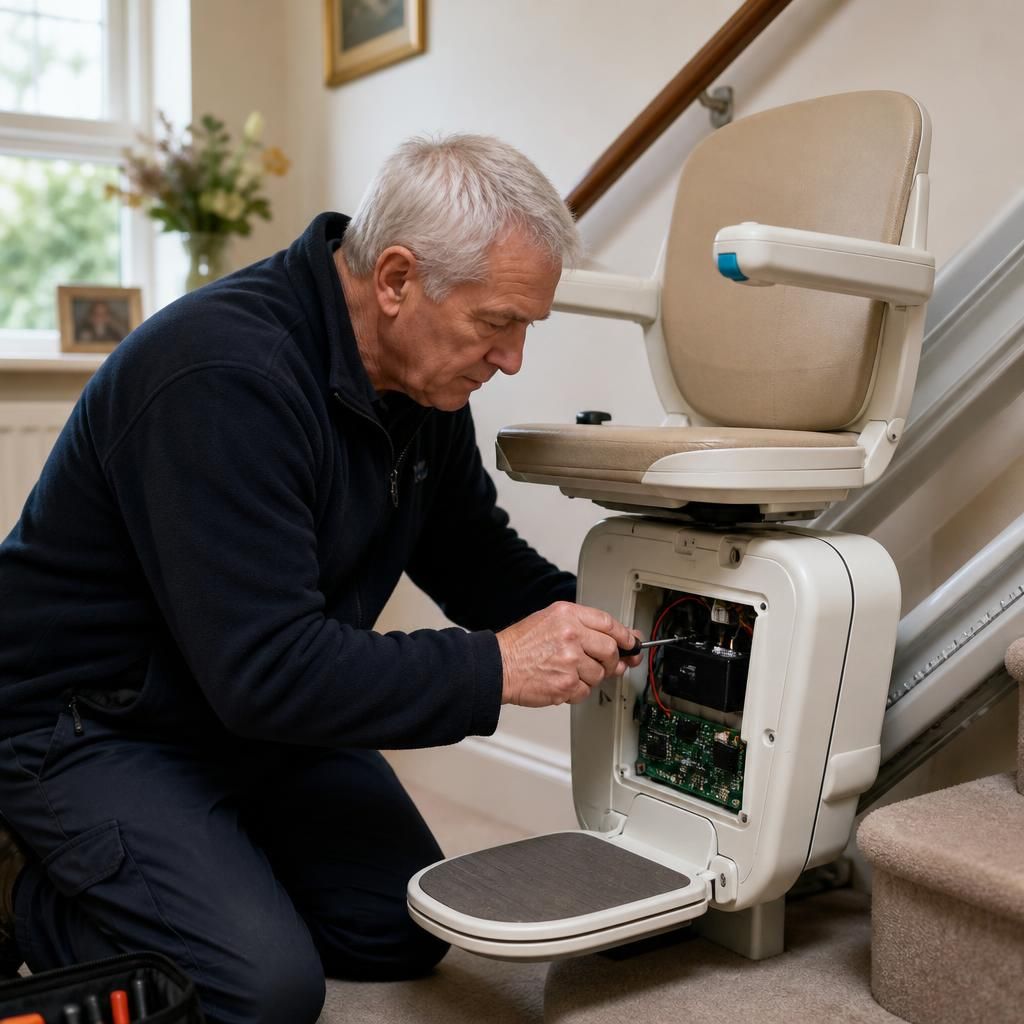
Contact Us to Arrange a Stairlift Inspection
If your stairlift is showing unusual noises, jerky movement, charging problems or repeated fault warnings, contact us to arrange a professional inspection. We can assess the issue and advise whether servicing or repair is required.