
Is it necessary to opt for professional repair for minor issues, or can I attempt to fix them myself?
For minor stairlift issues, you may carry out simple user checks such as removing an obstruction, checking the key and ensuring the stairlift is switched on and charged. Do not remove covers or attempt electrical or mechanical repairs, as even a small fault can affect safety; contact a qualified stairlift engineer for diagnosis and repair.
For a minor stairlift issue, you can carry out a few basic user checks, but repairs should normally be left to a qualified stairlift engineer. Safe checks include removing an obvious obstruction, confirming that the key is inserted and turned on, checking the power or isolation switch, and ensuring the stairlift is correctly positioned on its charging point. Do not remove covers, dismantle components or attempt electrical, battery or mechanical repairs yourself.
Stairlifts contain moving parts, electrical circuits, safety sensors and braking systems that must work together. A fault that appears minor, such as a pause, a warning light or a change in movement, may indicate a problem with the batteries, charging system, rail, drive mechanism, safety edges or control system. An incorrect adjustment or repair could leave the stairlift unreliable or affect its ability to stop safely.
Before contacting an engineer, you can perform the following checks, provided the stairlift is stationary and it is safe to do so:
- Check that the key is inserted and switched to the operating position.
- Check the main power or isolation switch, including any switch near the top or bottom of the stairs.
- Make sure the stairlift is fully on its charging point and allow it to charge as recommended in the user instructions.
- Look for an obvious object affecting the footrest, seat, armrests, rail or safety edges.
- Confirm that the seat, armrests or swivel mechanism are in the correct travelling position, if your model requires this.
- Check the display or indicator lights and make a note of any error message, unusual sound or change in behaviour.
Only carry out checks described in your stairlift user manual. Do not repeatedly operate the controls to see whether the problem clears, and do not bypass a safety sensor or interlock. If the stairlift is obstructed, switch it off where this can be done safely and remove only the visible obstruction without reaching into the mechanism.
Professional repair is needed if the issue returns after these checks, if the stairlift will not charge or move, or if it is making unusual noises or movements. An engineer should also investigate reduced speed, jerky travel, unexpected stops, a seat that does not lock correctly, a loose or damaged seat belt, problems with the swivel seat, repeated warning lights or any fault affecting the controls. These symptoms should not be treated as routine wear without assessment.
Stop using the stairlift and seek urgent technical advice if you notice a burning smell, smoke, sparks, overheating, exposed wiring, sudden uncontrolled movement or a failure of the braking system. Keep clear of the stairlift and stairs while awaiting assistance. If someone is stranded on the stairs, help them only if you can do so without putting either person at risk; do not attempt to move or carry them unsafely.
A qualified engineer can identify the underlying cause, test the safety systems and use model-specific parts and procedures. This is particularly important for battery replacement, electrical faults, drive components, charging equipment, safety switches, belts and rail mechanisms. Unauthorised repairs may also affect warranty or service arrangements, depending on the equipment and its terms.
In practice, user checks are appropriate for simple operating problems, but a persistent or unexplained fault requires professional repair. If you are unsure whether a symptom is safe to investigate, stop using the stairlift and contact Independent Stairlifts for advice or an engineer assessment. Providing the model details, the symptoms, any displayed fault code and what happened immediately before the problem can help the engineer prepare for the visit.
Minor operating problems may be suitable for basic user checks, but internal stairlift repairs should always be carried out by a qualified engineer. You can safely check that the key and power switch are on, the lift is positioned correctly on its charging point, and no visible object is obstructing the seat, footrest, rail or safety edges.
Do not remove covers, alter components or bypass safety sensors. If the fault returns, the stairlift moves unevenly, stops unexpectedly, will not charge, or displays a warning, stop using it and arrange a professional assessment. An engineer can identify the underlying cause and test the drive system, batteries, charging equipment and safety mechanisms before the stairlift is used again.
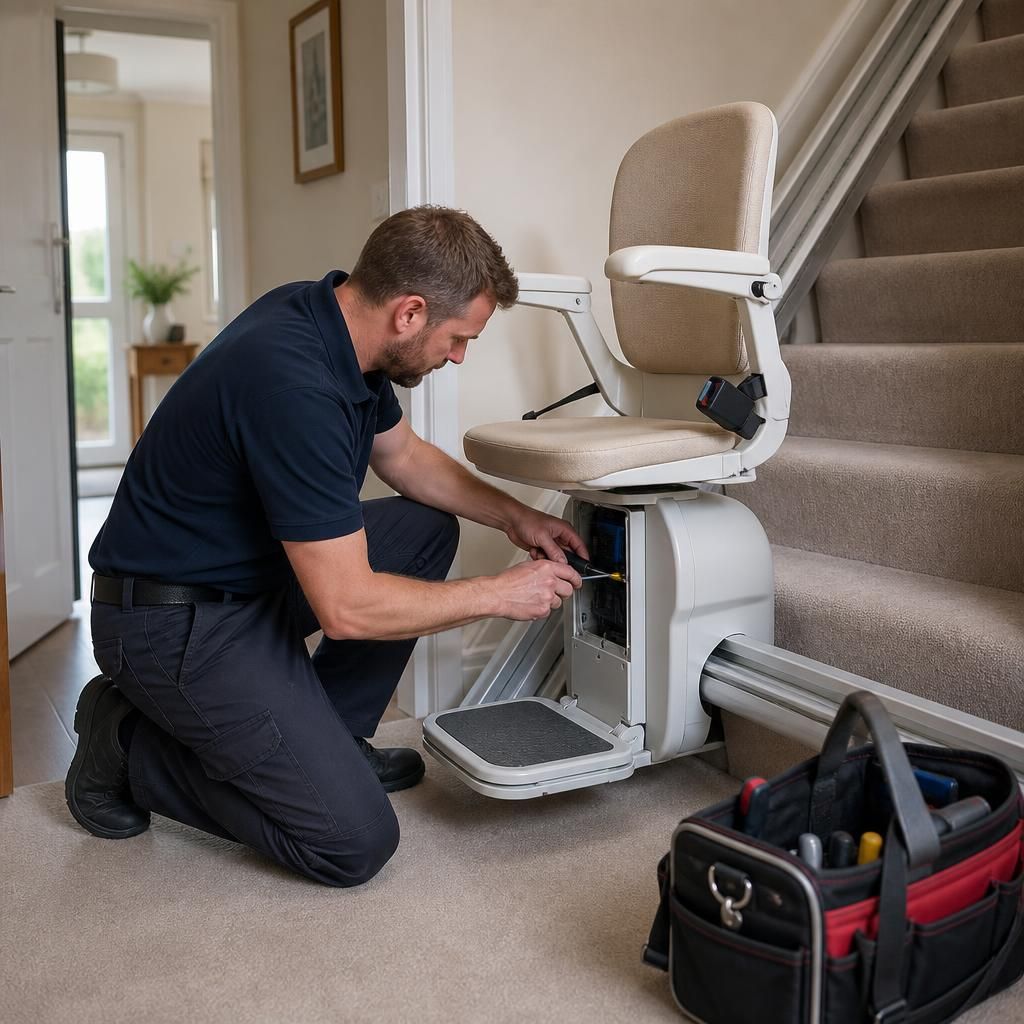
Arrange a Professional Stairlift Repair Assessment
If a minor stairlift issue returns or you are unsure whether it is safe to investigate, contact Independent Stairlifts to arrange a professional repair assessment. Our qualified engineers can identify the cause and check the stairlift’s safety systems before further use.