
How often should a stairlift be serviced to ensure safe and reliable operation?
A stairlift should usually receive a professional service at least once a year, or as often as the manufacturer recommends. It may need servicing sooner if it is used heavily, develops unusual noises or movement, shows reduced performance, or has been affected by a fault or change in its operating environment.
A stairlift should normally have a professional service at least once a year, or at the interval specified by the manufacturer. Regular servicing checks the lift’s safety systems, mechanical components, electrical connections and charging equipment so potential faults can be identified before they affect reliable operation. A service should be arranged sooner if the stairlift is used heavily, develops unusual noises or movement, shows reduced performance, or has been affected by a fault, impact or change in its operating environment.
The correct interval can vary according to the model, age and condition of the stairlift. The manufacturer’s instructions and any service recommendations provided at installation should therefore be treated as the starting point. A newer lift in light domestic use may continue to operate reliably between annual services, while an older lift or one used several times each day may benefit from more frequent professional attention.
More frequent servicing may also be appropriate where:
- the stairlift is used by more than one person or makes repeated journeys throughout the day;
- the user has a higher body weight within the lift’s stated limit, or transfers on and off the seat place additional strain on the equipment;
- the stairlift is installed outdoors or in an area exposed to damp, dust, temperature changes or other harsh conditions;
- the track, seat or controls have been modified, moved or exposed to accidental damage;
- the lift has previously needed repairs or has been out of use for an extended period; or
- the manufacturer, engineer or warranty terms specify a shorter service interval.
A professional service is more than a quick visual inspection. The engineer will typically examine the track, drive system, seat, armrests, footrest, swivel or powered mechanisms, safety sensors, seat belt, controls and charging points. They may also check the batteries, wiring, limit switches, brushes, rollers and other model-specific components. The lift should be run through its normal operating cycle to identify hesitation, uneven movement, stopping problems or changes in speed.
During the appointment, the engineer can clean and adjust suitable components, tighten connections where necessary and identify parts that are worn or approaching the end of their serviceable life. They should explain any fault found, advise whether it requires immediate attention and distinguish between essential safety work and preventative maintenance. Keeping a record of the service date, inspection findings and any parts replaced makes it easier to plan future maintenance.
Between professional services, carry out only the basic checks described in the operating instructions. Keep the track clear, make sure the charging points are not obstructed, check that the seat belt fastens correctly and look for visible damage, loose coverings or objects on the stairs. Keep the lift and track clean in the way recommended for the model, but do not apply household oils or lubricants unless the manufacturer specifically permits this. Incorrect products can attract dirt or affect the drive system and safety components.
Do not wait for the next scheduled service if the stairlift behaves differently from normal. Contact us for advice if it makes repeated or unusual noises, judders, stops unexpectedly, travels more slowly, fails to charge, displays a fault indication or needs repeated resets. If there is burning smell, smoke, visible electrical damage, a damaged seat belt or another immediate safety concern, stop using the lift, switch it off if it is safe to do so and arrange professional assistance.
Regular servicing cannot prevent every fault, and it does not replace correct daily use or attention to warning signs. It does, however, provide a planned opportunity to assess wear, test safety features and deal with developing problems before they lead to avoidable disruption. For most domestic stairlifts, arranging a professional service every year and following the manufacturer’s guidance is a sensible maintenance routine; the right interval for your lift can then be adjusted according to its use, condition and installation environment.
A professional stairlift service should usually be arranged at least once a year, unless the manufacturer or engineer recommends a shorter interval. Annual servicing allows the engineer to assess the drive system, track, safety sensors, controls, seat belt, batteries and charging equipment before wear develops into a fault.
The recommended interval may be shorter if the lift is used heavily, installed outdoors, exposed to damp or dust, or has previously needed repairs. Arrange an earlier inspection if you notice unusual noises, juddering, slower movement, unexpected stops, charging problems or repeated fault indications. Stop using the stairlift and seek professional advice immediately if there is smoke, a burning smell, visible electrical damage or a damaged seat belt.
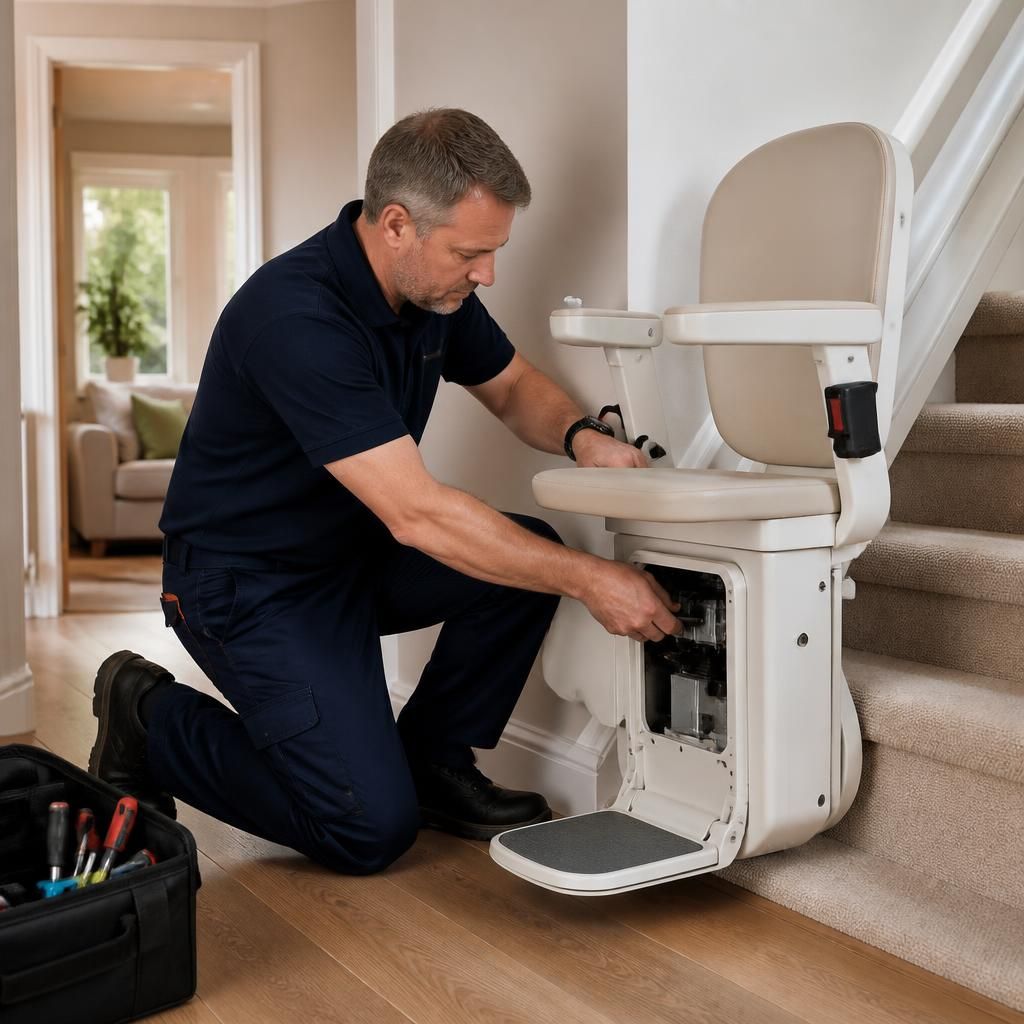
Arrange Your Stairlift Service
Arrange your stairlift service with Independent Stairlifts to keep its safety systems, drive components and charging equipment checked by a qualified engineer. Contact us to book an inspection or discuss any changes in performance.