
Can regular stairlift maintenance prevent emergency repairs or replacements?
Yes. Regular professional stairlift maintenance can identify worn components, battery problems and developing faults before they cause an emergency breakdown, helping to extend the lift’s working life and reduce the risk of premature replacement, although it cannot prevent every fault.
Yes. Regular professional stairlift maintenance can reduce the risk of emergency repairs and premature replacement by identifying wear, battery deterioration, loose connections and developing faults before they affect safe operation. It cannot prevent every breakdown, particularly where a component fails suddenly or the stairlift is affected by damage or a power problem, but it makes avoidable faults less likely and helps keep the lift reliable.
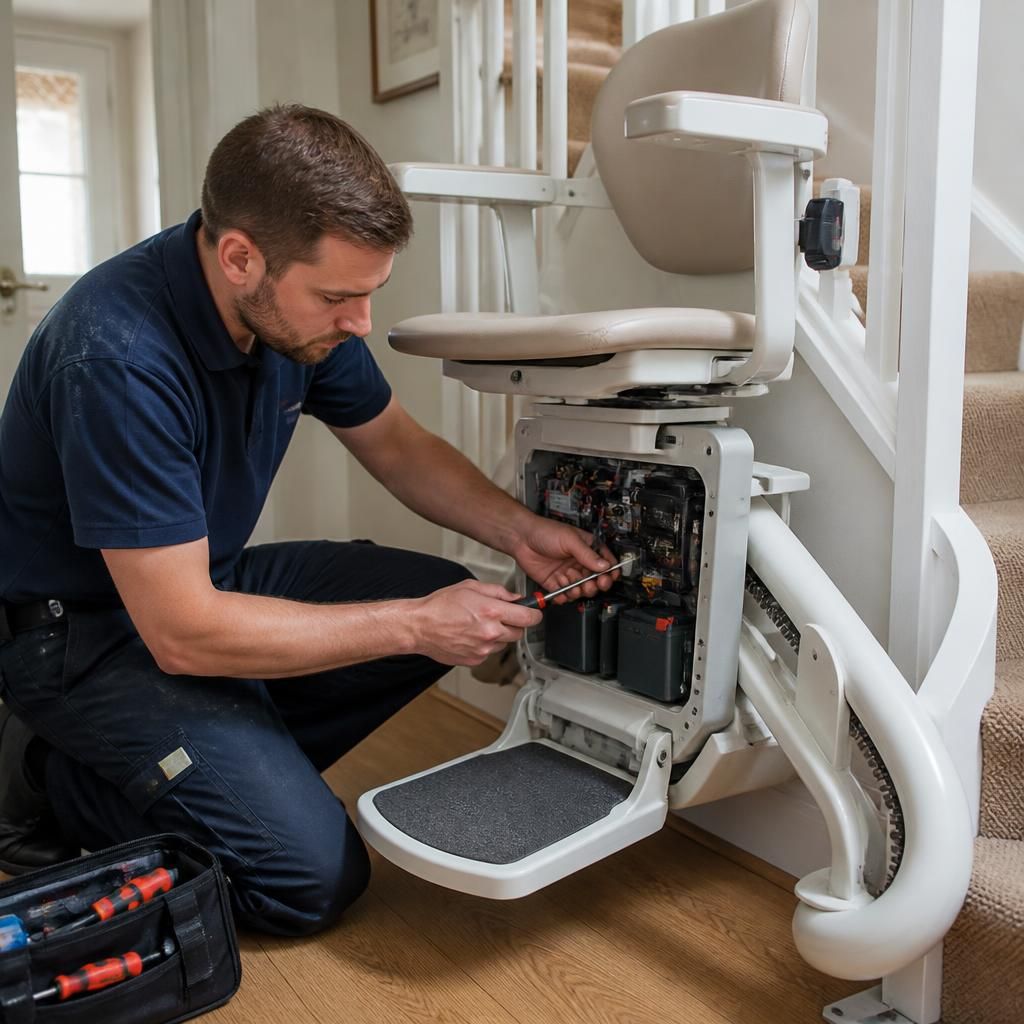
Maintenance is preventative rather than simply reactive. During a service, an engineer checks the stairlift’s key mechanical, electrical and safety systems. This commonly includes the rails, drive mechanism, seat, armrests, footrest, swivel and locking functions, sensors, controls, charging points and batteries. The engineer can clean and adjust components, identify unusual wear and recommend repairs before a minor issue develops into a larger failure.
Battery condition is especially important. Stairlift batteries gradually lose capacity and may eventually struggle to hold a charge. Early signs can include shorter journeys between charges, slower operation, repeated low-battery warnings or the lift failing to respond after being parked correctly. A service can identify battery deterioration and confirm that the charging system is working properly. Replacing batteries at the appropriate time is usually more practical than waiting for a complete loss of power.
Routine checks can also reduce wear on parts that work together. For example, a misaligned or contaminated rail, a worn drive component or a loose connection may place additional strain on the motor and controls. Dealing with the underlying issue early can help avoid secondary damage, an inconvenient breakdown or the need to replace several components at once. Keeping the stairlift clean and using it as intended between services supports this preventative approach.
Regular servicing may extend the useful life of the stairlift. A well-maintained lift is more likely to operate within the manufacturer’s design limits, and faults can be recorded and monitored over time. This gives the engineer a clearer maintenance history and helps identify recurring problems. However, maintenance does not make an older stairlift indefinitely reliable. Parts can become obsolete, damage can occur unexpectedly and a replacement may eventually be more economical or appropriate than continued repair.
The correct service interval depends on the stairlift model, its age, how frequently it is used, the environment and the manufacturer’s recommendations. A lift used several times a day, installed in a demanding environment or showing signs of wear may need closer attention than one used occasionally. Follow the servicing schedule provided for your model and arrange an assessment if the stairlift has been unused for a prolonged period, has recently been moved or has developed a fault.
Between professional services, you can reduce avoidable problems by:
- keeping the rail, charging points and surrounding area clear of dust, objects and obstructions;
- parking the stairlift at its designated charging point when it is not in use;
- checking that the seat, armrests, footrest and swivel mechanism lock correctly before travelling;
- using the controls and safety belt as instructed;
- reporting unusual noises, jerky movement, reduced speed, repeated warning sounds or charging problems promptly; and
- avoiding attempts to dismantle the lift, alter electrical components or fit unapproved parts.
Do not continue using the stairlift if it moves unpredictably, stops before reaching the end of the rail, gives a persistent fault indication, has damaged wiring or presents any other immediate safety concern. Switch it off if it is safe to do so, keep the area clear and contact a qualified stairlift engineer. Minor issues can become more serious when the lift is repeatedly operated despite a warning.
In summary, planned maintenance is one of the most effective ways to reduce emergency repairs and delay premature replacement. It helps identify faults early, maintains safety features, supports battery performance and provides evidence about the condition of the lift. Arrange professional servicing at the recommended interval and seek advice promptly whenever the stairlift’s performance changes.
Regular stairlift maintenance can prevent emergency repairs by identifying battery deterioration before the lift loses power or becomes unreliable. Batteries gradually lose their ability to hold a charge, which may cause shorter journeys, slower movement, repeated low-battery warnings or difficulty restarting after the stairlift has been parked.
During a professional service, the engineer can check the batteries, charging points and associated electrical connections, then advise whether cleaning, adjustment or replacement is needed. Replacing batteries when their condition has clearly declined is generally safer and more practical than waiting for a complete failure, particularly if the stairlift is used every day.
Keep the stairlift parked at its designated charging point when it is not in use and report charging problems promptly. If it stops responding, gives a persistent warning or operates unpredictably, do not repeatedly try to use it. Arrange an assessment so the underlying fault can be dealt with before it causes further damage or leaves you without safe access between floors.
Arrange your professional stairlift maintenance check
Arrange a professional stairlift maintenance check with Independent Stairlifts to identify developing faults early and keep your lift operating safely. Contact our team to book an assessment.