
Can I service my stairlift myself, or should I always hire a professional?
You can carry out simple user checks, such as keeping the track clear and checking for visible damage, but stairlift servicing should be carried out by a qualified professional. Servicing involves safety-critical electrical, mechanical and battery checks that should not be attempted without the appropriate training and equipment.
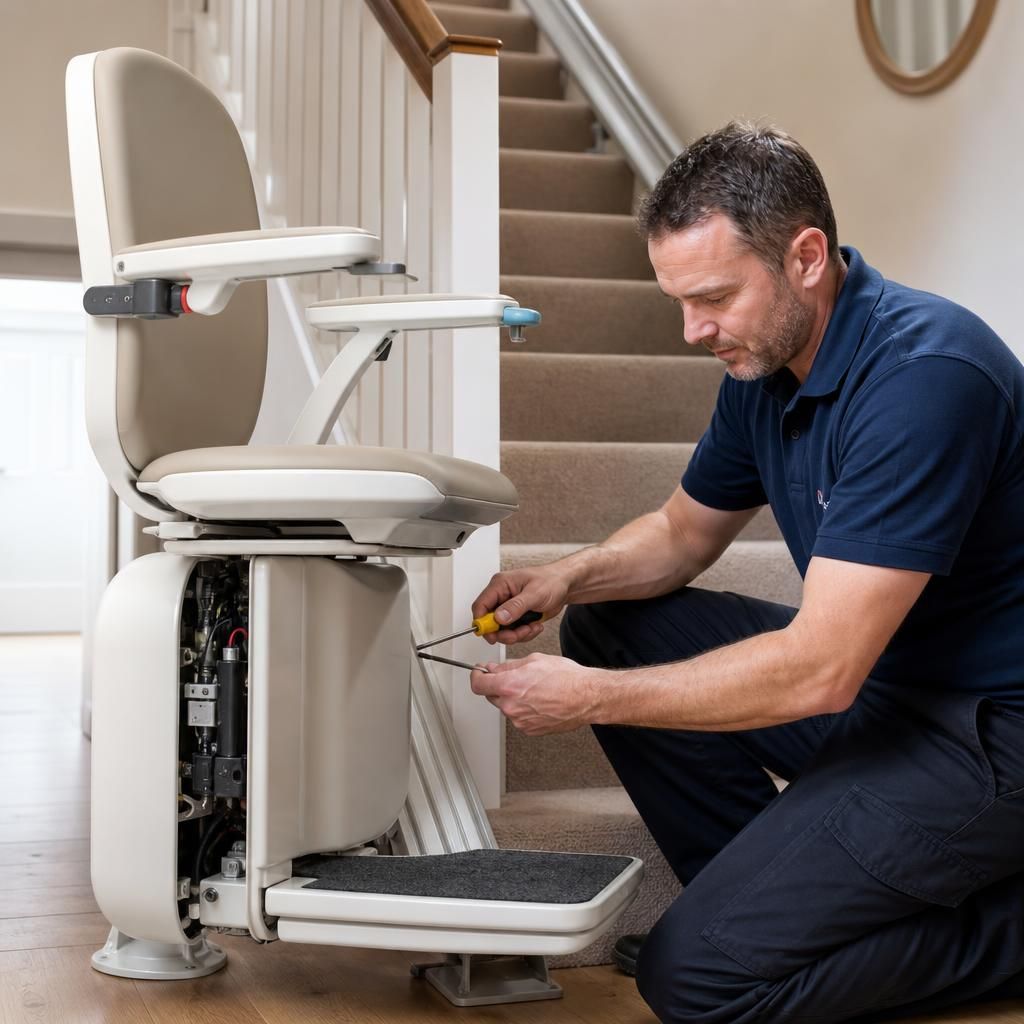
Stairlift servicing should be carried out by a qualified professional. You can perform simple user checks and routine cleaning, but a full service involves safety-critical mechanical, electrical and battery inspections that require the right training, tools and model-specific knowledge. Attempting to dismantle or adjust the stairlift yourself could create a safety risk, cause further damage or affect warranty and service arrangements.
There is an important difference between basic user care and professional servicing. User care helps identify obvious problems and keeps the stairlift ready for use. A service is a structured inspection and test of the parts that control safe movement, stopping, charging and passenger protection.
Checks you can safely carry out include:
- Keeping the stairlift track, steps and landing clear of coats, toys, furniture and other obstructions.
- Checking for visible damage to the seat, armrests, footrest, covers, track or charging points.
- Wiping dust and surface dirt from accessible areas with a soft, dry or slightly damp cloth, following the instructions supplied with your model.
- Checking that the seat, armrests and footrest are positioned as they should be and that nothing is preventing them from moving normally.
- Making sure the stairlift is parked at its charging point when it is not in use, where your model’s instructions require this.
- Observing whether the stairlift starts, stops and travels as expected, without unusual noise, jolting or hesitation.
- Checking the handset or diagnostic display for warning lights or messages, then referring to the user manual if one appears.
Do not continue using the stairlift simply because it still moves. Stop and seek advice if it makes unusual noises, moves unevenly, fails to charge, stops unexpectedly, shows a fault message, or has damaged safety equipment. If the stairlift stops between floors, follow the instructions in your user guide and contact the appropriate service team rather than trying to force it to move.
Do not attempt to carry out these tasks yourself:
- Removing covers or accessing wiring, circuit boards, motors or other internal components.
- Testing, replacing or disconnecting batteries unless this is specifically authorised and explained by a qualified technician for your model.
- Adjusting the track, drive mechanism, brakes, limit switches, sensors or safety edges.
- Bypassing a safety switch, sensor or interlock to make the stairlift operate.
- Applying lubricant or cleaning products to the rail or moving parts unless the manufacturer’s instructions expressly require it.
- Carrying out electrical testing or making repairs without the correct equipment and technical knowledge.
A professional service normally includes inspection of the rail and fixings, drive system, seat and moving parts, controls, sensors, safety edges, charging system, batteries and stopping functions. The technician can also identify wear that is not obvious during everyday use and confirm whether adjustments or replacement parts are needed. The exact checks depend on the stairlift’s design, age, condition and installation, including whether it is straight, curved or installed outdoors.
Professional servicing is also appropriate for reconditioned stairlifts. Although a reconditioned model has been inspected before installation, its ongoing performance still depends on regular checks and correct use. Batteries and other wear components can deteriorate over time even when there is no obvious external damage.
Use the servicing schedule in your documentation as a guide, and arrange an inspection sooner if the stairlift has developed a fault, has been exposed to water or extreme weather, has been unused for a prolonged period, or has undergone building work nearby. Keep records of services and report any change in performance, however minor it may seem.
In short, routine cleaning and visual checks are suitable for the user, but servicing and repairs should be left to a qualified stairlift professional. If you are unsure whether a problem is safe to investigate, leave the stairlift switched off or unused as appropriate and contact Independent Stairlifts for advice and a safe assessment.
You can carry out simple visual checks and routine cleaning, but stairlift servicing should be completed by a qualified professional. A full service includes safety-critical checks of the drive system, rail, controls, sensors, stopping functions, charging system and batteries, which require suitable equipment and model-specific knowledge.
Safe user checks include keeping the track and steps clear, looking for visible damage, wiping accessible surfaces with a soft cloth and checking for warning lights or unusual movement. Do not remove covers, adjust the rail or safety switches, access wiring, test batteries or apply lubricant unless your user manual specifically instructs you to do so.
If the stairlift jolts, makes unusual noises, fails to charge or stops unexpectedly, stop using it and contact Independent Stairlifts for advice. Continuing to use a stairlift that appears to be working can allow a developing fault to become a safety issue or cause further damage.
Arrange Professional Stairlift Servicing
Arrange professional stairlift servicing with Independent Stairlifts to check your lift’s safety systems, moving parts, charging system and batteries. Contact our team to book an assessment or discuss any concerns about your stairlift’s performance.