
Are there any warning signs that indicate my stairlift needs immediate servicing or repair?
Warning signs that your stairlift needs immediate servicing or repair include sudden stops, jolting movement, unusual noises, reduced speed, difficulty starting, repeated fault warnings, or problems with the seat, armrests, footplate or safety belt. Stop using the stairlift if it behaves unpredictably, fails to stop correctly or shows visible damage, and contact a qualified stairlift engineer for advice without delay.
Warning signs that your stairlift needs immediate servicing or repair include sudden stopping, jolting, unusual noises, reduced speed, difficulty starting, repeated fault warnings and any problem with the seat, armrests, footplate or safety belt. Stop using the stairlift and contact a qualified stairlift engineer without delay if it behaves unpredictably, fails to stop correctly, moves when it should not, or shows visible damage.
Stop using the stairlift immediately if:
- It stops unexpectedly on the stairs or cannot complete its journey reliably.
- The lift starts, stops or changes speed abruptly, or its movement becomes jerky or uneven.
- It travels without the control being operated, fails to respond to the controls, or does not stop when the control is released.
- The stairlift does not stop correctly at the top or bottom of the staircase.
- You notice smoke, a burning smell, sparks, signs of overheating or damaged electrical wiring.
- The seat swivels unexpectedly, does not lock securely, or the armrests, footplate or safety belt are loose or damaged.
- The lift appears to have come off its normal track, has suffered an impact, or has any cracked, bent or loose components.
- A safety sensor, obstruction sensor or other safety feature does not appear to work correctly.
Do not try to get off the stairlift while it is moving, and do not continue using it to see whether the problem clears. If it stops between floors, remain seated with the safety belt fastened if it is safe to do so, use the alarm or telephone to obtain assistance, and follow the instructions supplied with your stairlift. Do not attempt to climb over the lift or move it manually unless an engineer specifically advises you how to do so.
Some warning signs require prompt attention even when the stairlift is still operating. Arrange a service or repair if you notice a gradual loss of speed, a shorter operating range between charges, repeated low-battery messages, difficulty charging, or a charging light that does not behave as expected. A stairlift that needs repeated resets, regularly displays a fault code, or requires the control to be held in an unusual position should also be checked rather than used as normal.
Unusual sounds can help identify a developing fault. A new grinding, scraping, clicking, knocking or squealing sound may indicate an issue with the drive system, track, motor, gears, bearings or another moving part. A small change in sound is not necessarily an emergency, but it should not be ignored if it is persistent, becoming louder, accompanied by vibration, or associated with a change in movement.
Pay particular attention to changes in the stairlift’s safety features. The seat should remain secure during travel, the swivel mechanism should lock in the correct position, and the safety belt should fasten and release properly. The footplate should not catch on the stairs or move unexpectedly, and the armrests should remain stable. If any of these parts prevents a secure seating position, stop using the lift until it has been inspected.
Before contacting us, note what happened without carrying out a repair. Record any fault message, when the problem occurs, whether it happens in one direction or at a particular point on the track, and whether the batteries are charging normally. A photograph of visible damage may also help the engineer prepare. Keep the stairlift switched off if instructed, but do not remove covers, bypass sensors, alter wiring, lubricate components or dismantle the lift. These actions can create additional faults and may compromise its safety.
Some apparent faults have simple causes, such as a power switch being off, the lift not being parked correctly on its charging point, an obstruction on the track, or a control not being fully released. You may carry out only the basic checks described in your stairlift’s user instructions, provided the lift is stationary and there is no sign of electrical, mechanical or safety-related damage. If the fault returns after a permitted reset or basic check, arrange professional advice rather than repeatedly restarting the stairlift.
A qualified engineer can assess the batteries, charging system, drive components, track, controls and safety mechanisms, then confirm whether the lift is safe to use. Prompt servicing may resolve a developing fault before it causes a complete breakdown, but a stairlift that is stopping unpredictably, moving abnormally or showing visible damage should remain out of use until professionally inspected.
The most urgent stairlift warning signs are unpredictable movement, failure to stop correctly, sudden jolting, smoke, a burning smell or visible damage. Stop using the lift immediately if any of these occur, keep the safety belt fastened if it is safe to remain seated, and contact a qualified stairlift engineer for advice.
Do not attempt to climb over the stairlift, move it manually, bypass a safety sensor or remove its covers. If the lift has stopped between floors, use the alarm or telephone to obtain assistance and follow the instructions supplied with your stairlift.
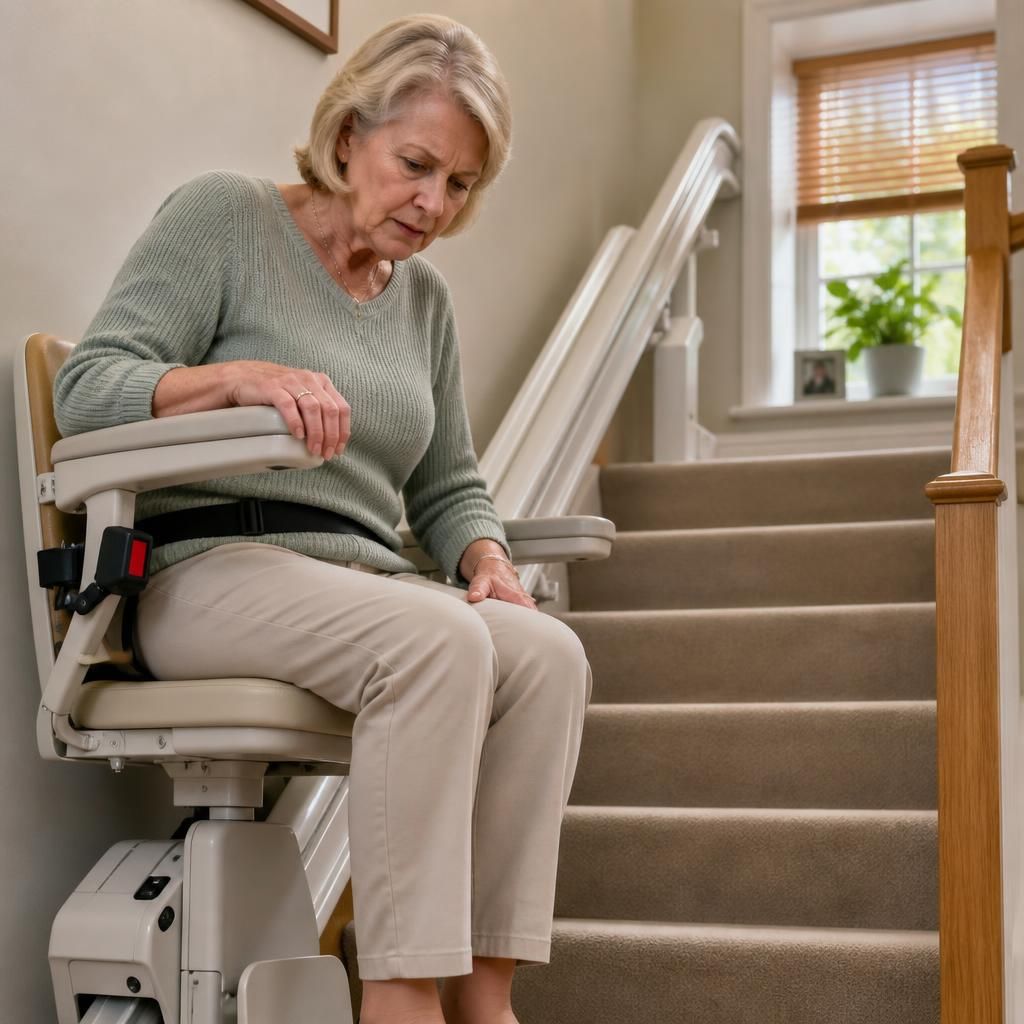
Arrange a stairlift inspection or repair
If your stairlift shows any warning signs or is not operating as expected, contact Independent Stairlifts to arrange an inspection or repair. Stop using it immediately if it moves unpredictably, fails to stop correctly or shows visible damage.