
What measures are in place to ensure the safe operation of a stairlift for seniors after installation?
After installation, a stairlift is checked to confirm that its seat belt, swivel seat, controls, safety sensors, braking system and charging points operate correctly. The installer also provides user guidance and recommends regular servicing so that any wear, faults or changes in the user’s mobility can be addressed promptly.
A stairlift is made safer for seniors after installation through a combination of commissioning checks, built-in safety features, user instruction, routine care and planned servicing. Before the stairlift is handed over, the installer checks that it follows the staircase correctly, stops at the intended points, charges properly and responds to its controls and safety systems. You should also receive clear guidance on using the lift safely and what to do if it stops or displays a fault.
Installation and commissioning checks
Once fitted, the stairlift is tested under normal operating conditions. These checks usually include the movement of the carriage, stopping positions, starting and stopping smoothly, the swivel seat, armrests, footrest, seat belt, remote controls and charging points. The installer also checks that the stairlift is securely attached to the stairs or supporting structure and that it does not create an avoidable obstruction on the staircase.
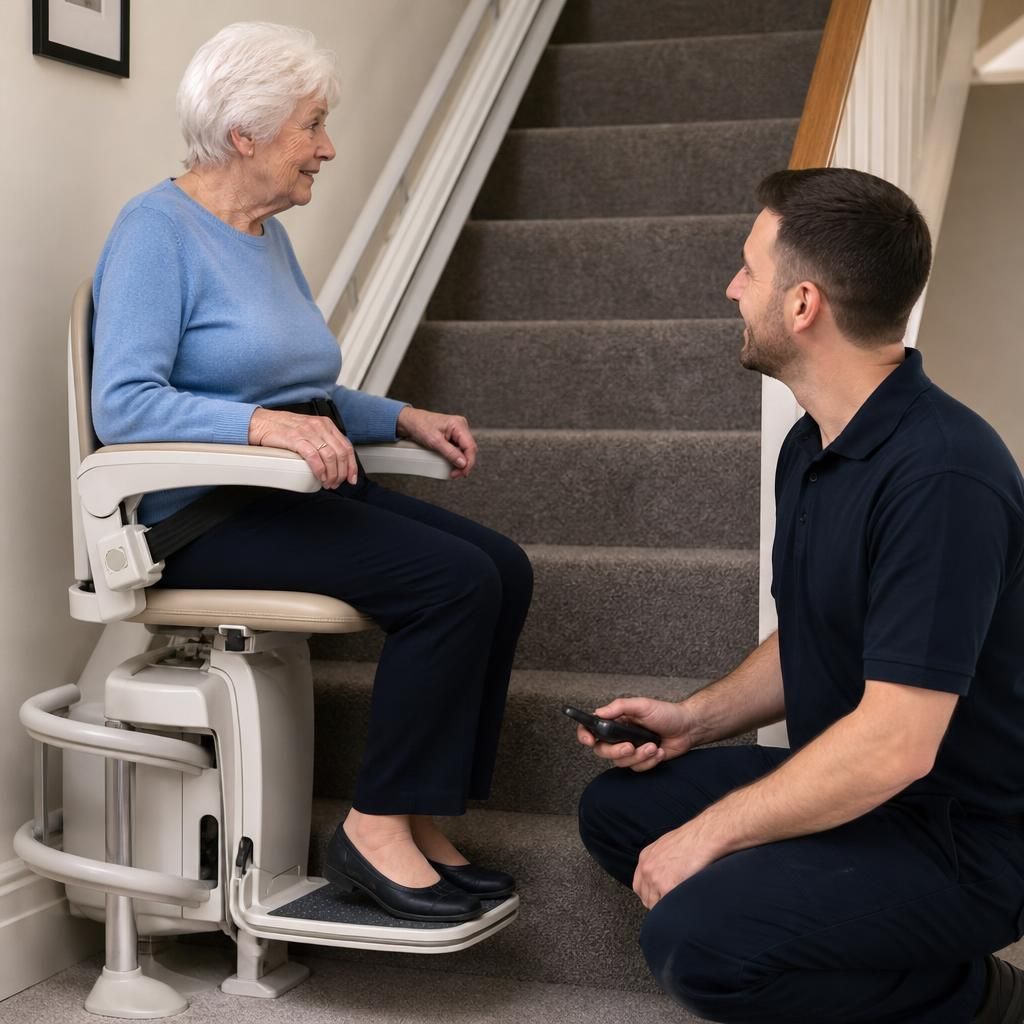
Any agreed features, such as a powered swivel seat or hinged rail, should be demonstrated during the handover. The installer should explain how these features affect getting on and off the stairlift and confirm that the user can operate them safely.
Safety features fitted to the stairlift
- Seat belt: The belt helps keep the user safely seated while travelling. It should be fastened before movement begins and adjusted so it is secure without being uncomfortably tight.
- Swivel seat and armrests: A swivel seat can help the user turn towards the landing when getting off. The stairlift should be stopped in the correct position, with the seat swivelled only when it is safe to do so. Armrests provide support and help prevent the user from leaning out of the seat.
- Safety sensors: Sensors around the footrest and carriage are designed to stop the stairlift if they detect an obstruction, such as an object, pet or loose item on the stairs. The obstruction must be removed before trying to travel again; sensors should never be bypassed.
- Braking and stopping systems: The stairlift has control and braking systems to regulate travel and bring the carriage to a controlled stop. Limit switches help it stop at the correct points at the top and bottom of the stairs.
- Key switches and controls: A key or control setting can help prevent unintended use. The user should know where the operating controls are located and how to use the remote control supplied with the stairlift.
- Battery backup: Battery-powered stairlifts normally continue to operate for a limited period during a mains power cut, provided the batteries are adequately charged. The lift should be left at its designated charging point when not in use.
User instruction and safe operating practice
Safe operation depends on using the stairlift as instructed. The user should sit fully back in the seat, keep their feet on the footrest, fasten the belt and keep their hands, clothing and walking aids clear of the moving parts. Walking sticks, frames and other aids should not be carried in a way that could catch on the stairs, rail or carriage. If a walking aid is needed at the other level, it should be positioned safely in advance or carried only in accordance with the installer’s advice.
The user should remain seated while the stairlift is moving and should not allow another person to travel on their lap or use the stairlift to carry heavy or unsecured items. Children and pets should be kept clear of the staircase while the lift is operating. The controls should be released if the user feels unwell, the stairlift behaves unexpectedly or an obstruction is detected.
Daily checks and housekeeping
Before use, check that the staircase and landing are clear, the seat belt is undamaged, and there are no loose objects near the rail, footrest or sensors. Keep the stairlift, charging contacts and surrounding area clean and dry. Do not store bags, furniture or other items where they could restrict the seat, obstruct the carriage or prevent a safe transfer at the top or bottom of the stairs.
Do not attempt to lubricate, adjust or repair the stairlift yourself unless the manufacturer’s instructions specifically permit a simple user task. Household cleaning products, loose coverings and unauthorised alterations can interfere with sensors or moving parts.
Servicing and responding to faults
Planned servicing allows a qualified engineer to inspect wear, batteries, charging, drive components, safety switches, sensors, fixings and the overall operation of the stairlift. The appropriate service interval depends on the model, how often it is used and the manufacturer’s recommendations. Keeping service records and reporting small changes early can help prevent a minor issue becoming a loss of use.
Stop using the stairlift and contact the service team if it makes an unusual noise, moves unevenly, fails to charge, stops repeatedly, shows a warning indication or does not respond normally to its controls. Do not force the stairlift to move or remove covers. If it stops between floors, the user should follow the supplied emergency instructions and use a telephone or other agreed method to request assistance. A stairlift should not be used as an evacuation device unless specifically designed and approved for that purpose.
Ongoing suitability for the user
Safety also depends on the stairlift continuing to match the user’s abilities. A change in balance, strength, eyesight, memory or ability to transfer on and off the seat may require further instruction, an adjustment or a review of the equipment. Family members and carers should know the basic operating procedure, the location of the emergency contact details and how to keep the staircase clear without operating the lift on the user’s behalf unless necessary.
If the user’s mobility or home circumstances change, contact Independent Stairlifts for advice rather than adapting the stairlift yourself. A reassessment can confirm whether the existing seating position, controls, belt arrangement or other features remain appropriate and whether any additional support is needed.
One important safeguard after installation is a clear handover, during which the installer demonstrates the stairlift’s safety features and confirms that the user can operate them correctly. This should include fastening the seat belt, using the controls, swivelling the seat safely at the landing, responding to an obstruction detected by the sensors and returning the lift to its charging point.
The user should also know how to stop using the stairlift if it behaves unusually and how to contact the service team for advice. Keeping the staircase clear, checking the belt and footrest before use, and reporting warning sounds, charging problems or uneven movement promptly helps maintain safe operation between servicing visits.
Need advice about your stairlift’s safe operation?
If you have concerns about your stairlift’s operation, safety features or suitability, contact Independent Stairlifts for practical advice from the service team. Stop using the lift if it behaves unusually and follow the emergency guidance provided at installation.