
What maintenance is required after a stairlift installation?
After installation, a stairlift needs regular cleaning, charging and basic safety checks, together with professional servicing at the intervals recommended by the manufacturer. Keep the rails and seat clear, check that the lift starts, stops and locks correctly, and contact Independent Stairlifts promptly if you notice unusual noises, reduced battery performance or any change in operation.
After installation, a stairlift requires routine user checks, regular cleaning and charging, plus professional servicing at the intervals specified by the manufacturer or installer. Good maintenance helps preserve reliable operation and identifies wear, battery problems or safety faults before they affect daily use.
Follow the maintenance guidance provided with your stairlift. The exact requirements depend on the model, rail design, usage, environment and whether the lift is straight, curved or installed outdoors. Keep the user manual and installation details in an accessible place, and contact Independent Stairlifts if you are unsure about a check or instruction.
Everyday checks for the user
- Keep the stairlift rail, steps, landing and access areas clear of clothing, toys, pets and other obstructions.
- Check that the seat, armrests, footrest and any swivel or folding mechanism move as expected and lock securely where applicable.
- Make sure the safety belt is clean, undamaged and fastens correctly.
- Check that the lift starts, travels and stops smoothly, without unexpected movement, hesitation or unusual noise.
- Confirm that the lift is parked in its recommended charging position when it is not in use. Many stairlifts charge through contacts at particular points on the rail, so parking position is important.
- Keep remote controls clean and replace their batteries if the lift does not respond reliably.
These checks should not involve removing covers, adjusting components or working on electrical parts. If something does not look or sound right, stop using the stairlift until you have received advice.
Cleaning and keeping the rail clear
Wipe the seat, armrests, footrest and accessible surfaces with a soft, slightly damp cloth, following the cleaning advice for your model. Avoid soaking electrical controls and do not use abrasive products unless the manufacturer specifically allows them. The rail should be kept free from dust and objects that could interfere with the carriage or moving parts.
Do not apply oil, grease or other lubricant to the rail unless this is expressly recommended in the manual. A stairlift’s carriage and drive system are designed to work with specific components and lubrication requirements; unsuitable products can attract dirt or affect braking and movement.
Battery care
Rechargeable batteries are a key part of most stairlift systems. Leaving the lift in its correct charging position when not in use helps maintain the batteries. If the stairlift is used infrequently, it still needs to remain connected to its power supply so the batteries can be maintained.
Reduced travel distance, slower operation, repeated low-battery warnings or a lift that does not hold its charge can indicate battery deterioration or a charging fault. Battery life varies with the model, usage and conditions, so arrange an assessment rather than replacing batteries without professional advice. Batteries should be replaced with the correct type by a suitably qualified person.
Professional servicing
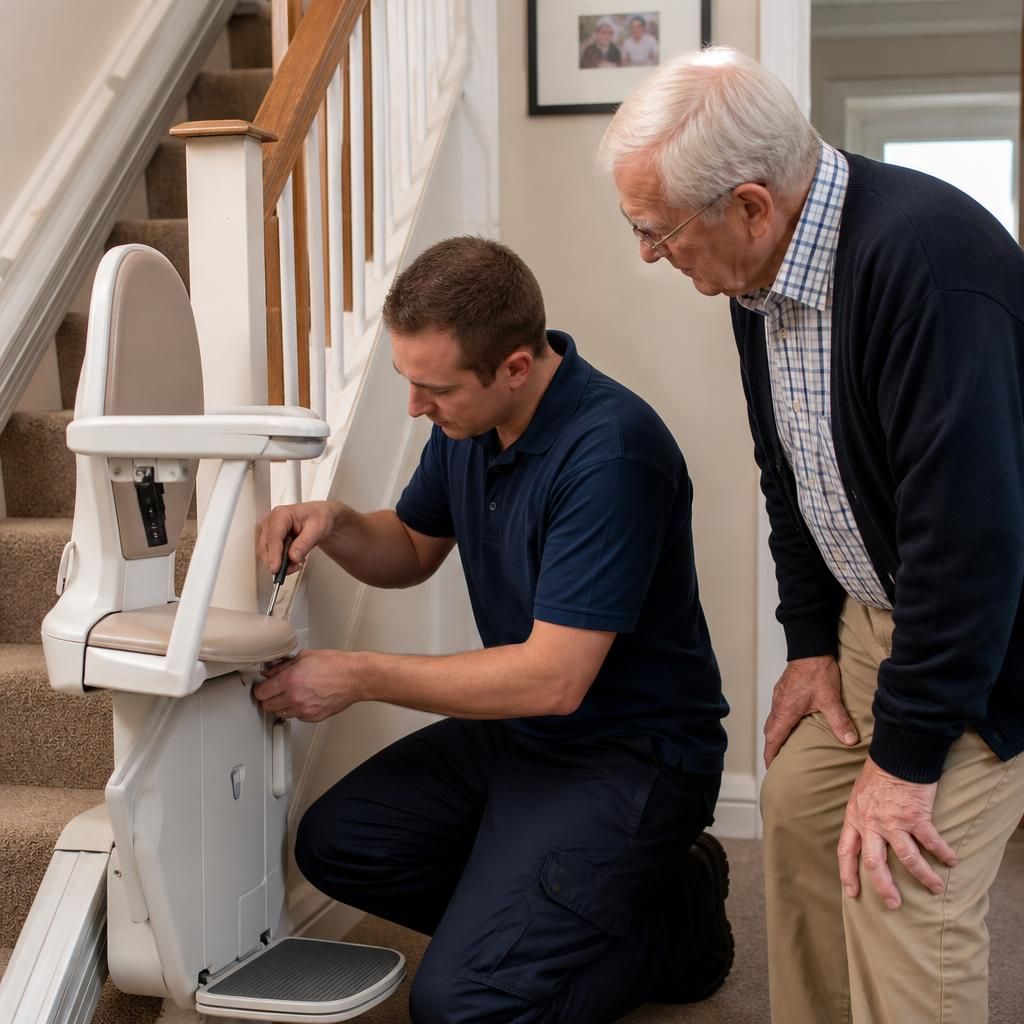
A qualified stairlift technician should service the lift at the interval recommended for the specific model and installation. A service will normally include inspection of the rail, carriage, drive system, controls, charging points, batteries, seat, footrest, safety belt, sensors and braking or safety mechanisms. The technician may also test the lift under operating conditions and identify components that are worn or approaching the end of their serviceable life.
The recommended interval can be affected by frequent use, multiple users, heavier operating demands, an outdoor location, exposure to moisture or dust, and the age or condition of a reconditioned stairlift. Keep records of servicing and any repairs, including the date, work completed and parts replaced. This provides a useful maintenance history and helps technicians diagnose recurring issues.
Signs that need prompt attention
- Grinding, clicking, squeaking or other noises that were not present previously.
- Jerky starts, stops or travel, unexpected movement, or a change in speed.
- The stairlift stopping before reaching its usual position or failing to complete its journey.
- Charging lights or fault indicators behaving differently from normal.
- Repeated battery warnings or noticeably reduced battery performance.
- A loose seat, armrest, footrest, belt, remote control or rail component.
- Damage, fluid ingress or signs of overheating around the power supply, controls or charging equipment.
If the stairlift stops unexpectedly, develops a safety fault or cannot be controlled normally, keep it out of use and contact Independent Stairlifts or the appropriate service provider. Do not attempt to bypass a sensor, safety belt switch, limit switch or other safety device. Never continue using the lift to see whether a fault clears by itself.
Additional care for outdoor stairlifts
Outdoor stairlifts need particular attention because rain, condensation, temperature changes, dirt and coastal air can affect exposed surfaces and electrical connections. Use the supplied cover when the lift is parked, keep drainage areas clear and follow the model-specific guidance for cleaning and weather protection. Report corrosion, water damage, cracked covers or changes in battery performance promptly.
What the owner should and should not do
Owners can usually manage charging, cleaning, keeping the stairs clear and observing normal operation. Repairs, electrical work, battery replacement, adjustment of the rail or drive system, and testing of safety components should be left to a trained stairlift technician. Unauthorised alterations can create a safety risk and may affect warranty or service arrangements.
When a stairlift is shared by more than one person, each user should know how to fasten the belt, operate the controls, stop the lift and call for assistance. If the user’s mobility or ability to operate the controls changes, arrange a review so that the seat, controls and transfer arrangements remain suitable.
Following the manufacturer’s instructions, keeping the lift clean and charged, carrying out simple visual and operational checks, and arranging professional servicing will keep most stairlifts dependable after installation. If you are uncertain about the condition of your stairlift or have noticed a change in its operation, contact Independent Stairlifts before using it again.
Professional servicing is the main maintenance requirement after a stairlift installation. A qualified technician checks the rail, carriage, drive system, seat, safety belt, footrest, controls, batteries, charging points and safety sensors to confirm that the lift is operating correctly.
Arrange servicing at the interval recommended for your specific model and installation. More frequent attention may be appropriate for an outdoor stairlift, a heavily used lift or an older reconditioned model. Keep a record of each service, repair and replacement part, and contact Independent Stairlifts promptly if the lift becomes noisy, jerky, unreliable or difficult to charge.
Do not remove covers, adjust the rail, replace batteries or bypass safety devices yourself. These tasks should be completed by a trained stairlift technician to protect safe operation and avoid affecting the manufacturer’s warranty or service arrangements.
Need help with stairlift maintenance?
If you need help with stairlift maintenance, contact Independent Stairlifts for advice or to arrange a professional service visit. Stop using the lift if it develops a fault or changes in operation.