
What is the typical installation timeframe for a stairlift in a residential home?
A straight stairlift can often be installed in a few hours once the home assessment is complete, while a curved stairlift usually takes longer because it is made to follow the staircase and may require a separate manufacturing period. The exact timeframe depends on the stairlift type, staircase design, availability and any required preparation work.
A straight stairlift can usually be fitted in a few hours once the home assessment has been completed and the equipment is available. A curved stairlift generally takes longer overall because its rail is made to match the staircase; the installation itself may still be completed in a day, but manufacturing and delivery add to the time between the survey and fitting. The exact timeframe depends on the stairlift type, staircase layout, equipment availability and whether any preparation work is needed.
Typical timeframe for a straight stairlift
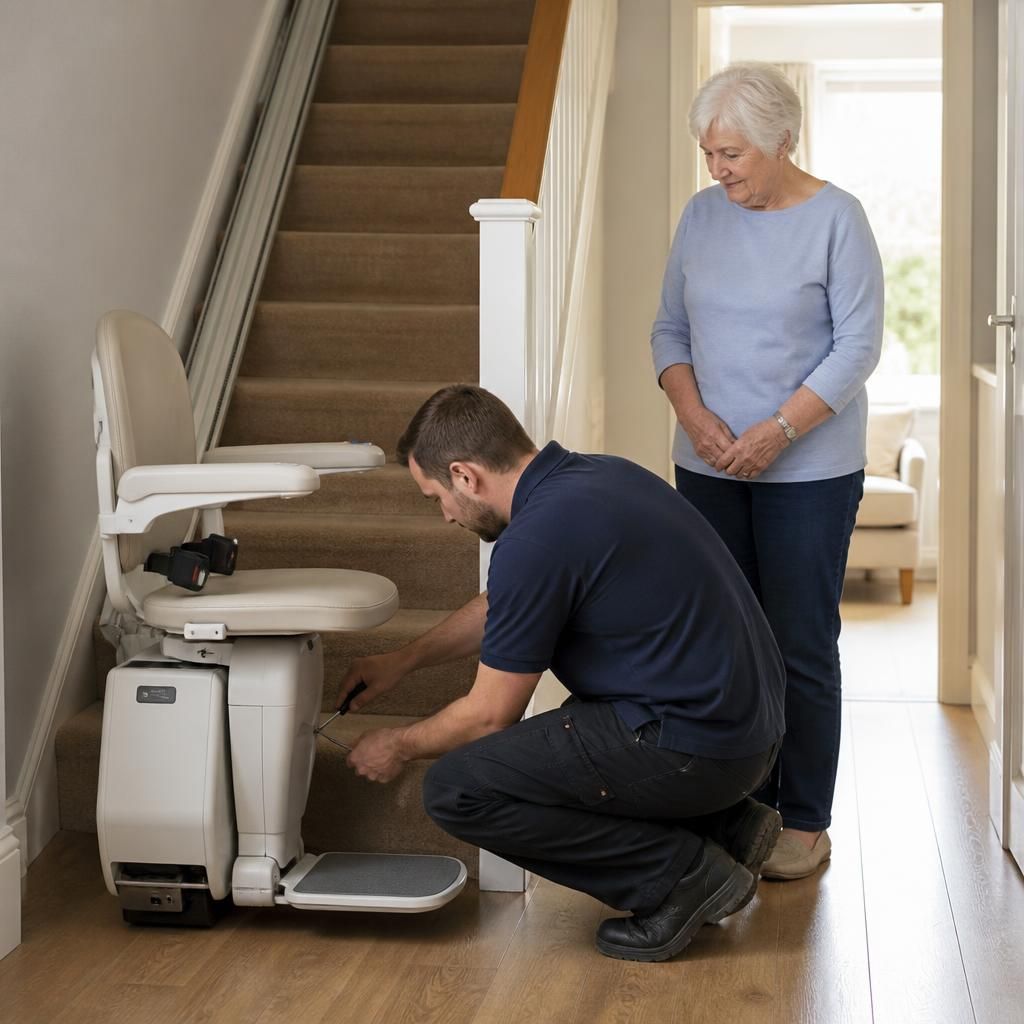
Straight stairlifts are installed on a continuous staircase without bends, intermediate landings or changes in direction. Because the rail is produced in a standard straight configuration, installation can often be arranged relatively quickly after the assessment. On the fitting day, the installer normally measures and prepares the stairway, secures the rail to the steps, installs the carriage and charging points, and tests the system. In many homes, this work is completed within a few hours.
The time may be longer if the staircase has unusual dimensions, restricted access, damaged steps, limited electrical provision or other features that need attention before the stairlift can be installed. Where a stairlift is urgently required, the available stock and suitability of the proposed model will also affect how quickly it can be supplied.
Typical timeframe for a curved stairlift
Curved stairlifts are designed for staircases with bends, landings, turns or changes in direction. A surveyor takes detailed measurements of the staircase and considers the user’s preferred travel position, parking location, seat options and any access requirements. The rail is then made to follow the individual staircase, so the period from assessment to installation is normally longer than for a straight model.
The fitting itself is commonly completed during a planned installation visit, but the overall process can take several weeks, depending on the complexity of the design, manufacturing schedule and delivery arrangements. A particularly intricate staircase, shared access area or installation requiring additional preparation may need more planning.
What happens before installation?
- Home assessment: A qualified surveyor checks the staircase, available space, electrical requirements and suitable parking positions. They also consider the user’s mobility, transfer ability and preferred way to use the lift.
- Recommendation and confirmation: The suitable stairlift type and configuration are agreed, including options such as a powered swivel seat, hinged rail or different seat dimensions where appropriate.
- Preparation and ordering: A straight stairlift may be allocated from available equipment, while a curved model is prepared to the staircase measurements. Any required repairs, clearance work or electrical preparation are identified at this stage.
- Installation and testing: The installer fits the rail and carriage, checks the charging system and safety features, and runs the stairlift through its full operating route.
- Demonstration and handover: The user and, where relevant, family members or carers are shown how to use the controls, seat belt, swivel mechanism, charging points and emergency functions safely.
Factors that can affect the installation date
- The stairlift type: straight installations are generally quicker to arrange than curved installations.
- The shape and condition of the staircase, including bends, narrow sections, intermediate landings and uneven or damaged steps.
- Whether the required model and configuration are available or need to be manufactured.
- Optional features such as powered swivel seats, powered footrests, hinged rails or different control arrangements.
- Whether furniture, decorations or other obstacles need to be moved before the fitting team arrives.
- Electrical work or minor building preparation that must be completed first.
- Access to the property, parking restrictions and the availability of a suitable installation appointment.
How to prepare for the fitting visit
Keep the staircase and the areas at the top and bottom of the stairs clear. Remove loose rugs, ornaments and furniture that could obstruct the installer or the stairlift’s travel path. Let the installation team know in advance about narrow entrances, shared hallways, pets, parking limitations or any changes in the user’s mobility. If the stairlift is being installed for someone recently discharged from hospital, explain any time-sensitive access requirements so the installation can be planned appropriately.
Most stairlift installations are designed to use the stairs rather than the wall for support, so extensive structural work is not normally required. Even so, the survey is important because it identifies issues that could affect the fitting time, such as a fragile staircase, an unusually positioned socket or insufficient space for safe transfers.
What to expect after installation
The installer should check that the stairlift moves smoothly, stops correctly at the charging points and operates safely on the full staircase. You should receive an explanation of normal operation, charging, cleaning and basic fault procedures. Do not use the stairlift until the demonstration is complete, particularly if the user has limited balance, reduced strength or difficulty transferring from a chair.
If your circumstances change before the appointment, contact Independent Stairlifts promptly. A change in staircase access, the user’s mobility, the intended seat position or the need for additional features may affect the specification and installation schedule. The most reliable timeframe will be confirmed after the home assessment, when the staircase and the user’s requirements have been reviewed together.
The fitting visit is usually much shorter than the full period from assessment to use. A straight stairlift can often be installed in a few hours when the equipment is available, whereas a curved stairlift normally requires additional time for the rail to be measured, manufactured and delivered to match the staircase.
The confirmed timeframe is provided after the home assessment. This takes account of the staircase design, the chosen features, any preparation work and appointment availability, so the installation can be planned safely and with minimal disruption.
Book Your Stairlift Assessment
Book your stairlift assessment to confirm the most suitable solution and receive a timeframe based on your staircase, chosen features and any preparation required.