
How do you ensure the stairlift installation process is minimally disruptive to my household?
We minimise disruption by planning the installation around your household, confirming access arrangements in advance and using experienced installers to fit the stairlift efficiently. We protect surrounding areas, keep walkways clear during the work and remove installation materials afterwards, leaving the staircase and nearby rooms clean and ready to use.
A minimally disruptive stairlift installation depends on careful planning before the fitting begins, efficient work by experienced installers and clear arrangements with your household. We assess the staircase and surrounding areas in advance, agree a suitable installation time, protect floors and furnishings, maintain safe access wherever possible and leave the work area clean and ready to use.
Before installation, we confirm the details that could affect access or timing. This includes the type and layout of the staircase, the position of doors and landings, the availability of suitable electrical power and any restrictions caused by furniture, pets or other household activities. If the stairlift is being installed for someone with limited mobility, we also discuss how they will move around the home while the staircase is temporarily unavailable.
The installation appointment is arranged around your household’s needs. Where possible, we select a time that avoids important routines, care visits or other work taking place in the home. We explain what will happen, which areas the installers need to access and whether there are any short periods when the stairs cannot be used. This gives you the opportunity to prepare other routes between floors or arrange assistance in advance.
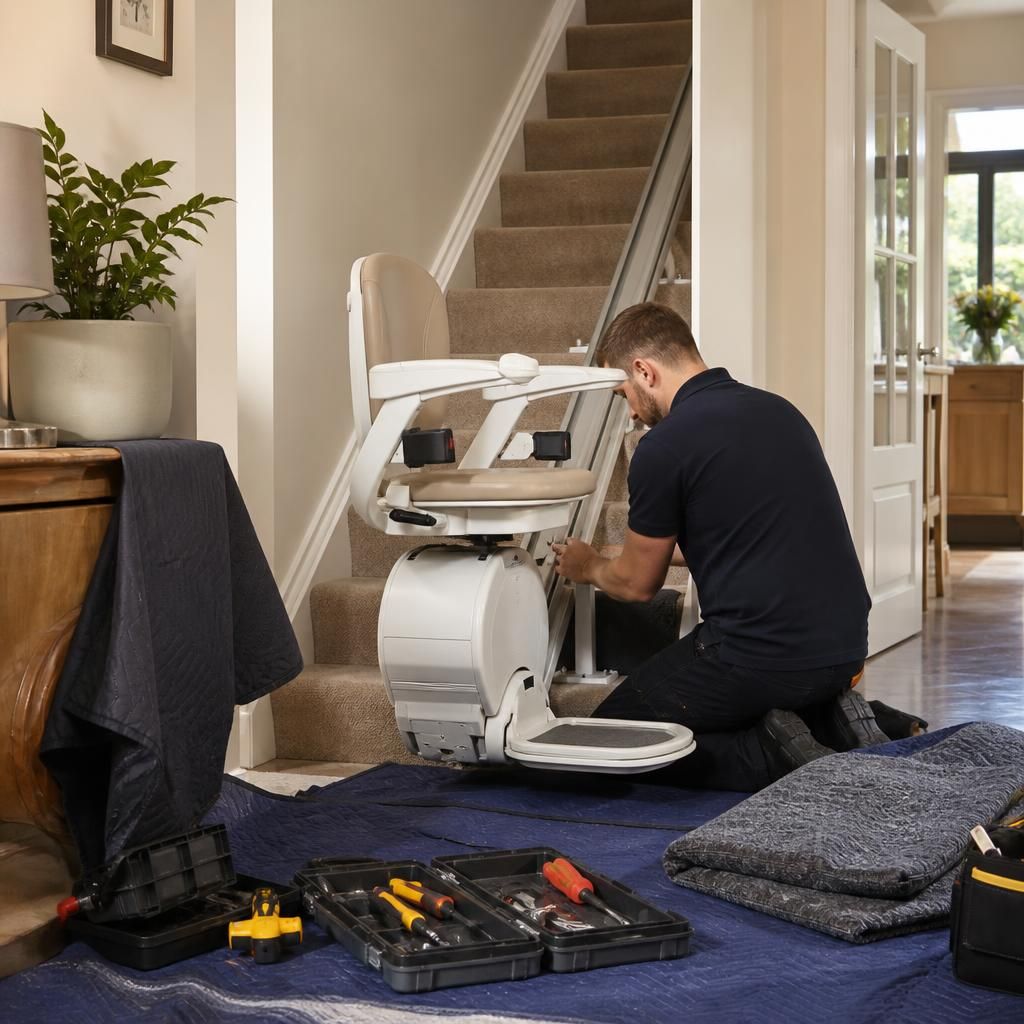
Installers normally bring the equipment and tools needed for the agreed work, reducing unnecessary movement in and out of the property. They work methodically, keeping tools and components together rather than spreading them across rooms. For a standard stairlift, the rail is usually secured to the staircase rather than the wall, so extensive structural work is not normally required. The precise method depends on the stairlift design and the condition of the stairs.
Protective measures help prevent avoidable damage or mess. The installation team can take care around flooring, skirting boards, walls and nearby furniture, using suitable coverings where needed. They also keep tools, packaging and removed materials away from main household routes. If furniture or personal belongings need to be moved for safe access, this is discussed beforehand rather than being left to the last minute.
During the fitting, the staircase may need to remain clear for safety. If there is no practical alternative route, we explain when access will be restricted and avoid leaving the stairs obstructed between stages of the work. Household members, visitors and pets should stay away from the working area until the installers confirm that it is safe. This is particularly important where someone is unsteady on their feet or has difficulty seeing or hearing activity around them.
Installation involves more than securing the stairlift. Once it is fitted, the installer checks the movement of the carriage, the controls, safety sensors, seat, footrest, armrests, charging points and any powered swivel or folding features included with the model. They also check that the stairlift travels correctly around bends or landings and that it does not obstruct doors, walkways or other essential household access more than necessary.
We explain the operation and safety features before considering the installation complete. The user is shown how to sit down and stand up safely, use the controls, fasten any safety belt and respond if the stairlift stops. If a family member, carer or other regular user will assist with operation, they should be included in this demonstration. Taking time to practise reduces confusion after the installers leave and helps identify any adjustment that may be needed.
At the end of the appointment, the installation team removes packaging, surplus materials and protective coverings. The staircase, landings and nearby work areas are checked for loose debris or tools, and the stairlift is left in its normal charging position where appropriate. Any instructions, warranty information and contact details for support are provided so you know what to do if you need advice after the fitting.
You can help keep the process smooth by:
- clearing ornaments, small furniture and personal belongings from the staircase and nearby landings;
- keeping children and pets away from the work area;
- telling us about access requirements, parking restrictions or planned visits before the appointment;
- identifying an alternative route between floors if the stairs will be temporarily unavailable;
- making sure the intended user, or their carer, is available for the operating demonstration; and
- raising any concern about noise, dust, furniture or access before installation begins.
Some installations require additional preparation, such as moving a radiator, adjusting a doorway or addressing a problem with the staircase or electrical supply. These requirements should be identified during the assessment and explained before work is scheduled. If the home has unusual access, narrow landings or a particularly complex staircase, allowing time for a detailed survey helps avoid unexpected disruption on the day.
Although fitting is designed to be efficient, the exact work involved varies between straight, curved and outdoor stairlifts and between different home layouts. We will confirm the expected arrangements with you in advance rather than making assumptions. If circumstances change before the appointment, contact us promptly so the installation plan can be reviewed and any necessary support arranged.
Careful preparation before the appointment is the main way to keep stairlift installation minimally disruptive. During the assessment, we identify access requirements, nearby furniture, doors, landings, electrical arrangements and any household routines that could affect the work. This allows the installation team to arrive with a clear plan rather than making avoidable adjustments on the day.
Before fitting begins, we agree when access to the staircase may be restricted and discuss any alternative route between floors. Floors and nearby furnishings are protected where necessary, while tools, components and packaging are kept together and away from household walkways. Once the stairlift has been installed and tested, the team removes protective coverings and waste, checks the surrounding area for debris and leaves the staircase ready for normal use.
Arrange Your Stairlift Installation Assessment
Arrange your stairlift installation assessment so we can review your staircase, household access requirements and the practical steps needed to keep fitting disruption to a minimum.