
How can I prepare my home for a stairlift installation?
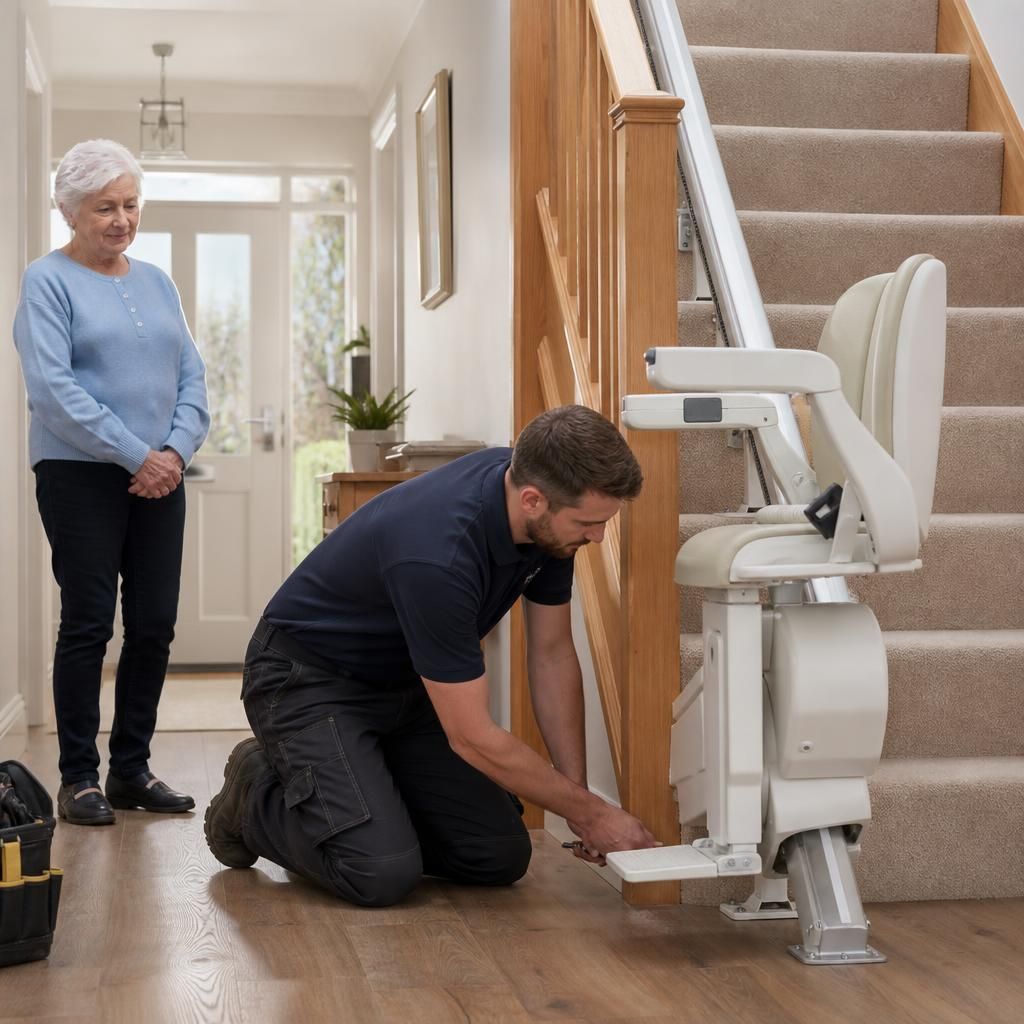
Prepare your home for a stairlift installation by clearing the staircase and nearby landing areas, removing trip hazards, and ensuring the installer can access the stairs, power supply and any relevant doors or entrances. An assessment will confirm any further requirements, such as moving furniture, protecting flooring or arranging access to shared areas.
Preparing your home for a stairlift installation mainly involves keeping the staircase, landings and access routes clear, identifying anything that could affect the fitting, and making sure the installer can reach the property and electrical supply. A pre-installation assessment will confirm the exact requirements for your stairlift and highlight any work that needs to be arranged beforehand.
Clear the staircase and landings
Remove ornaments, shoes, toys, plants and other items from every part of the staircase. Clear the hallways, landings and doorways at both ends of the stairs so the installation team can move equipment safely and work without obstruction. If furniture is close to the stairs, it may need to be moved temporarily, particularly where the stairlift rail finishes near a doorway, radiator or landing.
Do not place loose items on the steps while you are waiting for the installation. They can create a trip hazard and may prevent the installer from checking the stairway properly.
Remove or identify potential hazards
Tell us about anything that could affect safe access or installation, including:
- Loose carpets, damaged flooring or insecure stair rods
- Items fixed to the wall or banister near the proposed rail position
- Radiators, light switches, sockets, doors or cupboards close to the stairs
- Low ceilings, unusual corners, narrow landings or changes in floor level
- Pets that may be present during the survey or installation
Some obstacles can be worked around, while others may need to be moved or secured. Do not remove bannisters, alter the staircase or arrange building work unless this has been discussed with the installation team. The rail is normally fitted to the stair treads rather than the wall, but the individual design and surrounding space still need to be checked.
Provide clear access to the property
Let us know about parking restrictions, controlled entrances, shared driveways, stairs leading to the property and any access codes or keys needed on the day. If the installation is in a flat, sheltered housing scheme or another property with shared areas, permission may be required to use communal entrances, corridors or lifts.
Keep the route from the entrance to the staircase free from clutter. If access is restricted at particular times, explain this before the appointment so the installation can be planned safely and efficiently.
Check the electrical supply
A stairlift needs a suitable electrical supply for charging. The installer will identify the most appropriate connection point during the assessment. Keep sockets near the stairs accessible and mention any known electrical issues, such as faulty sockets, frequent power cuts or planned electrical work.
Do not use extension leads or attempt to install a new socket yourself for the stairlift. If an electrical alteration is necessary, this should be agreed with the installer and completed by a suitably qualified person.
Plan around the person using the stairlift
Make sure the intended user is available for the assessment where possible. Their height, weight, mobility, balance, ability to transfer and preferred way of approaching the stairs can affect the choice and configuration of the stairlift. They may also need to demonstrate how they sit down, stand up and use the controls.
Discuss any particular concerns in advance, such as difficulty bending a knee, limited grip strength, visual impairment, memory problems or the need to carry an oxygen cylinder or walking aid. This helps the assessor consider suitable controls, seat options, safety features and storage arrangements. Walking aids should not be carried loose on the stairs; ask about an appropriate carrying solution if one is needed.
If the user is frail or easily tired, arrange for them to have a safe place to sit away from the work area. Keep children and pets away from the staircase while tools and equipment are being used. The stairlift should not be used until the installation has been completed, checked and demonstrated.
Protect furniture and flooring
Installation involves carrying equipment through the property and securing the rail to the stairs. You can remove fragile ornaments and cover items that are particularly vulnerable to dust or contact. The installation team will take reasonable precautions, but it is helpful to point out delicate flooring, recently decorated surfaces and furniture that needs special care.
Normal preparation should not require major alterations to the home. However, curved staircases, unusual layouts, tight turns and restricted landings can require a bespoke rail or additional planning. The assessment is the appropriate time to discuss whether a door, radiator, handrail or item of furniture could interfere with the final parked position.
Before the installer arrives
- Clear the full staircase, both landings and the access route to the entrance.
- Remove fragile or loose items from nearby surfaces.
- Secure or report loose carpet, damaged flooring and other hazards.
- Make sure agreed parking and property access arrangements are in place.
- Keep the intended user, children and pets safely away from the work area.
- Have details available about keys, access codes, shared entrances or building permissions.
- Tell the installer about any changes to the staircase or home since the assessment.
After fitting, the installer will test the stairlift, check its safety features and explain how to operate it, charge it and park it. Ask questions at the handover and make sure the user is comfortable with the controls before using the stairlift independently. If circumstances change after the assessment—for example, furniture is moved or access becomes restricted—contact Independent Stairlifts before the installation so the arrangements can be reviewed.
Clearing the staircase and both landings before installation gives the fitting team safe, unobstructed access to the rail position and helps them check the complete travel path. Remove shoes, ornaments, plants, toys and other loose items from the steps, hallways and doorways near the stairlift.
Move nearby furniture if it could obstruct the stairlift when parked or interfere with carrying equipment through the property. Secure or report loose carpets, damaged flooring, stair rods and anything fixed close to the proposed rail position. Keep children and pets away from the staircase while work is taking place, and provide the intended user with a safe place to sit until the stairlift has been installed, tested and demonstrated.
Book Your Stairlift Installation Assessment
Book your stairlift installation assessment with Independent Stairlifts to confirm the best solution for your staircase and identify any preparation needed beforehand. Contact our team to arrange a convenient appointment.