
Are stairlifts safe for use by elderly individuals with limited mobility?
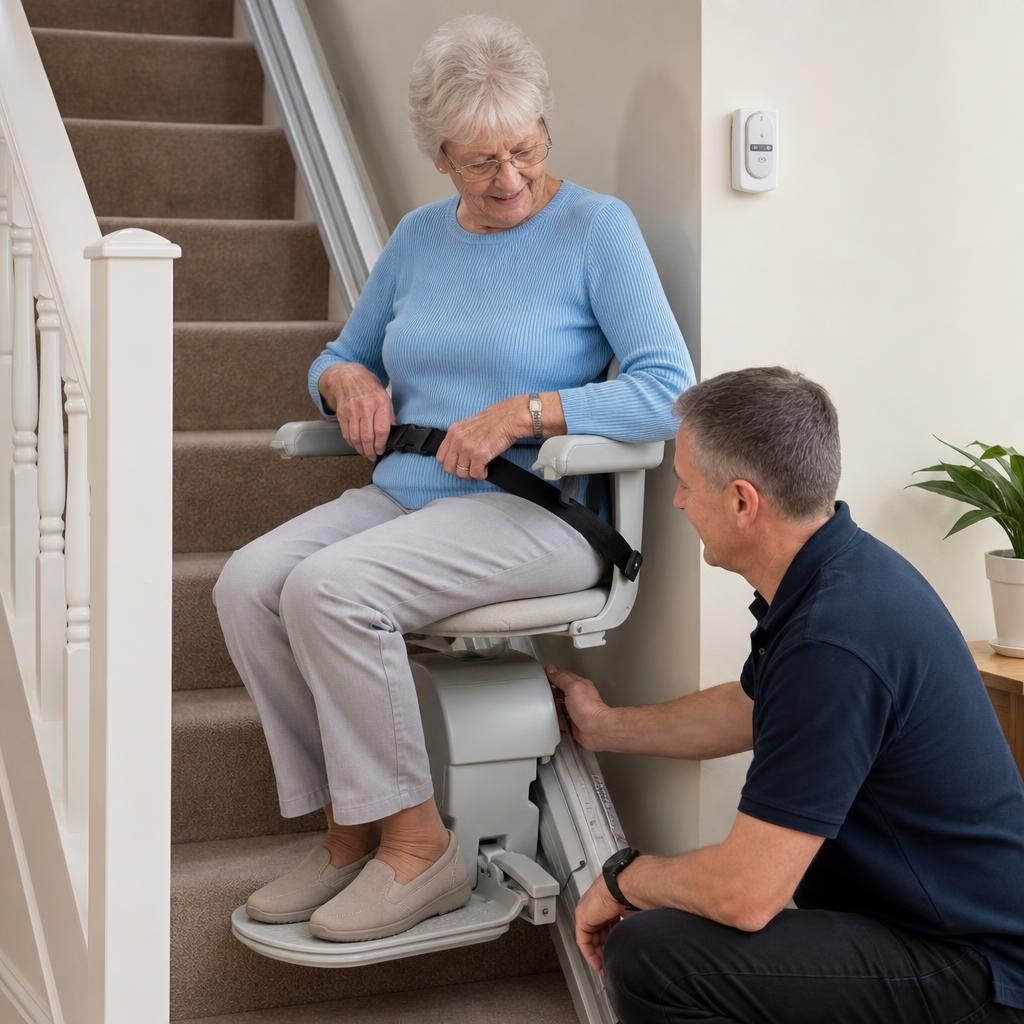
Yes, stairlifts are generally safe for elderly people with limited mobility when the model is properly assessed, professionally fitted and used as instructed. Safety features such as a secure seat belt, swivel seat, sensors, armrests, obstruction detection and battery backup help provide stable, controlled travel between floors.
Yes. Stairlifts are generally safe for elderly people with limited mobility when the equipment is suitable for the user, correctly fitted to the staircase and operated as instructed. Features such as a secure seat belt, swivel seat, armrests, obstruction sensors, smooth controls and battery backup are designed to support stable, controlled movement between floors.
Safety starts with an individual assessment rather than choosing a stairlift based on appearance alone. The assessment should consider the user’s mobility, balance, strength, height, weight, ability to transfer on and off the seat, and whether they can operate the controls. The staircase, landings, steps, bends, available headroom and nearby doors should also be checked. This helps determine whether a straight, curved or other specially configured stairlift is appropriate.
Important safety features include:
- Seat belts or harnesses: These help keep the user securely positioned during travel. The restraint should be fastened before the stairlift moves.
- Swivel seats: A powered or manual swivel seat can make getting on and off safer by allowing the user to turn towards the landing, rather than stepping off directly towards the stairs.
- Armrests and footrests: These provide support and help keep the user’s arms and feet within the safe seating area.
- Obstruction detection: Sensors stop the stairlift if an object is detected on the steps or in its path.
- Controlled movement: The stairlift is designed to start, stop and travel smoothly, reducing sudden movements that may affect balance.
- Battery backup: Rechargeable batteries allow the stairlift to continue operating during a power cut, provided they have been charged and maintained correctly.
- Diagnostic and safety controls: Indicator lights, alarms and interlocks can identify issues such as an unfastened belt, an incorrectly positioned seat or a charging problem.
Correct transfers are just as important as the equipment itself. The user should approach the stairlift carefully, apply the brakes or use their usual walking aid as appropriate, sit fully back in the seat, fasten the belt and place their feet on the footrest. The seat should be swivelled and locked in the correct position before standing at the top or bottom of the stairs. If transferring is difficult, a carer, family member or healthcare professional may need to help establish a safer technique.
Limited mobility does not automatically prevent someone from using a stairlift, but certain conditions may require additional assessment. Significant weakness, uncontrolled movements, severe balance problems, difficulty understanding instructions or an inability to remain seated could affect suitability. A stairlift should not be used to carry more than one person, pets, shopping or loose items, and the manufacturer’s maximum user weight must always be observed.
Professional installation is essential. The installer should secure the stairlift to the staircase, check clearances, test the safety systems and explain the controls before leaving. The installation should also allow other household members to use the stairs safely when the stairlift is parked. On narrow or unusual staircases, the position of the seat, arms, footrest and track needs particularly careful planning to avoid restricting access or creating a trip hazard.
After installation, users should follow the operating instructions and keep the track and steps clear. The stairlift should be parked at its designated charging point when not in use, where applicable, and should not be used if it is making an unusual noise, stopping unexpectedly, showing a warning indicator or has damaged parts. Do not attempt to repair electrical or mechanical components yourself. Contact the service provider for advice and arrange servicing in line with the manufacturer’s recommendations.
Carers and family members should know how to use the controls, release the user safely if the stairlift stops and contact the appropriate support service. It is also sensible to keep the emergency contact details and user instructions accessible. Regularly review whether the stairlift remains suitable if the user’s strength, balance, eyesight, hearing or medical condition changes.
Independent Stairlifts can assess the staircase and the user’s requirements before recommending a suitable solution. A careful assessment, professional fitting, clear instruction and ongoing maintenance provide the basis for safe, reliable stairlift use for elderly people with limited mobility.
A stairlift is safest for an elderly person with limited mobility when it has been matched to their physical abilities, fitted to the staircase and used according to the instructions. A professional assessment should consider balance, strength, posture, transfer ability and whether the user can operate the controls comfortably.
Safety features such as a seat belt, swivel seat, armrests, footrest, obstruction sensors and smooth start-and-stop movement help reduce common risks. The installer should also check clearances, secure the track correctly and demonstrate safe boarding, travelling and getting off the stairlift. Keeping the steps clear and arranging servicing in line with the manufacturer’s guidance helps maintain safe operation.
Book your personalised stairlift safety assessment
Book your personalised stairlift safety assessment with Independent Stairlifts to review your mobility needs, staircase layout and the safety features most suitable for your home. Our experienced team can explain your options and provide practical guidance before installation.