
What factors influence the overall cost of a stairlift installation?
The overall cost of a stairlift installation is influenced by the type of stairlift required, the layout and length of your staircase, the fitting work involved, and any features or adaptations you choose. A home assessment provides the most accurate quotation because it accounts for your property and mobility needs.
The overall cost of a stairlift installation is mainly determined by the type of lift required, the shape and condition of the staircase, the complexity of fitting it, and the features selected. A straight stairlift on a standard staircase is usually less involved to install than a curved model made to follow one or more bends, landings or changes in direction. The most accurate quotation comes from a home assessment, because it considers both the property and the user’s mobility requirements.
The main factors that influence the total cost include:
- Staircase design: A straight staircase generally needs a standard rail, while a curved, narrow, split-level or multi-flight staircase may require a rail designed specifically for the route. Changes in direction, intermediate landings, tight turns and unusual angles can increase manufacturing and installation work.
- Staircase length and available space: The length of the rail, the position of the top and bottom parking points, and the clearance around doorways or landings all affect the specification. A survey also checks that the stairlift can be used safely without obstructing access through the home.
- Type of stairlift: Straight, curved, outdoor and reconditioned stairlifts have different equipment and fitting requirements. Outdoor models need materials and controls suitable for exposure to changing weather conditions. A reconditioned lift may offer a lower-cost option, but compatibility with the staircase and the availability of an appropriate rail still need to be considered.
- Rail requirements: Curved stairlifts normally use a made-to-measure rail. The design may need to take account of narrow steps, adjacent walls, radiators, doorways, bannisters or limited space at the top and bottom of the stairs. These details can affect both the equipment and the time needed for installation.
- Installation conditions: Most stairlifts are fitted to the staircase rather than the wall, but the installer still needs to assess the condition and construction of the steps. Uneven, damaged or unsuitable flooring, restricted access to the stairs, or the need to remove and refit obstructions can add to the work involved.
- Seating and user requirements: Seat width, swivel arrangements, powered footrests, adjustable arms, harnesses and control positions can be specified to suit the user. Someone with limited balance, reduced leg strength or difficulty transferring on and off the seat may need different options from someone who can stand and sit independently.
- Controls and access arrangements: The position and type of controls, call-and-send units, remote controls and charging points can affect the specification. If more than one person uses the stairs, controls may need to be placed so that the lift can be called conveniently from either end.
- Electrical work: Stairlifts usually charge through a domestic electrical supply, but the assessment will establish whether the proposed charging points are suitable. Additional electrical work may be necessary in some properties, particularly where the existing arrangement does not provide a practical charging location.
- Removal or preparation work: If an old stairlift is already installed, its removal and disposal may form part of the quotation. Moving furniture, taking down a door or making minor adjustments to improve access may also affect the installation requirements. Any such work should be explained before fitting begins.
- Aftercare and servicing: The overall cost should be considered alongside warranty cover, servicing arrangements, call-out terms and the availability of replacement parts. The cheapest initial quotation may not provide the same level of included support as another option, so it is important to compare what is covered.
A home assessment is particularly useful because measurements alone do not show every factor that can affect the installation. The assessor can check the staircase, identify possible obstacles, discuss how the lift will be used and recommend a suitable configuration. This helps avoid choosing a model that fits the stairs but is difficult for the user to operate or transfer into safely.
When comparing quotations, check whether they include the stairlift, the rail, fitting, testing, user instruction, removal of existing equipment and aftercare. Ask whether the quoted specification is for a new or reconditioned lift, whether the rail is standard or made to measure, and whether any additional work is excluded. A clear quotation should explain the equipment and services included rather than presenting only a single unexplained total.
The right approach is to balance the initial installation cost with suitability, safety, reliability and future support. A stairlift that matches the staircase and the user’s abilities is more important than selecting the lowest-priced specification. Independent Stairlifts can assess the home environment and discuss the available options so that the quotation reflects the actual installation rather than a generic estimate.
A home assessment is one of the most important factors in obtaining an accurate stairlift installation cost. It allows the installer to examine the staircase, measure the available space and identify practical issues that may not be clear from photographs or a general description.
The assessment considers details such as bends, landings, narrow sections, doorways, bannisters, radiators, charging points and the condition of the steps. It also looks at how the user will transfer onto the seat, operate the controls and move safely at the top and bottom of the stairs. These findings help determine whether a standard or made-to-measure rail is required and whether any preparation work should be included in the quotation.
Before accepting a quotation, check that it clearly states whether it includes:
- the stairlift, rail and chosen seating features;
- delivery, fitting, testing and user instruction;
- removal of an existing lift or other preparation work; and
- warranty cover, servicing and call-out arrangements.
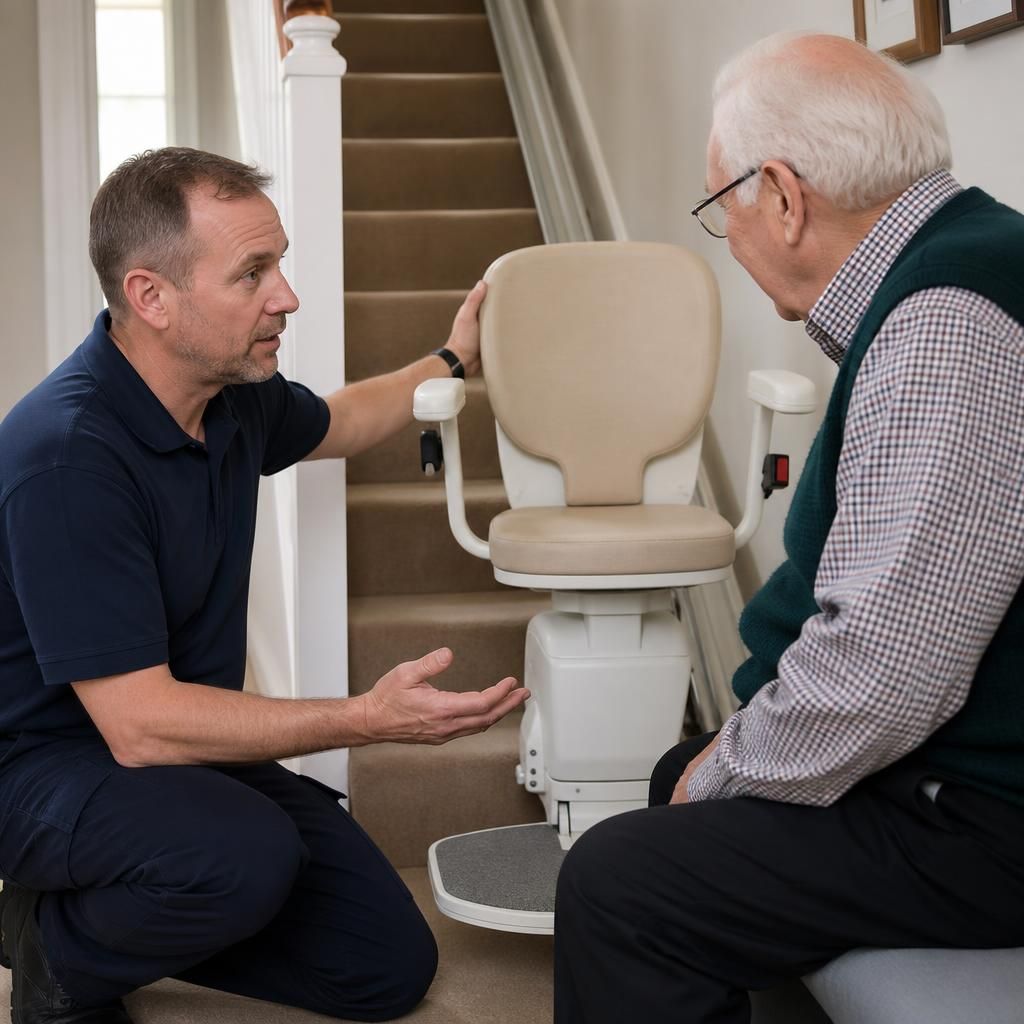
Arrange a Home Assessment for an Accurate Stairlift Installation Cost
Arrange a home assessment with Independent Stairlifts to identify the right stairlift, fitting requirements and features for your staircase. You will receive a clear quotation based on your home and mobility needs.