
What factors influence the cost of installing a stairlift in my home?
The cost of installing a stairlift depends mainly on your staircase layout, the type of stairlift required, its features and the complexity of fitting it safely. A home assessment provides the most accurate tailored quote, including any necessary adaptations, electrical work and aftercare.
The cost of installing a stairlift is influenced by the design of your staircase, the type and specification of the lift, the work needed to fit it safely, and the level of aftercare included. A straight stairlift on a straightforward staircase is usually less complex to install than a curved model, but the only reliable way to establish the cost is through a home assessment and a tailored quotation.
Staircase layout and design
The shape and structure of the staircase are usually the most significant influences on price. A straight stairlift runs along a single, uninterrupted flight and normally uses a standard rail. If the stairs include a bend, curve, half landing, intermediate landing or more than one flight, the rail must be designed to follow the staircase accurately. This requires additional surveying, design and manufacturing, which can make a curved stairlift more expensive.
Other design details can also affect the installation, including:
- The width of the stairs and the available clearance beside the rail.
- The position and size of landings at the top, bottom or between flights.
- Steps that change direction or have unusual angles.
- Low ceilings, doorways or other obstructions near the staircase.
- The location of radiators, bannisters, doors and other fixtures.
- Whether the stairlift needs to stop short of a doorway or finish on a particular part of a landing.
A narrow or unusually shaped staircase does not necessarily prevent installation, but it may require a different seat, rail position or parking arrangement. These decisions can affect both the equipment selected and the fitting time.
Type of stairlift
Straight, curved, outdoor and reconditioned stairlifts have different pricing considerations. Straight stairlifts are generally based on a more standard rail and installation process. Curved stairlifts are made to suit the individual staircase, so the bespoke rail and more involved fitting process are reflected in the quotation.
Outdoor stairlifts need materials and controls suitable for exposure to changing weather conditions. The condition of the external steps, the availability of a safe power supply and the need for protective covers or weather-resistant components may also influence the total cost.
A reconditioned stairlift may reduce the initial equipment cost, although the final price still depends on its suitability, condition, specification, warranty and installation requirements. It should be assessed and fitted by a competent provider rather than selected solely because it has a lower purchase price.
Seat design and additional features
The standard seat and controls may be suitable for some users, while others need features that improve comfort, stability or ease of use. Additional specification can affect the price. Examples include:
- Powered swivel, folding or reclining seats.
- Powered footrests or automatic folding mechanisms.
- Different seat widths, supports or upholstery options.
- Adjustable armrests or improved postural support.
- Remote controls for calling the lift between floors.
- Safety sensors and controls adapted to the user’s dexterity or strength.
- Weather-resistant features for outdoor use.
These options should be selected because they address a genuine need, not simply because they are available. During an assessment, the important considerations include how safely you can sit down and stand up, whether you can operate the controls, and whether the stairlift must accommodate another person in the household.
Installation complexity
Fitting a stairlift normally involves securing the rail to the stairs rather than fixing it to the wall. However, the installer may need to work around tight spaces, unusual construction or restricted access. The time and skill required can increase where the staircase has several flights, difficult access, limited parking or other practical constraints.
In some homes, additional work may be needed before the stairlift can be installed. This might include moving an obstruction, adjusting a door, improving lighting or making minor changes to the surrounding area. Any such work should be explained clearly in the quotation, with the cost separated from the stairlift and standard installation where appropriate.
Electrical requirements
Most stairlifts use rechargeable batteries and charge at a designated point, so they do not normally require extensive electrical work. The position and condition of the available power supply can nevertheless affect installation. If a suitable socket is not available, or if the existing electrical installation requires attention, an electrician may need to carry out additional work.
Battery condition is particularly relevant when considering a reconditioned stairlift. Batteries and other consumable components may need inspection or replacement, and this should be included in the assessment rather than assumed to be part of the standard price.
Access, parking and property-specific requirements
The physical installation is only one part of the process. Access to the property, the distance equipment must be carried, parking restrictions and the availability of a safe working area can all affect the practical arrangements. These factors do not always change the price, but they should be identified in advance so that the installation can be planned properly.
Listed buildings, rented properties, shared entrances and communal staircases may also involve permission or access requirements. You may need consent from a landlord, managing agent or another responsible party before work begins. Establishing this early can help prevent delays and unexpected charges.
Removal of an existing stairlift
If an old stairlift is already fitted, the quotation should state whether its removal and disposal are included. Removing equipment may be straightforward, but curved rails, obsolete components or lifts installed in difficult locations can require additional time. The condition of the stairs and any remaining fixings should also be checked before the replacement is fitted.
Warranty, servicing and aftercare
The lowest initial price is not necessarily the lowest overall cost. Compare what is included after installation, such as the warranty period, call-out arrangements, servicing options, battery cover and support if the lift develops a fault. Ask whether routine servicing is included or charged separately, and whether the warranty applies to all components or only selected parts.
A clear quotation should identify the stairlift model or specification, the rail type, installation, any optional features, electrical or building work, removal of existing equipment, VAT where applicable, warranty terms and aftercare. It should also explain any circumstances that could lead to an additional charge.
Why a home assessment matters
A home assessment allows the installer to measure the staircase, identify obstructions, observe how you use the stairs and discuss your mobility requirements. It also provides an opportunity to consider where the stairlift should park, how much space will remain for other users, and whether a powered or manual feature would be most appropriate.
When comparing quotations, make sure they are based on the same requirements. A lower quote may exclude essential features, removal, electrical work or aftercare, while a higher quote may include a more suitable seat, a bespoke rail or a broader warranty. The most appropriate stairlift is the one that provides safe, practical access and clearly sets out the complete cost of installation and ongoing support.
A home assessment is the most reliable way to establish the likely cost of installing a stairlift, because it allows the installer to assess the staircase, the user’s mobility needs and any practical fitting requirements in person.
During the assessment, the installer can check the stair layout, available clearance, parking position, obstructions, power supply and whether features such as a powered swivel seat or folding rail would be useful. This helps ensure the quotation reflects the complete installation rather than only the basic stairlift price.
When reviewing the quotation, check that it clearly sets out:
- The stairlift model, rail design and selected features
- Installation and any required electrical or property adjustments
- Removal of an existing stairlift, if applicable
- Warranty, servicing and aftercare arrangements
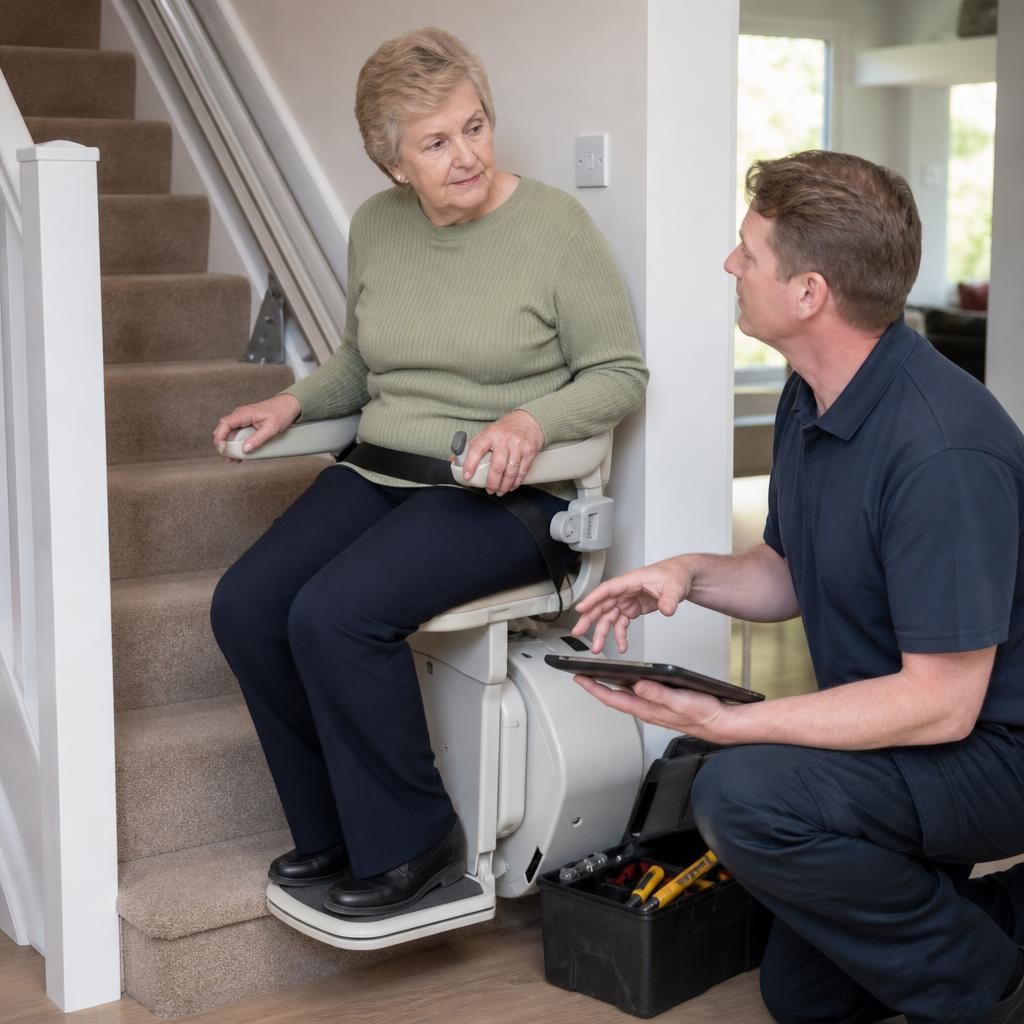
Arrange a Home Assessment for a Tailored Stairlift Quote
Arrange a home assessment with Independent Stairlifts to identify the factors affecting your installation and receive a tailored quotation. We can assess your staircase, discuss suitable features and explain what is included in the price.