
What are the typical maintenance and servicing requirements for a stairlift?
A stairlift typically needs routine servicing to check its safety systems, battery, rails, seat, controls and moving parts, with repairs or adjustments completed when required. Regular cleaning, charging and prompt reporting of unusual noises, movement or fault warnings also help keep it safe and reliable.
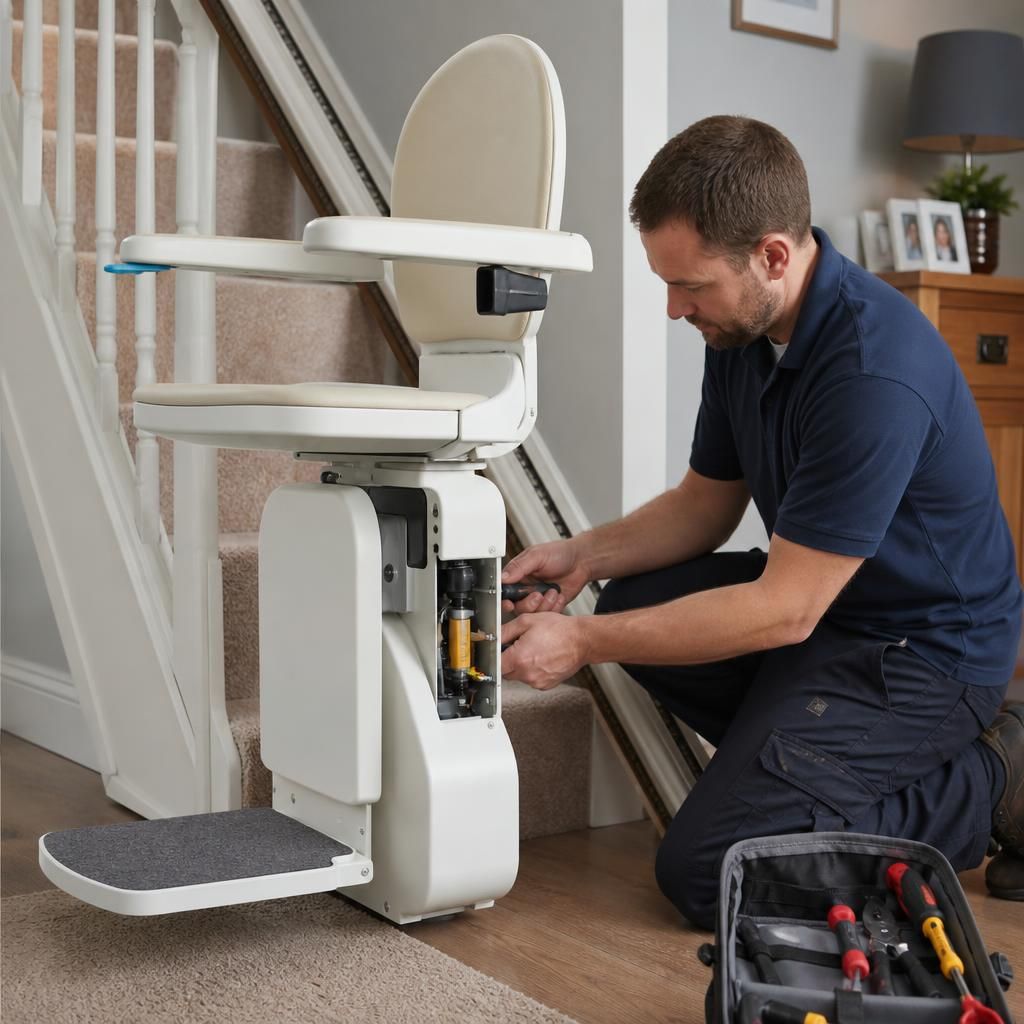
A stairlift should receive routine servicing in line with the manufacturer’s recommendations, with additional attention if it is used heavily, installed outdoors or develops a fault. A service normally includes checks of the safety systems, battery and charging equipment, rail, seat, controls, drive mechanism and other moving parts. The engineer will clean, adjust or replace components where necessary and confirm that the lift is operating safely.
How often does a stairlift need servicing?
Many stairlifts are serviced annually, although the correct interval depends on the model, how frequently it is used, its age and the conditions in which it operates. Your installation paperwork, warranty terms or service agreement should state the recommended schedule. A reconditioned stairlift may require the same regular servicing as a new model, but its age and previous usage can make an assessment of its condition particularly important.
Do not wait for the next planned service if you notice a change in performance. Contact a qualified stairlift engineer promptly if the lift stops unexpectedly, moves unevenly, makes unusual noises, fails to charge or displays a fault warning.
What is checked during a service?
- Safety systems: The engineer checks safety edges, sensors, switches, the seat swivel and other features designed to stop the lift or prevent unsafe operation.
- Battery and charging: Batteries, charging contacts, the charger and charging points are inspected. The engineer may also check whether the lift is returning correctly to its charging position.
- Rail and fixings: The rail is checked for secure attachment, damage, obstruction and correct alignment. Fixings may be tightened where required.
- Seat and controls: The seat, armrests, footrest, seat belt, remote controls and directional controls are tested. Folding and swivelling mechanisms are checked for safe operation.
- Drive system and moving parts: The motor, gearbox, rollers, gears and other mechanical components are inspected for wear, noise or signs that adjustment or replacement may be needed.
- Overall operation: The engineer runs the stairlift along the full rail, checking its speed, stopping, starting, smoothness and performance at the top and bottom of the stairs.
Some components may need lubrication or adjustment, but this should be carried out according to the manufacturer’s instructions. Using unsuitable lubricants or attempting to alter the drive mechanism yourself can cause damage or affect safety.
What can you do between services?
Simple day-to-day care helps reduce avoidable faults. Keep the rail, charging points and stairlift’s travel path clear of coats, bags, toys and other items. Wipe the seat, armrests and controls with a suitable slightly damp cloth, following the cleaning guidance for the model. Avoid pouring liquid into the controls or onto the rail, and do not use abrasive cleaning products unless the manufacturer specifically permits them.
Leave the stairlift correctly positioned on its charging point when it is not in use. This is particularly important for battery-powered models, as allowing the batteries to remain repeatedly discharged can shorten their working life. If the stairlift has remote controls, keep them dry and replace their batteries when required.
Users should not remove covers, interfere with wiring, dismantle the seat or try to repair the motor, batteries or safety systems. Stairlifts carry significant weight and contain electrical and moving components, so repairs and technical adjustments should be completed by a suitably trained engineer.
When do batteries or other parts need replacing?
Battery performance gradually reduces with age and use. Signs that batteries may need attention include shorter travel between charges, slower operation, the lift stopping away from its charging point or repeated low-battery warnings. However, similar symptoms can result from a charging fault or a problem elsewhere in the system, so an engineer should diagnose the cause rather than replacing parts unnecessarily.
Other wear items, such as rollers, belts, switches or mechanical components, may eventually require adjustment or replacement. The timing varies according to the stairlift design, usage, environment and maintenance history. A service can identify wear before it develops into a more disruptive breakdown.
Do outdoor stairlifts need additional care?
Outdoor stairlifts are exposed to rain, temperature changes, dirt and sunlight, even when they have protective covers. Their service should include attention to weather-exposed electrical connections, controls, rail components, covers and drainage. Keep the lift as dry and clean as the installation allows, use its cover correctly and report corrosion, water ingress or changes in operation without delay.
What if the stairlift develops a fault?
If the stairlift stops, first check the basics described in its user instructions: the power supply, isolation switch, charging position, seat position and any visible obstruction. Do not repeatedly operate a lift that is behaving abnormally or attempt to bypass a safety feature. If the fault remains, switch it off only if the instructions advise this and contact the service provider for guidance.
When reporting a problem, describe any warning lights, sounds, error messages, where the lift stopped and whether it will move in either direction. This information can help the engineer prepare for the visit. If someone is left unable to use the stairs, arrange an alternative safe route or assistance rather than trying to move them manually on the stairlift.
Servicing, warranty and service plans
Check what is included in your warranty or service agreement before booking work. Planned servicing, call-outs, labour, replacement batteries and other parts may be treated separately, and coverage can vary between agreements. Keeping service records, installation information and details of previous repairs makes it easier to confirm the lift’s history and plan future maintenance.
Regular servicing cannot prevent every fault, but it provides an opportunity to identify wear, test essential safety features and maintain reliable operation. Following the manufacturer’s guidance, keeping the stairlift charged and reporting changes promptly are the most practical ways to support safe, dependable use.
Regular servicing checks the stairlift’s safety systems, battery, charging equipment, rail, seat, controls and drive mechanism before minor wear develops into a more disruptive fault. The engineer can test the lift along the full rail, make approved adjustments and identify parts that may need attention.
Between services, keep the rail and travel path clear, leave the stairlift on its charging point and clean the seat and controls with a suitable slightly damp cloth. Do not remove covers or attempt to repair electrical, battery or mechanical components. Report unusual noises, uneven movement, charging problems or fault warnings to a qualified engineer promptly.
Arrange your stairlift service or maintenance check
Contact Independent Stairlifts to arrange a stairlift service or maintenance check. Our team can assess the lift, identify any wear or faults and advise on the appropriate repairs or replacement parts.