
What are the benefits of scheduling a home assessment before purchasing a stairlift?
A home assessment ensures the stairlift is matched to your staircase, mobility needs and home layout before you buy. It enables accurate advice on the most suitable model, fitting requirements and total installation cost, helping you make an informed decision with greater peace of mind.
A home assessment before purchasing a stairlift ensures that the equipment, installation plan and final cost are matched to your staircase and the person who will use it. Rather than choosing a model from general specifications, a trained adviser can inspect the property, discuss mobility requirements and identify any practical issues that may affect safety, comfort or installation.
It confirms which type of stairlift is suitable. The shape of the staircase is a primary consideration. A straight stairlift may be appropriate where the stairs run without a bend or intermediate landing, while a curved stairlift may be needed for changes of direction, multiple flights or unusual layouts. An assessment can also establish whether an outdoor model is required for external steps, or whether a reconditioned stairlift is suitable for the staircase and the intended user.
The assessor will normally consider the width and gradient of the stairs, the position of landings, available clearance, doorways and any obstructions. They can identify whether the lift needs to park in a particular position, whether a hinged or sliding rail could help preserve access, and whether the staircase has features that require a bespoke installation. These details cannot always be assessed accurately from photographs or general measurements.
It allows the stairlift to be matched to the user, not just the staircase. During the assessment, discuss how the user approaches the stairs, sits down and stands up, and whether they have difficulty with balance, bending, grip or transferring on and off the seat. The adviser can then explain relevant options, such as a suitable seat style, powered swivel seat, adjustable arms, a raised seat position, powered footrest or controls that are easy to operate.
It is also useful to discuss who else uses the staircase. A lift may need to fold away to leave walking space for other household members, or the controls may need to be positioned for a particular hand. If more than one person may use the stairlift, the assessment can help identify a configuration that is safe and practical for everyone, while recognising that a single design may not suit every user equally.
It provides a more accurate installation plan and price. A home visit allows the installer to assess the work required rather than relying on a standard assumption. The quotation can take account of the rail length, bends, parking position, power supply and any necessary adaptations. If the staircase has a narrow entrance, awkward landing or limited access, these factors can be considered before an installation date is arranged.
This helps reduce the risk of unexpected costs or changes after an order has been placed. It also makes it easier to compare quotations, because you can check whether each one covers the same equipment, fitting work, warranty arrangements and aftercare. Ask for any optional features or additional work to be identified separately so that the total cost is clear.
It identifies potential safety and access issues. The assessment should consider whether the stairlift will leave adequate space at the top and bottom of the stairs, whether doors or corridors could be obstructed, and where the user will transfer safely. The installer can also discuss the position of charging points, the direction in which the seat swivels and how the lift will be parked when it is not in use.
Where there are concerns about the staircase, flooring, sockets or nearby furniture, these can be addressed before fitting. Stairlifts are generally secured to the stairs rather than the wall, but the assessment confirms the appropriate fixing method and highlights any property-specific considerations. It is sensible to mention planned decorating, flooring changes or other building work at this stage.
It helps you understand the available choices. A home assessment gives you an opportunity to compare the practical differences between new and reconditioned equipment, straight and curved designs, and standard and additional features. The most expensive option is not automatically the most suitable. The right choice depends on the staircase, frequency of use, comfort requirements, available space and expected length of use.
The adviser should explain how the stairlift operates, including the controls, safety sensors, charging system, swivel mechanism and emergency procedures. You can also ask about servicing, breakdown support, warranty cover, battery replacement and what happens if the user’s mobility changes. Understanding these points before purchasing makes it easier to assess the long-term suitability of the equipment.
It can confirm whether a stairlift is the right solution. In some homes, the assessment may identify that a stairlift is unsuitable because of restricted space, access arrangements or the user’s transfer needs. It may also show that a different configuration or another accessibility aid should be considered. This is valuable information before committing to an installation, particularly if the user has difficulty sitting upright, controlling their posture or transferring safely without assistance.
To make the visit productive, have the person who will use the stairlift present if possible. Explain their current difficulties, how often the stairs are used and any relevant changes in mobility. Note any concerns about other household members, pets, doors, furniture or emergency access. You can also prepare questions about cleaning, maintenance, servicing, removal and future resale or relocation.
Overall, scheduling a home assessment gives you a property-specific recommendation, a clearer quotation and a safer installation plan. It replaces guesswork with an assessment of the actual staircase and the user’s needs, helping you choose a stairlift that is practical to operate and suitable for everyday use.
A home assessment provides a property-specific fitting plan and quotation before you purchase a stairlift. An adviser can inspect the staircase, landings, available clearance and access points to identify the most suitable model and rail configuration.
This is particularly important where the stairs are narrow, curved or close to doors and furniture. The assessment can also confirm the safest parking position, charging point and seat orientation, while identifying any installation requirements that could affect the total cost. You therefore have a clearer understanding of what is included and can avoid choosing equipment based only on standard measurements.
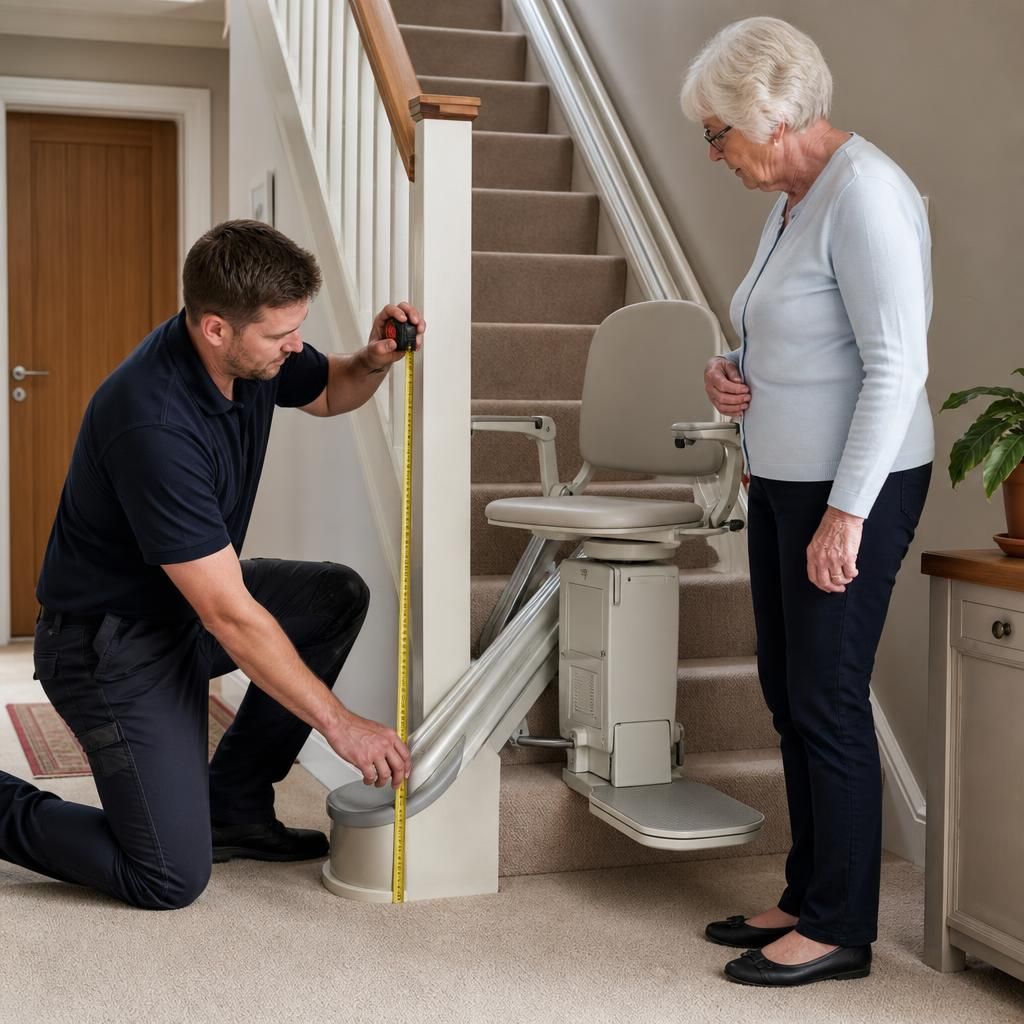
Arrange Your Home Assessment Before Choosing a Stairlift
Arrange a home assessment with Independent Stairlifts before choosing your stairlift, so we can review your staircase, mobility requirements and installation needs. You will receive tailored guidance on suitable options and a clearer quotation for your home.