
How do additional features and customisations impact stairlift pricing?
Additional features and customisations can increase stairlift pricing because they require upgraded components, specialist fitting or adaptations to suit your staircase and needs. Options such as powered swivel seats, folding rails, weather-resistant controls and bespoke upholstery should be assessed alongside the layout of your home, as a personalised quotation will show which features are necessary and which are optional.
Additional features and customisations affect stairlift pricing according to the equipment involved, the complexity of the installation and the extent to which the lift must be adapted to your staircase or mobility needs. Some options add to the initial purchase and fitting cost, while others may also affect ongoing servicing or replacement-part costs. A home assessment and itemised quotation will show which features are essential, recommended or optional.
Features that commonly increase the initial price include:
- Powered swivel seats: These rotate the seat towards the landing, helping you get on and off the stairlift more safely. A powered version is generally more expensive than a manually operated swivel seat because it includes additional controls and moving components.
- Powered or automatic footrests: These can be useful if bending down to operate a footrest is difficult. They add convenience, but the extra mechanism can affect the purchase price and may require specialist servicing.
- Folding or retractable rails: A folding rail can help preserve access to a doorway, hallway or walkway at the bottom of the stairs. It is a more complex option than a standard rail and may cost more to supply and install.
- Adjustable seats, armrests and footrests: These allow the stairlift to be configured for posture, leg length, weight distribution or transfer ability. More adjustment can improve comfort and safety, although it may increase the specification and price.
- Upgraded upholstery and finishes: Different fabrics, colours and upholstery options may be available. These tend to affect the price less than mechanical customisations, but bespoke materials or finishes can add to the total.
- Enhanced controls: Remote controls, alternative control positions and simplified operating switches may be helpful where hand strength, reach or dexterity is limited. The cost depends on the type of control and how it is integrated into the stairlift.
- Outdoor and weather-resistant equipment: An outdoor stairlift needs suitable protection against rain, moisture, temperature changes and sunlight. Weather-resistant materials, covers, controls and charging arrangements can make an outdoor installation more costly than an equivalent indoor model.
The staircase itself can also determine how much customisation is required. A straight staircase usually needs a comparatively straightforward rail, whereas a curved staircase requires a rail designed around its bends, landings, changes of gradient and available clearance. Tight turns, narrow staircases, intermediate landings and limited space at the top or bottom may require additional design work or a particular seat and rail configuration. These are not simply optional upgrades; they may be necessary for the stairlift to fit and operate safely.
Some adaptations relate directly to the person using the lift. A customer who has difficulty standing may need a powered swivel seat or a seat with additional support. Someone with limited hand movement may benefit from a different control arrangement. A higher weight capacity, reinforced seating or a more supportive backrest may also influence the specification. The right choice should be based on current mobility and likely day-to-day use, rather than selecting every available feature.
Installation conditions can create further costs. Examples include the need to reposition charging points, protect a doorway, accommodate unusual skirting boards, work around radiators or make minor adjustments to ensure safe clearance. These requirements should be identified during the assessment rather than added unexpectedly after an order has been placed. A stairlift is normally fixed to the stairs or supporting structure, so the installer can assess the property without assuming that extensive changes to the interior will be needed.
It is useful to separate features that improve convenience from those that address safety or access. A powered swivel seat may be important where transferring at the top of the stairs is difficult, while a particular upholstery colour is primarily a personal preference. Likewise, a folding rail may be essential if a standard rail would obstruct a doorway, but unnecessary where there is ample space. This distinction helps you understand which parts of the quotation are required for safe use and which are choices that can be reviewed against your budget.
Customisation can also affect future ownership costs. More mechanical or electrical components may require additional inspection during servicing, and specialist parts can be more expensive or take longer to obtain. Battery replacement, warranty terms and the availability of support should therefore be considered alongside the purchase price. Ask whether a quoted feature is covered by the same warranty as the main stairlift and whether it changes the recommended servicing arrangements.
When comparing quotations, check that each one includes the same standard of equipment and installation. A lower price may reflect a basic seat, a different rail design, fewer controls or the exclusion of items such as delivery, removal of an old stairlift or follow-up adjustments. An itemised quotation should identify the stairlift model or specification, selected features, installation work, warranty cover and any likely additional charges.
A home assessment remains the most reliable way to establish the effect of customisation on price. During the assessment, the staircase, landing spaces, access routes and charging points can be examined alongside your transfer ability, preferred controls and everyday routine. You can then choose a specification that provides the necessary support without paying for features that do not add practical value. If your mobility or home circumstances change, discuss whether the selected stairlift can be adjusted or upgraded before making a final decision.
Stairlift customisations affect pricing when they require additional mechanical components, specialist design or more involved installation. The final cost depends on whether a feature is needed for safe access, required by the staircase layout or selected mainly for convenience.
A home assessment helps separate essential adaptations from optional upgrades. For example, a folding rail may be necessary to keep a doorway clear, while a powered swivel seat may make transfers safer for someone with limited mobility. By reviewing the staircase, available space and the user’s everyday needs, the quotation can focus on features that provide practical value rather than adding unnecessary extras.
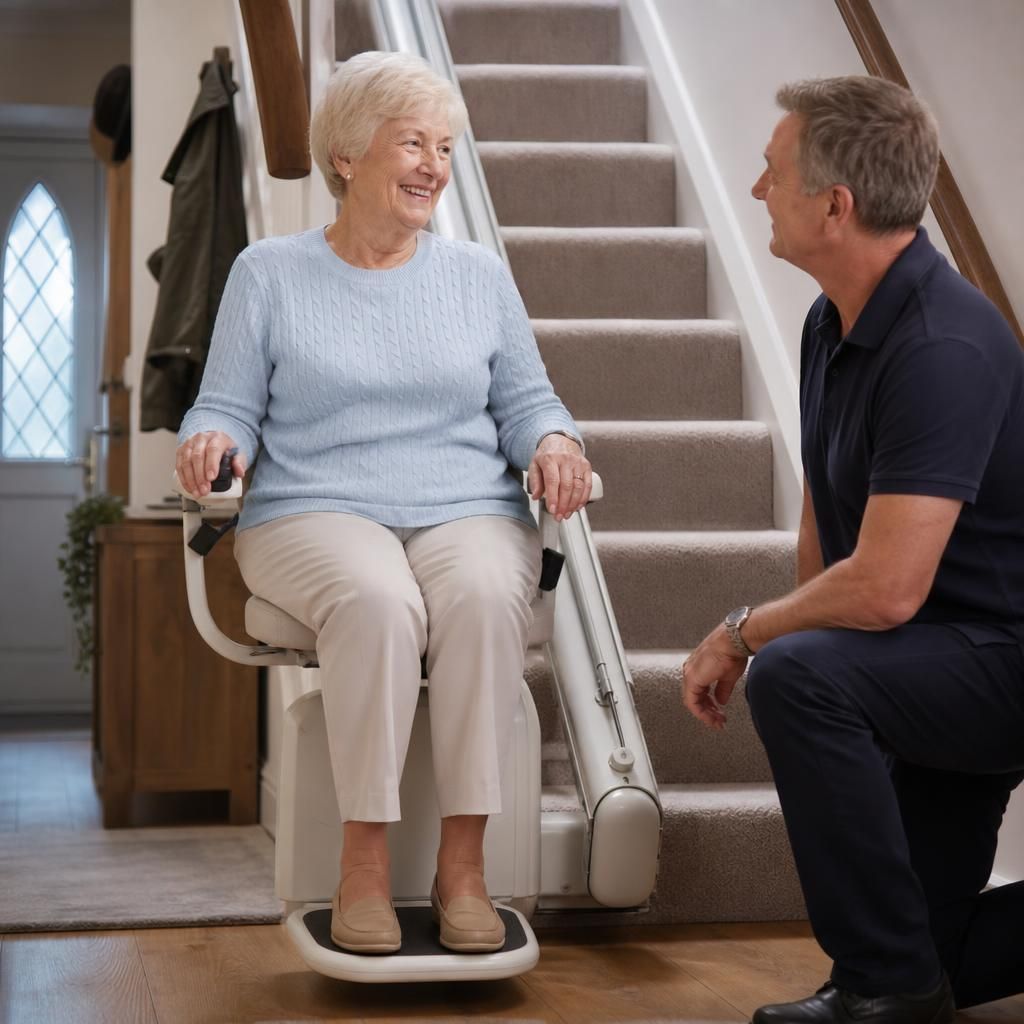
Get a Personalised Stairlift Quote
Arrange a home assessment to review which stairlift features and customisations are necessary for safe, comfortable use. We can provide an itemised quotation based on your staircase, mobility needs and preferred specification.