
Can installing a stairlift damage my home’s interior?
When professionally installed, a stairlift should not significantly damage your home’s interior because its rail is usually secured to the stair treads rather than the wall. The fitting may leave small fixing holes if the stairlift is removed, but careful installation protects your stairs, walls and surrounding décor.
When fitted professionally, a stairlift should not significantly damage your home’s interior. Most stairlift rails are secured to the stair treads, rather than attached to the wall, so the installation does not normally require structural alterations, wall removal or changes to the staircase. If the stairlift is later removed, there may be small fixing holes in the treads, but these can usually be filled or repaired.
The fitting process is designed to preserve the surrounding décor and leave the staircase safe and usable. Before installation, the surveyor checks the construction and condition of the stairs, the available space, nearby doors and the position of the electrical supply. This helps identify any potential issues before work begins and ensures the chosen stairlift is suitable for the home.
Where is a stairlift fixed?
A typical stairlift rail is attached to the stair treads using suitable brackets. This avoids relying on the wall for support, which is particularly important where the wall is made from plasterboard, has decorative panelling or is not structurally suitable. The brackets are positioned carefully to provide the required clearance without unnecessarily affecting the stairs, skirting boards or handrail.
In some homes, the installation may require minor adjustments around the staircase. For example, a handrail could affect the available space, or a trim, cupboard door or radiator may need to be considered when positioning the rail. A bespoke curved stairlift can usually be designed around existing features, although the final layout depends on the shape and dimensions of the staircase.
Could the stairs or walls be marked?
Most of the visible fixing points are on the stair treads and are concealed by the rail and its brackets during use. Wall damage is not normally expected because the rail is not usually fixed to the wall. Installers also take care when moving equipment through the property and fitting the stairlift, helping to protect paintwork, wallpaper, flooring and surrounding furniture.
Some minor marks can still occur if the existing staircase or décor is fragile, unusually tight or already in poor condition. Older timber, loose flooring, damaged plaster or delicate wallpaper may need particular care. These points should be discussed during the home assessment so that suitable protection and installation methods can be planned.
What happens if the stairlift is removed?
Removing a stairlift may leave small holes where the brackets were secured. The extent of any repair depends on the staircase material and the condition of the treads. Timber staircases can generally be made good with appropriate filler or repairs, while carpet may show small marks where brackets have been positioned. A professional installer can explain what is likely to remain and whether removal work is included in the service.
The rail may also have protected an area of the stairs from normal wear, meaning slight differences in colour or finish could become visible after removal. This is not usually installation damage, but a change caused by the surrounding staircase ageing or receiving more exposure than the covered area.
Can installation damage a carpet or wooden staircase?
A stairlift can normally be installed on carpeted, wooden, tiled or other suitable stair surfaces, provided the staircase is sound and capable of supporting the equipment. On carpeted stairs, the brackets are fitted through or around the carpet as appropriate. On wooden stairs, the fixing method is selected according to the tread construction and condition.
Problems are more likely where treads are loose, severely worn, unusually thin or covered by flooring that is not securely fitted. The installer should identify these conditions during the assessment rather than proceeding without addressing them. They may recommend repairs or a different installation approach before the stairlift is fitted.
Does a stairlift affect the structure of the home?
A standard stairlift does not normally require changes to the staircase structure, walls or floorplan. The rail follows the stairs and the equipment can usually be removed without altering the layout of the property. A power supply is required, but this is commonly connected to an existing suitable socket or arranged in a discreet location following an electrical safety check.
Every staircase is different, however. A curved stairlift, a lift serving multiple levels or a stairlift installed in a particularly narrow area may require more detailed planning. The survey should consider door openings, landing space, headroom, radiators and access to the controls so that the completed installation works safely without obstructing normal movement.
How can you minimise the risk of damage?
- Arrange a proper home assessment before choosing the stairlift. This allows the installer to inspect the staircase and surrounding interior rather than relying on photographs or general measurements.
- Tell the surveyor about fragile finishes, recent decorating, fitted carpets, panelling, loose treads or any areas that must remain accessible.
- Ask where the rail and brackets will be positioned and what, if anything, may need to be moved or adjusted.
- Confirm how the installer will protect flooring, walls and furniture while bringing equipment into the property.
- Ask what reinstatement or repair work may be needed if the stairlift is removed in the future.
A reputable installation should be carried out with minimal disruption and without unnecessary alterations. If a proposed fitting appears likely to damage the wall, cut into substantial parts of the staircase or interfere with essential access, ask for the reason and whether an alternative design is available.
In most cases, the practical benefits of a correctly fitted stairlift can be achieved without significant damage to the home’s interior. The main lasting evidence of installation is usually limited to fixing points in the stair treads if the equipment is removed. A detailed assessment and experienced fitting are the best ways to protect the staircase, walls and décor while ensuring the stairlift is secure and suitable for everyday use.
A professionally installed stairlift should cause minimal damage because its rail is normally secured to the stair treads, not the wall. This avoids structural alterations and helps protect plaster, wallpaper, panelling and other surrounding décor.
The brackets are positioned to suit the staircase while maintaining safe clearance from the handrail, skirting boards and nearby doors. If the stairlift is removed, small fixing holes may remain in the treads, but these can usually be repaired. A home assessment identifies fragile finishes, loose flooring or worn timber in advance, allowing the installation method to be adapted where necessary.
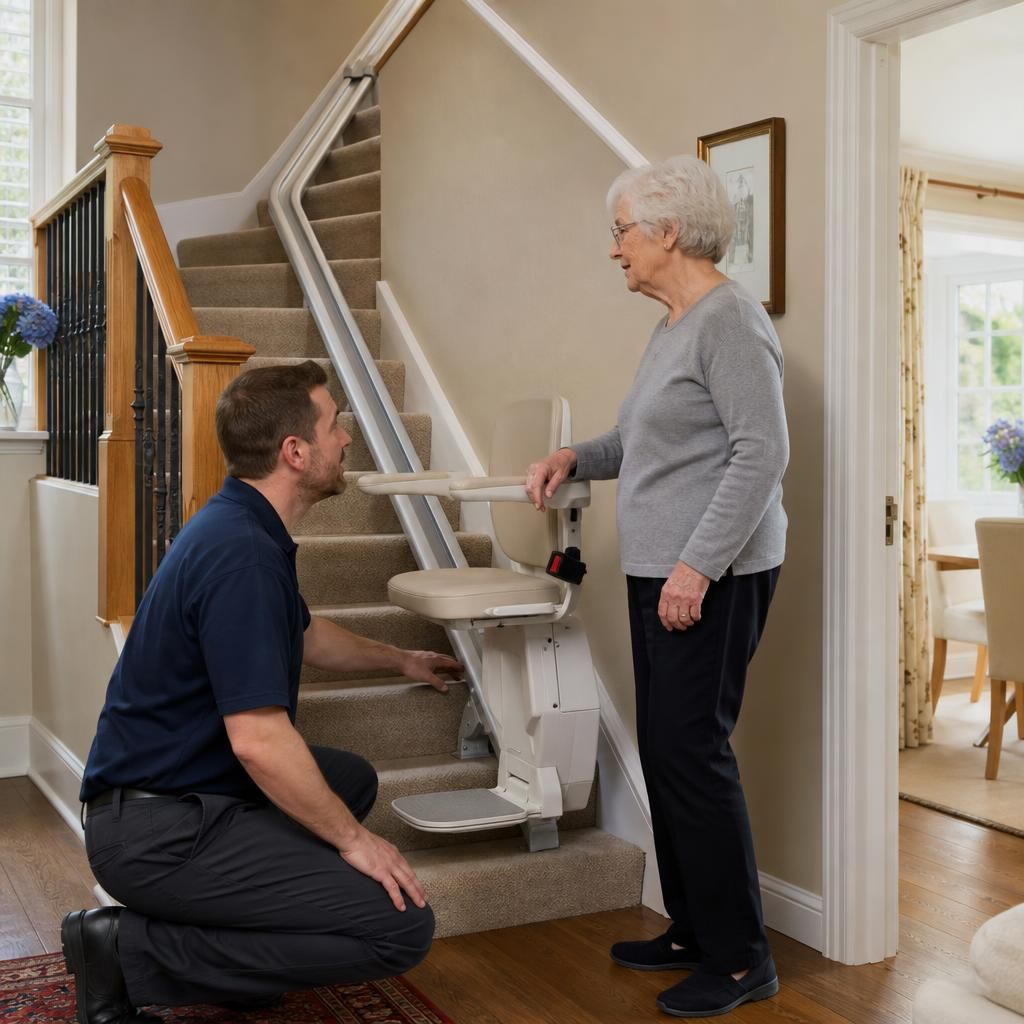
Arrange Your Stairlift Home Assessment
Arrange a home assessment to check your staircase, surrounding décor and access requirements before installation. Our specialist team can recommend a suitable stairlift and explain how the fitting will protect your home’s interior.