
Are reconditioned stairlifts a reliable option for long-term use?
Yes, a professionally inspected and reconditioned stairlift can be a reliable option for long-term use, provided it is suitable for your staircase and has been serviced using quality replacement parts. Before buying, check its condition, service history, warranty and the ongoing support available from the installer.
Yes. A professionally inspected and reconditioned stairlift can be a reliable option for long-term use when it is suitable for your staircase, refurbished with appropriate parts and installed by a competent provider. Reliability depends less on whether the stairlift is new or reconditioned and more on its condition, specification, installation, servicing and the support available after installation.
A reconditioned stairlift is not simply a second-hand lift that has been removed and fitted elsewhere. A properly reconditioned model should be assessed, cleaned, tested and serviced before it is offered for reuse. Components that are worn, damaged or no longer dependable should be replaced, and the stairlift should be checked for safe operation under the conditions expected in your home.
What makes a reconditioned stairlift reliable?
The quality of the refurbishment process is the most important consideration. Ask the installer what checks are carried out before the stairlift is supplied. These may include inspection of the drive system, carriage, track, seat, armrests, footrest, safety sensors, controls, charging system and batteries. The installer should also confirm that the lift operates smoothly, stops correctly and responds properly to its safety controls.
Some parts may be cleaned and tested for continued use, while others may need replacement. Batteries, for example, are consumable components and their condition can significantly affect day-to-day performance. A reputable provider should not rely on components that are close to the end of their useful service life simply because the stairlift can still move during a basic test.
It is also important that the reconditioned stairlift is the right model for the user and the staircase. A straight stairlift may be suitable for a simple, uninterrupted flight, whereas a staircase with bends, intermediate landings or multiple levels usually requires a curved system designed for that layout. Outdoor installations have different demands because the equipment must cope with exposure to weather and changes in temperature. Correct matching is essential for safe and dependable use.
Why a home assessment matters
A home assessment allows the installer to examine the staircase, available space, access points and the user’s mobility requirements. The assessment should consider how the person will approach the stairlift, sit down and stand up, use the controls and get on and off safely. Factors such as the width of the stairs, the position of doors, the height of the user and any difficulty bending the knees can affect the most suitable design.
This assessment is particularly important with a reconditioned stairlift because not every available model will suit every staircase or user. A suitable lift should not be selected solely because it has a lower purchase price. The track, seat design, controls, weight capacity and safety features all need to be appropriate. If the equipment is poorly matched, it may be uncomfortable to use, difficult to operate or unsuitable for long-term needs.
Check the warranty and aftercare
A warranty provides useful protection, but the terms vary between providers and products. Before agreeing to the installation, check what the warranty covers, how long it lasts and whether it includes labour, replacement parts, batteries and call-outs. Clarify whether exclusions apply to accidental damage, misuse or existing faults.
Aftercare is just as important as the initial warranty. Ask who will respond if the stairlift stops working, whether servicing is available locally and whether replacement parts can still be sourced for the model supplied. Older equipment can remain dependable, but long-term support may be more difficult if a model has been discontinued or its components are no longer readily available.
Maintenance and everyday use
Regular maintenance helps identify wear before it becomes a more serious fault. The service requirements depend on the model and how frequently it is used, so follow the installer’s recommendations. A service may include checking the drive mechanism, track, safety systems, charging points, batteries and fastenings, as well as cleaning areas where dust or debris could affect operation.
Users should follow the operating instructions and avoid placing items on the footrest or interfering with the safety sensors. The stairlift should be charged as instructed, particularly if it is used infrequently. Unusual noises, jerky movement, repeated stopping, warning lights or reduced battery performance should be reported rather than ignored. Do not attempt to repair electrical or mechanical components yourself.
Questions to ask before purchasing
- Has the stairlift been professionally inspected and serviced before installation?
- Which parts have been replaced, and will replacement parts remain available?
- Is the model suitable for the staircase and the user’s current mobility needs?
- What testing is completed after installation?
- What does the warranty include, and are batteries and labour covered?
- Who provides repairs and servicing if a problem develops?
- Are there any limitations relating to the user’s weight, posture or ability to transfer on and off the seat?
A provider should be willing to explain the stairlift’s condition, the work completed during refurbishment and the support included in the price. Be cautious if you are given limited information about its history, if the warranty is unclear or if the equipment is recommended without a proper assessment of the staircase and user.
Reconditioned compared with new
A new stairlift offers the widest choice of current specifications and may be preferable where a particular seat, control system or design is needed. A reconditioned stairlift can offer a practical alternative where a suitable model is available and the priority is dependable access at a lower initial cost. However, the lower price should not mean accepting unsuitable equipment, uncertain refurbishment or limited aftercare.
In summary, reconditioned stairlifts can provide reliable long-term service when they have been properly refurbished, correctly installed and supported with appropriate servicing and warranty cover. The safest decision is based on the individual stairlift’s condition and suitability rather than its label alone. A home assessment and a clear discussion of inspection, parts, warranty and aftercare will help you decide whether a particular reconditioned stairlift is appropriate for your home.
A reconditioned stairlift is reliable for long-term use only when its condition, safety systems and replacement parts have been properly checked before installation. The refurbishment process should include testing the drive mechanism, batteries, controls, seat and safety sensors, with worn components replaced rather than simply cleaned.
Ask what work has been completed and what support is included after installation. A clear warranty, access to servicing and continued availability of suitable parts are important, particularly if the model is older. The lift must also be matched to your staircase and mobility needs through a home assessment; a well-maintained stairlift that is difficult or unsafe for the user to operate is not a dependable long-term solution.
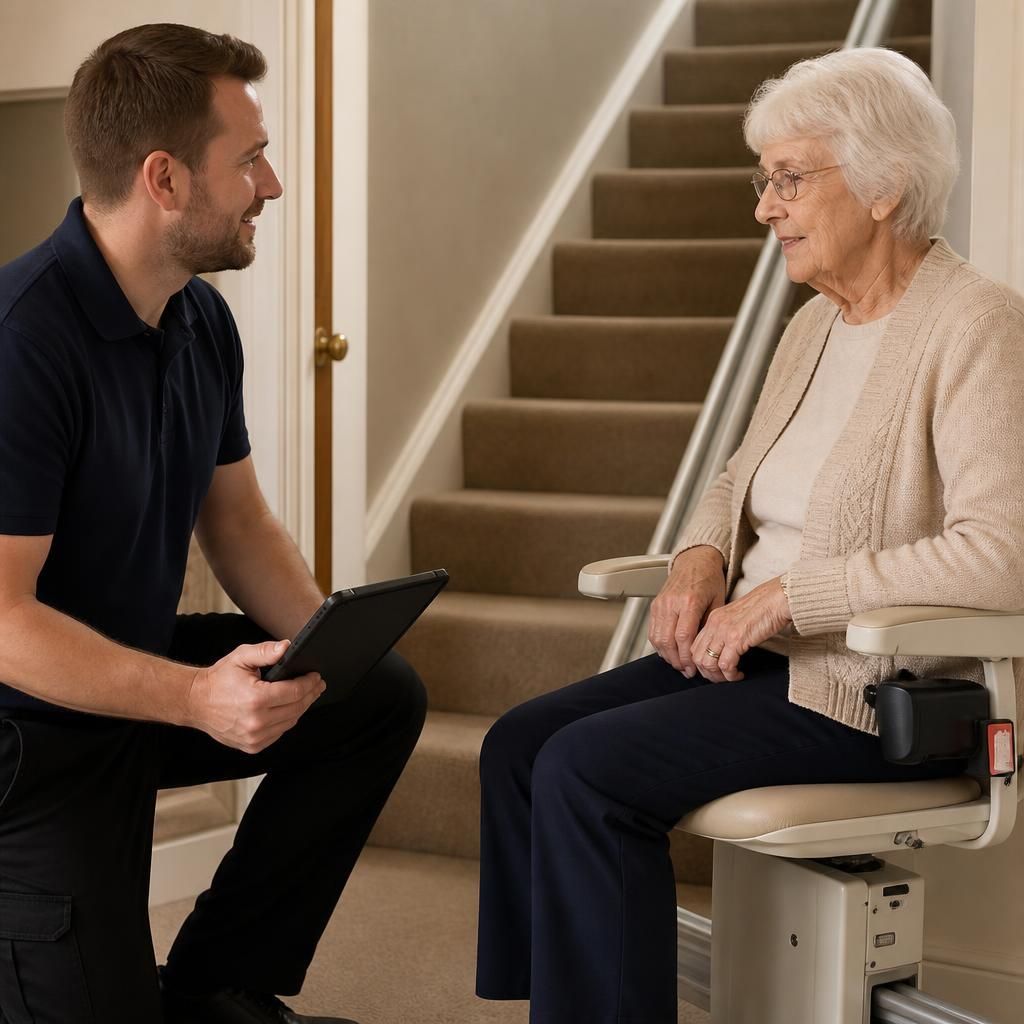
Arrange a home assessment for a reconditioned stairlift
Arrange a home assessment to confirm whether a reconditioned stairlift is suitable for your staircase, mobility needs and long-term use. We can discuss available models, refurbishment checks, warranty cover and ongoing servicing before you decide.