
How can stairlifts improve independence for senior users?
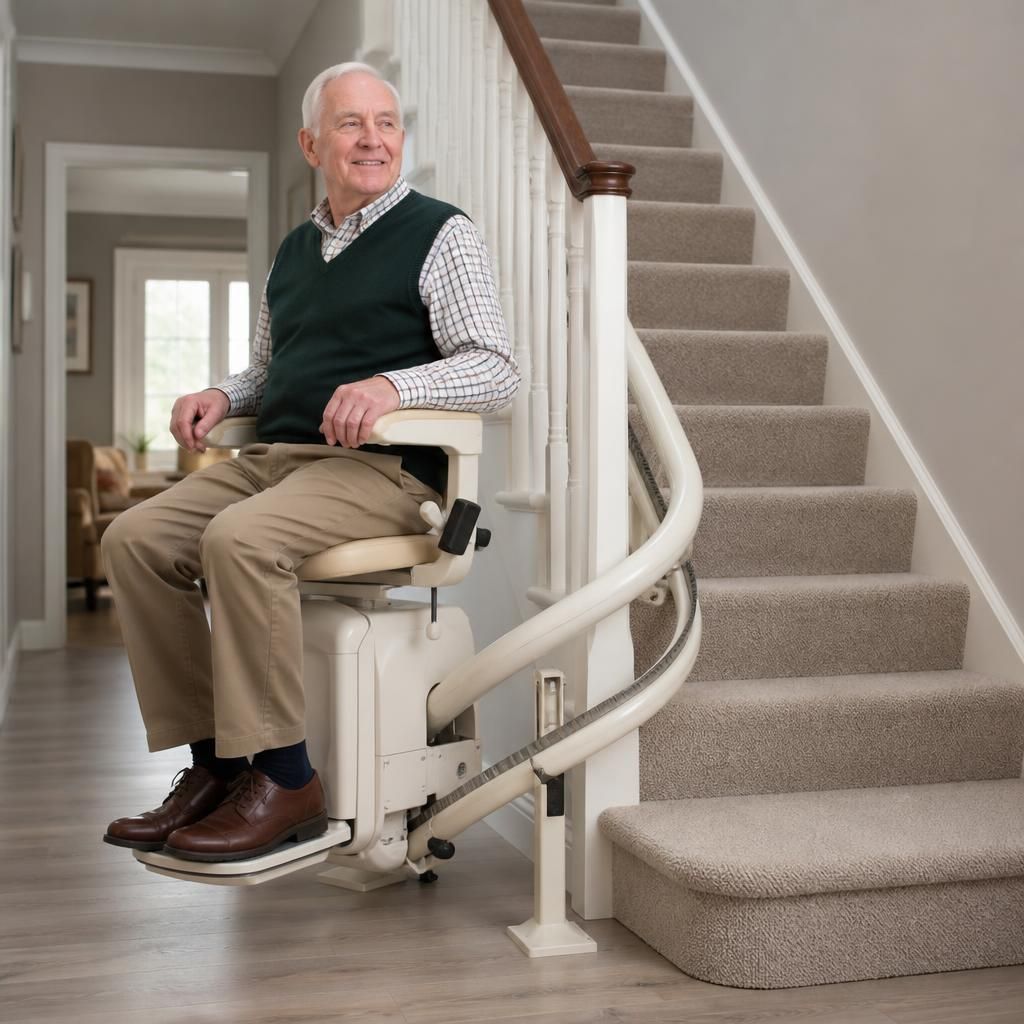
Stairlifts improve independence for senior users by providing a safe, reliable way to move between floors without relying on family members or risking falls on the stairs. This can make it easier to maintain daily routines, access bedrooms and bathrooms, and remain comfortably in a familiar home.
Stairlifts improve independence for senior users by providing a controlled, seated way to travel between floors without climbing the stairs unaided. This can reduce the need to ask relatives or carers for help, lower the risk associated with difficult transfers on the staircase and make essential areas of the home easier to reach.
Maintaining access to the whole home
When stairs become painful, tiring or unsafe, many people begin restricting themselves to a single floor. A stairlift can restore practical access to bedrooms, bathrooms, living areas and storage spaces. Being able to move around the home more freely helps maintain established routines, rather than requiring major changes such as moving a bed downstairs or relying on someone else to fetch belongings.
This is particularly useful where important facilities are located on different floors. For example, a senior user may be able to use the stairlift to reach an upstairs bathroom at night, return to a bedroom, or continue using a preferred living space without tackling the stairs on foot.
Reducing reliance on family members and carers
A stairlift does not remove the need for appropriate support, but it can reduce assistance with everyday movement between floors. A user may be able to decide when to go upstairs or downstairs instead of waiting for a relative or carer to be available. This can provide greater privacy and make ordinary activities feel less dependent on other people.
For adult children and other family members, a stairlift can also provide reassurance that the user has a safer option for accessing the staircase. It should not be treated as a replacement for welfare checks or professional care where these are needed. A proper assessment is still important if the user has significant balance, strength, vision or cognitive difficulties.
Supporting safer movement around the staircase
Stairs can be challenging because they combine changes in height with turning, stopping and transferring at the top or bottom. A stairlift provides a stable seat, a supported journey and controls that can usually be operated without standing or walking on the steps. Safety features such as a seat belt, armrests, obstruction sensors, swivelling or powered seats and suitable footrest protection can make the transfer and journey more manageable.
Safety depends on correct use and installation. The user should be able to sit down and stand up safely at the landing, operate the controls, fasten the belt and understand how to stop the lift in an emergency. Where these actions are difficult, the chosen model or additional support may need to be reconsidered.
Improving confidence without encouraging unnecessary risk
Confidence often reduces when a person has experienced pain, weakness, a near miss or a fall on the stairs. Having a stairlift can make the route more predictable and remove the pressure to hurry, carry items or use the handrail while managing a walking aid. A user can travel at the lift’s controlled speed and concentrate on sitting and standing safely.
Users should still avoid carrying loose or heavy items while travelling unless the stairlift has a suitable, secure carrying facility. Walking aids may need to be stored at the opposite landing, with an additional walking aid available if required. The staircase should remain clear, well lit and free from trailing cables or other obstructions.
Helping seniors remain in a familiar home
By restoring access between floors, a stairlift may help a senior user remain in a familiar property for longer. This can avoid or delay adaptations such as relocating essential furniture, changing sleeping arrangements or moving home solely because the stairs have become difficult. Whether it is suitable depends on the person’s mobility, the layout of the property and any other access barriers.
A stairlift is one part of an accessible-living plan. Other useful measures may include improved lighting, contrasting stair edges, grab rails, a suitable chair at the landing, non-slip flooring and a review of bedroom and bathroom access. Occupational therapists, physiotherapists or other qualified professionals can advise when mobility or care needs are complex.
Matching the stairlift to the user’s abilities and home
Independence is more likely when the stairlift is matched to both the staircase and the user. A personalised assessment should consider:
- Whether the stairs are straight, curved, narrow, steep or external.
- How easily the user can sit down, stand up and transfer at each landing.
- Seating position, posture, weight capacity and the need for powered or automated options.
- Hand control use, direction of travel and whether controls need to be available to a carer.
- Space at the top and bottom of the stairs, including doors, hallways and walking-aid storage.
- Whether a folding rail, hinged rail or compact design is needed to preserve access for other household members.
- Power supply, charging points and what should happen during a power interruption.
Straight stairlifts are generally designed for an uncomplicated flight, while curved models can follow bends, intermediate landings and changes in direction. Outdoor stairlifts require materials and protection suited to weather exposure. A reconditioned stairlift may also be appropriate where the model, condition, warranty and installation requirements have been assessed carefully.
Making daily activities more manageable
Improved access can support everyday tasks such as dressing, sleeping, washing, using the bathroom, doing laundry and spending time with other household members. The benefit is not simply the journey itself; it is the ability to plan the day without treating the staircase as a barrier or a potential hazard.
Before installation, consider how the stairlift will fit into the user’s normal routine. The seat height, swivel action, footrest, armrest support and control position can all affect whether the person can use it independently. Demonstration and instruction should be provided, and the user should have an opportunity to practise starting, stopping, parking and responding to any warning indicators.
Keeping independence over time
Independence can change as mobility, strength or balance changes. Regular servicing, prompt attention to unusual noises or movement and keeping the lift clean and unobstructed help maintain safe operation. The user and family should know how to report a fault and what to do if the stairlift stops away from a landing.
A professional review may be sensible if the user has had a fall, developed difficulty transferring, changed walking aids or can no longer operate the controls reliably. In some cases, adjusting the seating or controls may help; in others, additional care or a different mobility solution will be safer.
Ultimately, a stairlift improves independence when it gives a senior user reliable access while respecting their actual abilities and the home’s layout. A thorough assessment, appropriate safety features, clear instruction and ongoing servicing are as important as the lift itself. Independent Stairlifts can assess the staircase and discuss suitable straight, curved, outdoor or reconditioned options based on the user’s practical needs.
A stairlift can improve independence for a senior user by providing a controlled, seated way to travel between floors without climbing the stairs unaided. This can make bedrooms, bathrooms and living areas easier to reach while reducing the need to wait for family members or carers.
Independence depends on the stairlift being suitable for the user as well as the staircase. The seat height, swivel action, armrests, footrest, controls and seat belt should support safe transfers and comfortable operation. The user should be able to sit down, fasten the belt, operate the controls and stand safely at the landing.
A professional assessment can identify practical issues such as narrow landings, bends, doors, walking-aid storage and changes in the user’s mobility. With suitable installation, clear instruction and regular servicing, a stairlift can help a senior user continue using their familiar home more safely and with less day-to-day assistance.
Arrange a Personalised Stairlift Assessment
Arrange a personalised stairlift assessment with Independent Stairlifts to review the user’s mobility, staircase layout and suitable features. We can discuss straight, curved, outdoor or reconditioned options based on your practical needs.