
How do stairlifts for narrow stairs maintain user comfort without compromising space?
Stairlifts for narrow stairs maintain comfort through supportive seating, adjustable settings and smooth, controlled movement, while slimline designs, folding components and careful rail positioning help preserve usable space. A bespoke assessment ensures the lift suits both the staircase and the user without obstructing access more than necessary.
Stairlifts for narrow stairs maintain user comfort by combining a supportive, adjustable seat with a compact installation that keeps the lift and its folded parts as close to the staircase as practical. The most suitable design is determined by the user’s posture, mobility and transfer needs as well as the staircase width, gradient, landings, bends and available parking space.
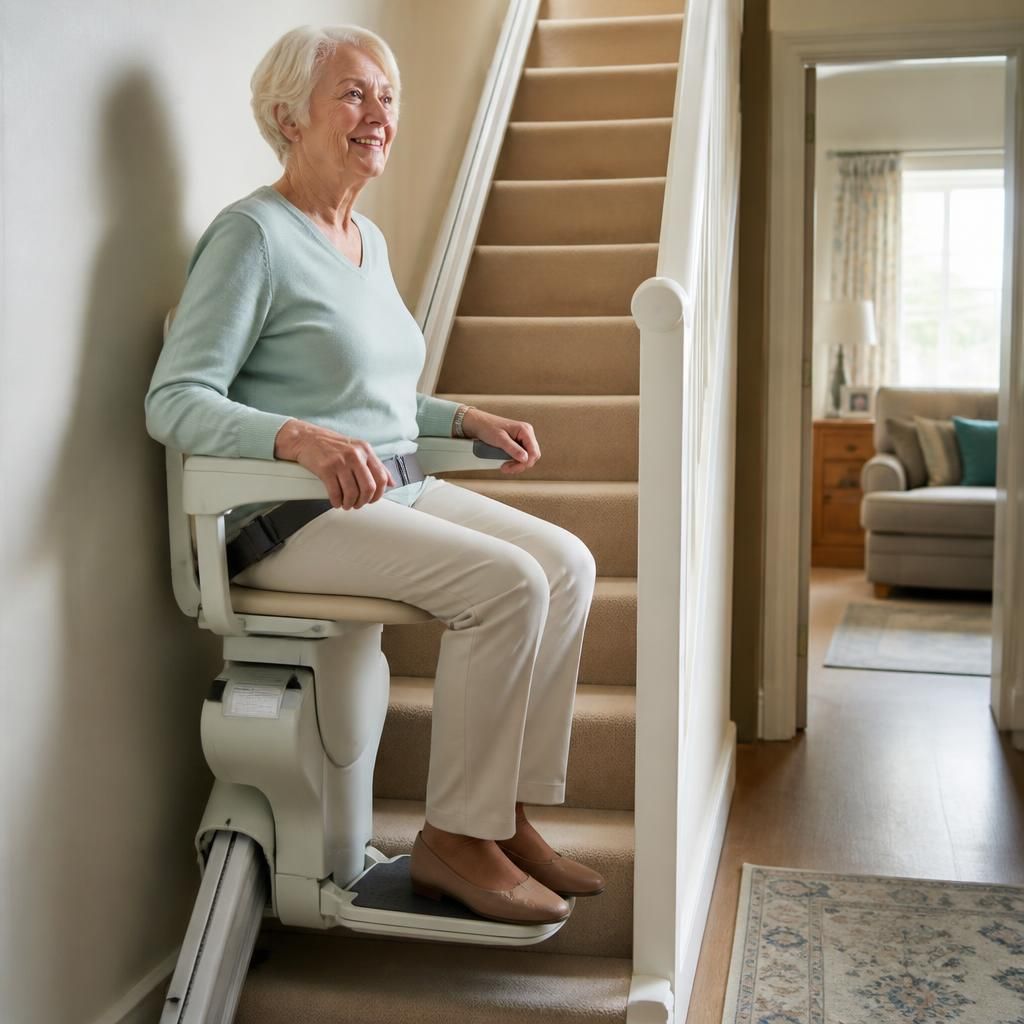
Comfort starts with the seating position. A narrow stairlift should still provide a stable seat, a supportive backrest and armrests that help the user remain balanced during travel. The seat height needs to allow a safe transfer from standing or from a nearby chair, while the footrest should support the feet without projecting unnecessarily into the walking route. Where appropriate, adjustable seat, armrest or footrest settings can help accommodate differences in height, leg length and flexibility.
A seat that is too wide, too high or poorly positioned may make a narrow staircase feel more restricted and can make getting on or off the lift difficult. Conversely, a compact seat that does not provide adequate support may reduce comfort and confidence. The objective is not simply to choose the smallest available model, but to find the smallest suitable configuration for the individual user.
Folding components help preserve usable space. Many stairlifts for narrow stairs are designed with a seat, armrests and footrest that fold when the lift is not in use. This can leave more room for other people to use the stairs, although the amount of clearance depends on the staircase and the equipment selected. Folding parts should be easy for the user or carer to operate, and the user should not have to lean into an awkward position to prepare the lift.
Some installations also use a hinged or retractable rail section where the bottom of the staircase is close to a doorway, passage or other obstruction. This can allow the lift to park without extending as far into the surrounding area. The rail arrangement must be assessed carefully, because the safest parking position may not be the same on every staircase.
Rail positioning is central to both space and comfort. On a narrow staircase, the rail is normally positioned to make the best use of the available tread and to maintain suitable clearance from walls, banisters and doorways. A bespoke rail can follow straight sections, curves and changes in direction rather than forcing the lift to occupy more room than necessary. At the same time, the rail must provide a stable, smooth route and allow the lift to stop in a position where the user can get on and off safely.
For curved or unusually shaped stairs, the track may be designed around intermediate landings, tight bends or changes in staircase width. This is particularly important where a standard straight rail would not provide a practical route or would leave the user facing an awkward transfer at the top or bottom.
Movement should be controlled rather than abrupt. A suitable stairlift provides a steady start, consistent travel and a controlled stop. Smooth movement can reduce unnecessary strain and help users who have reduced balance, joint discomfort or difficulty remaining upright. The operating controls should be positioned so they can be used without stretching, and remote controls may be useful when the lift needs to be called to another level.
Speed is only one consideration. A faster lift is not automatically more comfortable or suitable for a narrow staircase. The important points are predictable movement, effective braking, clear controls and a seating position that remains stable while the lift follows the rail.
Swivel and transfer features can make a compact lift easier to use. A swivel seat can turn towards the landing at the stopping point, helping the user get on or off without twisting across the staircase. Depending on the user’s mobility and the layout of the landing, a powered swivel or manual swivel may be considered. Fold-down or powered footrest options can also reduce the need to bend down, which may be useful for anyone with limited reach or strength.
Where sitting down and standing up is difficult, a standing or low-profile stairlift may be considered instead of a conventional seated model. These designs can sometimes suit particularly restricted staircases, but they are only appropriate when the user can stand securely and maintain balance throughout the journey. A thorough assessment is needed before choosing this type of solution.
Safety features support comfort by reducing the effort required from the user. A secure seat belt, stable armrests, sensors that respond to obstacles and controls that can be released easily all contribute to confident operation. A footrest safety sensor can help prevent travel if an obstruction is detected, while suitable braking and battery systems help the lift stop and operate reliably in normal use. Features should be selected according to the user’s abilities rather than added without considering whether they are simple to understand.
Keeping the staircase usable also depends on how the lift is parked. A lift may be positioned at the top or bottom, or moved to a designated parking point, depending on the layout. The parked position should not unnecessarily block a doorway, narrow landing or important route. If more than one person uses the stairs, the installation plan should consider when and where the lift will normally be left.
A professional assessment is essential on narrow stairs. The survey should consider the staircase dimensions, wall and banister positions, landings, doorways, electrical supply, parking locations and any changes in width. It should also consider how the user approaches the seat, transfers on and off, operates the controls and manages the belt or footrest. If the user’s condition is likely to change, the assessment should take future needs into account rather than focusing only on current use.
In practice, comfort without compromising space comes from balancing several elements: a supportive seat, suitable transfer height, accessible controls, smooth travel, folding components and a rail designed for the actual staircase. A bespoke recommendation from Independent Stairlifts can identify which features are necessary, which compact options are appropriate and where a compromise may affect safe everyday use.
Folding components help stairlifts for narrow stairs preserve usable space without removing essential support. A seat, armrests and footrest can fold when the lift is parked, leaving more room for other people to use the staircase. When open, these components should still provide a stable seating position, comfortable foot support and secure hand placement.
The rail position is equally important. A bespoke rail can be fitted to follow the staircase while keeping the lift as close to the wall as practical. Where space at the bottom is restricted by a doorway or passage, a suitable parking arrangement or hinged rail may reduce obstruction. These options must be assessed alongside the user’s transfer needs, because the most compact design is only appropriate if the user can operate it and get on and off safely.
Arrange your bespoke narrow-stair assessment
Arrange a bespoke narrow-stair assessment with Independent Stairlifts to confirm which stairlift configuration provides the right balance of comfort, safety and usable space in your home.