
What makes a stairlift suitable for elderly users?
A stairlift is suitable for elderly users when it provides safe, comfortable and dependable access while matching the user’s mobility, balance, strength and staircase. Key considerations include supportive seating, simple controls, smooth operation, safety sensors, secure transfers and professional assessment and installation.
A stairlift is suitable for an elderly user when it provides safe, comfortable and dependable access while matching the person’s mobility, balance, strength and staircase. The most appropriate solution should support secure transfers, be simple to operate, include relevant safety features and be professionally assessed and installed.
Suitability is not determined by age alone. An assessment should consider how the user walks, sits, stands and transfers, as well as any conditions affecting balance, grip, vision, hearing or memory. The staircase, available space and the position of doors and landings are also important. A stairlift that suits one person may be unsuitable for another, even in a similar home.
Safety and stability
A suitable stairlift should help the user remain stable throughout the journey and reduce the risk of falls when getting on or off. Important features and design considerations can include:
- A supportive seat with a secure backrest and suitable armrests.
- A seat belt or harness that is easy to fasten and release, where appropriate.
- Safety sensors that stop the lift if it detects an obstruction on the stairs.
- A swivel seat or powered swivel mechanism to help the user turn towards the landing before standing.
- Reliable brakes and controlled movement when starting, stopping and travelling around bends.
- Footrest protection and sufficient space for the user’s feet.
- Controls that prevent unintended movement and are positioned where the user can reach them comfortably.
The correct safety features depend on the individual. For example, a person with limited trunk control may need more support, while someone who finds twisting difficult may benefit from a powered swivel seat. A professional assessment can identify which features are necessary rather than treating every installation as the same.
Comfortable and supportive seating
Elderly users may spend significant time seated during everyday activities, so the stairlift should provide a stable and comfortable position without creating pressure points. The seat should be an appropriate width and height, with cushioning and back support suited to the user’s posture. Armrests should help the user feel secure without making it difficult to sit down or stand up.
The seat height is particularly important. If it is too low, standing may require excessive effort; if it is too high, the user may feel unstable when transferring. The footrest should support the feet at a comfortable height and should not force the knees into an awkward position. Where a user has joint pain, restricted hip movement or swelling, these details should be discussed during the assessment.
Simple, accessible controls
Controls should be clear, responsive and easy to use with the user’s available hand strength and dexterity. A straightforward control on the armrest is usually preferable to a complicated interface. It should be possible to start and stop the stairlift without excessive pressure or precise finger movement.
Remote controls can allow the lift to be called to the required floor, which is useful when more than one person uses it or when the user needs to leave it at the opposite end of the stairs. Controls and indicators should be easy to distinguish, particularly for someone with reduced vision. If memory or concentration is affected, consistent controls and clear instruction are especially important.
Smooth, dependable operation
A suitable stairlift should move at a controlled, predictable pace, without sudden acceleration, harsh stops or unnecessary vibration. Smooth operation can make the journey more comfortable for people with back, hip or knee problems and can reduce anxiety about using the equipment.
Reliability also matters. The lift should have a dependable rechargeable battery system so it can normally be used during a power cut, provided it has been maintained and charged correctly. Audible or visual alerts can indicate a low battery, an obstruction or another condition requiring attention. Regular servicing helps identify wear before it affects safe operation.
A suitable design for the staircase
The stairlift must be compatible with the staircase and the space around it. Straight stairlifts are designed for staircases without bends, while curved stairlifts are made to follow changes in direction, intermediate landings and more complex layouts. Outdoor models require materials and protection suited to exposure and changing weather conditions.
At the top and bottom of the stairs, the parking position should allow the user to get on and off without being left too close to a doorway, obstruction or change in floor level. A hinged or shortened rail may be useful where the rail could otherwise interfere with a door or walkway. These choices should be made during the site assessment, taking account of other household members and normal movement through the home.
Easy and secure transfers
Getting on and off the stairlift is often more demanding than the journey itself. The user should be able to approach the seat, turn and sit down without reaching too far or stepping around obstacles. At the landing, the stairlift should position the user so they can stand safely and move towards a stable surface or walking aid.
Where standing is difficult, a perching or standing stairlift may be considered, but this is only appropriate if the user can maintain enough strength and balance in that position. A seated stairlift is generally more suitable for someone who cannot stand securely for the journey. The assessment should also consider whether a carer needs to assist with transfers and whether there is enough room for that assistance.
Practical considerations for changing needs
Mobility can change over time, so it is sensible to consider likely future requirements when choosing a stairlift. The user may later need greater seating support, easier controls, a different belt arrangement or more help with transfers. A design that leaves suitable space around the staircase and does not obstruct essential routes can remain practical as circumstances change.
It is also important to check how the stairlift will affect other people in the household. When parked or folded, it should leave as much usable stair width as possible while still complying with the installation requirements. A professional survey can highlight potential issues involving radiators, bannisters, doors, narrow landings and changes in floor level.
Professional assessment, installation and support
A home assessment is the most reliable way to confirm whether a stairlift is suitable. The assessor should discuss the user’s abilities, health-related limitations and daily routine, inspect the staircase and explain the available options in clear terms. The installation should then be completed by a competent professional, with the lift tested and the user shown how to operate it safely.
After installation, the user should know how to charge the stairlift, use the controls, respond to an obstruction alert and contact the support team if the lift stops working. Keep the rail, seat, footrest and sensors free from objects, and follow the recommended servicing and maintenance arrangements. If the user’s mobility or confidence changes, request a review rather than attempting to adapt the equipment independently.
In practice, the best stairlift for an elderly user is one that combines the right physical support with simple operation, safe transfers, a suitable staircase design and dependable aftercare. Independent Stairlifts can assess these factors in the home and help identify a solution that is appropriate for the user now while allowing sensible consideration of future mobility needs.
A stairlift is suitable for an elderly user when it makes getting on, travelling between floors and getting off safer and more manageable. Secure transfers are particularly important, because standing up or sitting down can present more risk than the journey itself.
The seat should be positioned at a practical height, with supportive armrests, a stable backrest and a seat belt that is easy to fasten. A swivel seat can help the user turn towards the landing before standing, while a powered swivel function may be useful if they have limited strength or difficulty twisting. The lift should also stop in a position that leaves enough space to stand and reach a stable surface or walking aid.
During a home assessment, the user’s balance, leg strength, grip, posture and ability to transfer should be considered alongside the staircase layout. This helps determine whether a seated stairlift, additional seating support or another configuration is appropriate for their needs.
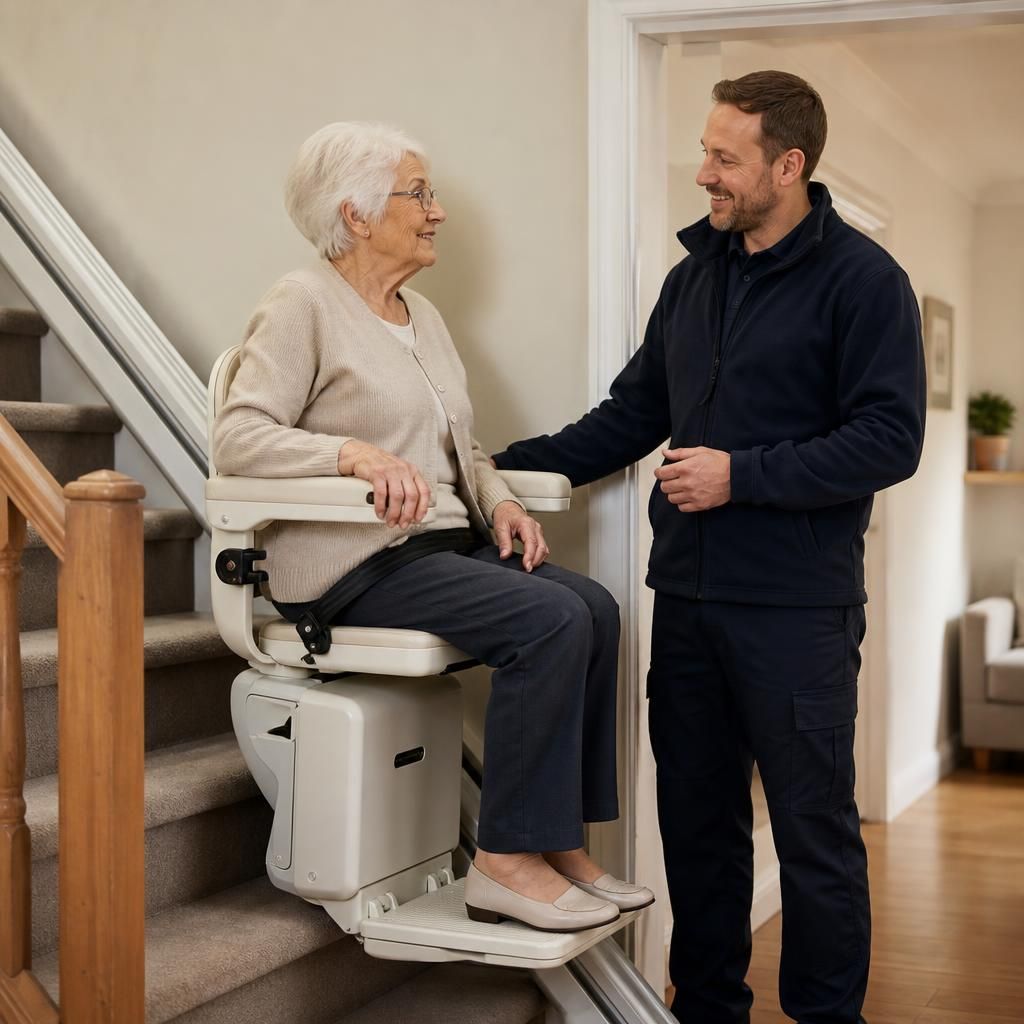
Arrange a stairlift assessment for your needs
Arrange a home stairlift assessment to review the user’s mobility, transfer needs and staircase layout. Independent Stairlifts can help identify a suitable configuration and explain the available options.