
What maintenance routines are essential to ensure the longevity and reliability of a stairlift in a domestic setting?
Essential stairlift maintenance includes keeping the track, seat and controls clean, checking for visible damage or unusual noises, ensuring the lift is parked on its charging point when not in use, and arranging routine servicing by a qualified engineer. Follow the manufacturer’s guidance, report faults promptly and avoid attempting electrical or mechanical repairs yourself to help maintain safe, reliable operation.
Essential stairlift maintenance combines regular cleaning and user checks with scheduled servicing by a qualified engineer. Keep the lift and track free from dirt and obstructions, charge it correctly, monitor changes in performance and report faults promptly. Following the manufacturer’s instructions is important because maintenance requirements vary between straight, curved, outdoor and reconditioned stairlift models.
Keep the stairlift clean and unobstructed. Wipe the seat, armrests, footrest, controls and accessible casing regularly with a soft, slightly damp cloth. Use only cleaning products recommended by the manufacturer, and do not spray liquid directly onto electrical components, switches or the charging contacts. Remove dust, pet hair and other debris from around the track and carriage, but do not apply oil, grease or other lubricant unless specifically instructed. The wrong lubricant can attract dirt or affect the lift’s movement and safety sensors.
Check the staircase and the area around the lift as part of normal household cleaning. Curtains, rugs, furniture, cables and stored items must not interfere with the track, footrest, swivel seat or moving parts. On an outdoor stairlift, clear leaves, mud, ice and standing water from the steps and track, while taking care not to damage weather seals or electrical connections.
Use the charging system correctly. When the stairlift is not in use, park it at its designated charging point, unless the installation instructions state otherwise. This allows the batteries to remain charged and helps prevent the lift from being unavailable when needed. If the model has charging points at both ends of the track, use the recommended parking positions. Do not switch off the stairlift’s power supply routinely, as doing so may prevent the batteries from charging.
Pay attention to changes in battery performance. A lift that travels more slowly, stops before reaching the usual destination, gives repeated low-battery warnings or needs charging more often may require battery testing or replacement. Batteries are serviceable components and should be replaced by a qualified engineer; do not attempt to open the battery compartment or alter the charging system yourself.
Carry out simple visual and functional checks. Before use, look for loose covers, damaged upholstery, exposed wiring, unusual wear or anything caught in the track. Check that:
- the seat locks securely in its normal travelling position;
- the swivel seat and any safety belt or harness operate as intended;
- the footrest is stable and clear of obstructions;
- the joystick, remote controls and stop control respond correctly;
- the lift starts, stops and travels smoothly without unusual vibration, knocking or grinding; and
- the safety sensors stop or prevent movement when an obstruction is detected, where this feature is fitted.
These checks are not a substitute for professional servicing. A safety feature that appears inconsistent, or a lift that behaves differently from normal, should be taken out of use until it has been assessed.
Arrange routine professional servicing. A qualified stairlift engineer should inspect the lift at the interval set out by the manufacturer or service agreement. A service normally includes checking the track, carriage, drive system, batteries, charging contacts, switches, sensors, seat mechanism, safety belt and fixings. The engineer can also test operating forces, identify wear that is not visible during everyday use and confirm that the lift is working safely within its intended specification.
Servicing is particularly important where the stairlift is used frequently, supports a heavier user within its rated capacity, is installed outdoors, or has been in storage or is reconditioned. Outdoor equipment may need additional inspection for corrosion, moisture ingress and weather-related deterioration. If the stairlift is used by more than one person, tell the engineer about any changes in usage or user requirements.
Report faults rather than repeatedly resetting the lift. Stop using the stairlift if it makes an unusual noise, moves erratically, fails to stop correctly, shows a fault indication, loses power unexpectedly or has damaged safety equipment. Check only the basic points covered in the user instructions, such as whether the lift is switched on, correctly parked and free from an obvious obstruction. Do not bypass a safety sensor, force the lift along the track, remove covers or attempt electrical, battery or mechanical repairs.
Keep the user manual, engineer’s service reports and contact details for support in an accessible place. Recording servicing, battery replacement and reported faults provides a useful maintenance history and helps an engineer diagnose recurring problems. If the stairlift is moved, altered or exposed to unusual conditions, arrange a safety check before regular use resumes.
Good daily care will not prevent every fault, but it reduces avoidable wear and helps identify problems early. Cleaning the lift, keeping it charged, maintaining a clear staircase, observing its normal operation and arranging qualified servicing are the key routines for preserving safe, dependable performance in a domestic setting.
Routine professional servicing is essential for keeping a domestic stairlift safe and reliable over time. A qualified engineer can identify wear and faults that may not be visible during everyday use, including issues with the drive system, batteries, charging contacts, track, sensors, seat mechanism and safety belt.
Arrange servicing at the interval recommended by the manufacturer or your service agreement. Tell the engineer about any changes in use, unusual noises, slower movement, repeated low-battery warnings or unexpected stops. Outdoor, frequently used and reconditioned stairlifts may need particularly careful inspection because moisture, heavier use or previous storage can affect components.
Between services, keep the stairlift clean, parked correctly on its charging point and free from obstructions. Do not remove covers, lubricate parts or attempt electrical or mechanical repairs yourself. If the lift behaves differently from normal or a safety feature does not work consistently, stop using it and contact a qualified engineer for advice.
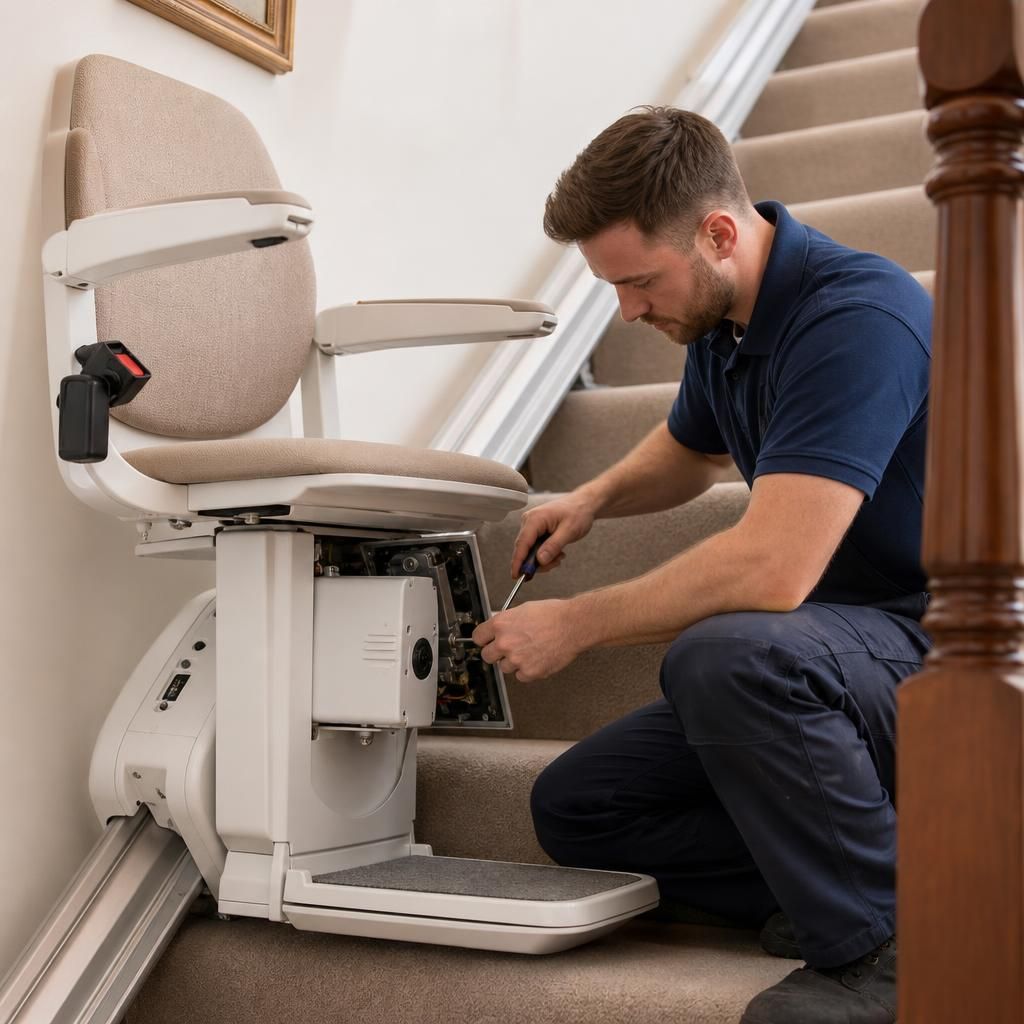
Arrange professional stairlift servicing
Arrange professional stairlift servicing at the interval recommended by the manufacturer or your service agreement. Contact Independent Stairlifts to book a qualified engineer and discuss any changes in performance or concerns about your lift.