
What maintenance and support options are available for my stairlift investment?
Your stairlift investment can be supported through planned servicing, responsive repairs, replacement parts and advice on safe day-to-day use. Independent Stairlifts can help assess the lift’s condition, explain available cover and arrange appropriate support to keep it reliable and suitable for your changing needs.
Support for your stairlift investment can include planned servicing, warranty assistance, fault diagnosis, repairs, replacement parts, battery care and advice on safe use. The right arrangement depends on the stairlift model, its age and condition, how frequently it is used, and the level of cover selected at installation or afterwards.
Planned servicing and inspections
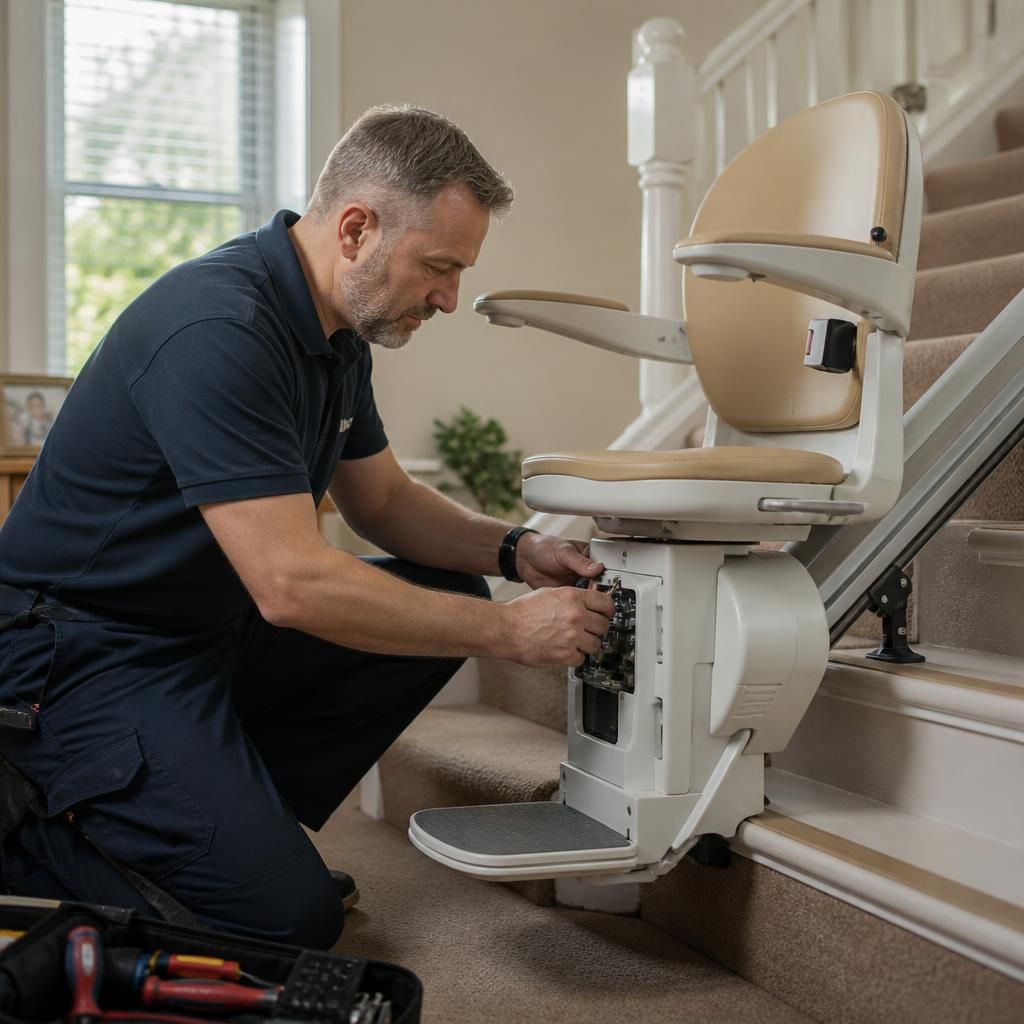
A service inspection checks the stairlift’s mechanical, electrical and safety systems before a minor issue becomes a breakdown. A qualified engineer may examine the track, drive system, seat, armrests, footrest, swivel mechanism, sensors, charging points, controls and safety edges. They can also check that fixings are secure, moving parts are operating correctly and the lift is stopping as intended.
Servicing is particularly useful where the stairlift is used frequently, has been installed in a demanding environment, or is supporting a user whose mobility or balance has changed. A service does not replace everyday checks, but it provides a more detailed assessment and helps identify wear that may not be obvious during normal use. The recommended interval should follow the manufacturer’s guidance and the engineer’s assessment of the installation.
Warranty and service agreement support
Your paperwork should explain what is covered, how long the cover lasts and which exclusions apply. Depending on the agreement, support may include labour, replacement components or attendance for faults arising during normal use. Accidental damage, misuse, unauthorised alterations and some consumable items may be treated differently, so check the terms rather than assuming every repair is included.
If you need assistance under a warranty or service agreement, have the stairlift details available and describe what has happened. The model, installation address, symptoms shown on the display and any warning sounds can help the support team decide whether advice, a scheduled visit or urgent attention is appropriate.
Fault diagnosis and repairs
Many apparent faults have a straightforward cause, such as the lift not being parked at a charging point, an armrest control not being switched on, an obstruction affecting a safety sensor or a remote control needing attention. Support staff can often guide you through safe initial checks. Do not remove covers, bypass a safety sensor or attempt electrical repairs yourself.
Where an engineer is required, they can inspect the fault, test the stairlift and identify whether adjustment, cleaning, a replacement part or more extensive repair is needed. Genuine, compatible components are important because the lift’s safety systems, charging equipment and drive components must work together. Ask for an explanation of the proposed work and whether the repair is covered by your existing agreement before authorising chargeable work.
Battery and charging support
Most domestic stairlifts use rechargeable batteries and are designed to remain connected to their charging point when parked. Keeping the lift correctly positioned for charging is one of the simplest ways to reduce avoidable interruptions. If the lift travels more slowly, stops before reaching the end of the track, gives a low-battery warning or fails to operate after being parked correctly, the batteries or charging system may need checking.
Batteries are service items and eventually lose capacity. Their condition can be affected by age, infrequent use, poor charging contact or a fault elsewhere in the system. Replacement should be carried out using the correct specification and by a suitably qualified person. Do not dispose of old batteries with ordinary household waste; follow the disposal advice provided with the replacement.
Emergency and responsive assistance
Ask what contact route applies to your cover and whether assistance is available outside normal office hours. If the stairlift stops on the stairs, remain seated if it is safe to do so, use the controls or alarm provided, and contact the support service. If you can safely reach the stairs without the lift, avoid attempting to move it manually unless the instructions specifically allow this.
If there is smoke, a burning smell, visible electrical damage, unusual heat or another immediate hazard, switch the stairlift off if this can be done safely, keep away from the equipment and seek appropriate emergency help. A stairlift should not be used again until it has been inspected if it has been involved in an impact, water exposure or another event that could affect its safety.
Support for changing needs
Maintenance is not only about repairing faults. An assessment can also establish whether the current setup remains appropriate as the user’s strength, balance, vision or confidence changes. Possible adjustments may include control settings, seat or armrest positioning, a different control method or advice about transfers. Any change should be assessed professionally; adding cushions, altering components or fitting accessories without checking compatibility can affect the user’s position and the safety sensors.
If the stairlift is no longer suitable, support may include discussing an upgrade, relocation, replacement or a different mobility solution. A curved or straight lift, for example, may have different servicing requirements, while an outdoor installation is exposed to weather and may need particular attention to its covers, charging equipment and controls. Reconditioned stairlifts should also be maintained according to the model’s instructions and the condition recorded at installation.
Everyday checks that help prevent problems
- Keep the track and steps clear of clothing, toys, pet items and other obstructions.
- Park the stairlift as instructed so that it can charge correctly.
- Keep controls, sensors and charging contacts clean and dry, using only the cleaning method recommended for the model.
- Check that the seat, armrests, footrest and swivel mechanism are working normally before use.
- Pay attention to new noises, jerky movement, unexpected stops, warning lights or changes in speed.
- Keep the user’s instructions and support contact details where they can be found easily.
Do not use the stairlift if a safety feature appears faulty or if its movement has changed significantly. Report the issue promptly and explain whether it happens in one direction, at a particular point on the staircase or only when a specific control is used. These details can make diagnosis more efficient.
Keeping useful records
Retain the installation information, user manual, warranty or service agreement, service reports and details of replacement parts. Note the date of a fault, any message displayed and what happened immediately beforehand. This record helps establish how the stairlift has been maintained and gives the engineer useful information when planning further work.
For ongoing support, contact Independent Stairlifts to confirm the cover available for your installation, arrange a service or discuss a repair. If your circumstances have changed, mention this when booking so the assessment considers both the condition of the stairlift and whether it still provides the safest, most practical access for the user.
Planned stairlift servicing is a detailed inspection of the lift’s mechanical, electrical and safety systems, carried out to identify wear or developing faults before they cause an interruption. An engineer may check the track, drive system, seat, swivel mechanism, footrest, controls, safety sensors, charging points and fixings, then test that the lift starts, travels and stops correctly.
Servicing should follow the manufacturer’s guidance and take account of the lift’s age, condition, frequency of use and installation environment. It does not replace simple daily checks: keep the track and steps clear, park the lift correctly for charging, and report unusual noises, jerky movement, warning lights or unexpected stops. If a fault affects a safety feature, stop using the stairlift and contact the appropriate support service rather than attempting a repair yourself.
Arrange Stairlift Maintenance or Support
Contact Independent Stairlifts to arrange a service, discuss your existing cover or report a stairlift fault. If the user’s mobility or circumstances have changed, mention this so we can assess whether the current setup remains suitable.