
What are the energy efficiency considerations when selecting a stairlift, and how do they impact electricity usage over time?
When selecting a stairlift, consider its battery-charging system, standby consumption, charging efficiency and how often it will be used, as these factors affect electricity usage over time. Most modern stairlifts use rechargeable batteries and draw power mainly while charging, so choosing a well-maintained model with efficient standby operation can help keep ongoing electricity use low without compromising reliability.
Stairlift energy efficiency is mainly determined by the way its rechargeable batteries are charged, how much electricity the charger uses in standby, and how often the lift travels. Most modern stairlifts run from batteries rather than drawing full power directly from the household supply during each journey. The mains electricity is used primarily to recharge those batteries, so a correctly installed and maintained stairlift usually has a modest effect on overall household electricity usage.
How a stairlift uses electricity
A stairlift normally has a charger connected to a standard domestic socket. When the stairlift is parked at a designated charging point, the charger replenishes the batteries and then reduces or stops the charging current once they are charged. The batteries supply the motor when the stairlift is travelling. This arrangement allows the lift to continue operating for a period during a power cut and avoids the charger having to provide all the motor’s power instantly.
Electricity use is therefore not simply based on the length of time the stairlift is moving. The charger may remain connected while the stairlift is not being used, and some electricity is required to operate the charging system and its controls. Efficient models minimise this standby demand, while older or poorly maintained chargers may be less efficient.
Key energy efficiency considerations when choosing a stairlift
- Battery-charging system: Ask what type of charger is supplied and how it manages charging once the batteries are full. A modern, properly regulated charger should avoid unnecessary continuous charging.
- Standby consumption: Check whether the manufacturer provides information about the charger’s standby or idle electricity use. This can be more relevant than the short periods when the stairlift is travelling.
- Battery condition and quality: Batteries that are ageing, damaged or repeatedly allowed to discharge may need longer charging and may provide less reliable performance. Replacement batteries can restore normal operation and charging efficiency.
- Expected frequency of use: A stairlift used several times a day will require more energy than one used occasionally. The number of journeys, the distance travelled and the weight carried all affect the work required from the motor.
- Staircase design: A curved stairlift may travel a longer or more complex route than a straight model, although the actual electricity use depends on the equipment, journey pattern and installation. Energy efficiency should be considered alongside the correct rail design and safe access.
- Installation environment: Outdoor stairlifts are exposed to cold, damp and changing temperatures. These conditions can affect battery performance and may increase the need for charging or maintenance. Weather protection and suitable positioning of the charging points are important.
- Condition of a reconditioned stairlift: A reconditioned model can be an appropriate option, but its batteries, charger, motor and control systems should be inspected and tested. The age and service history of these parts are more useful indicators than appearance alone.
How electricity usage changes over time
At first, electricity use may be relatively consistent if the stairlift is used in the same way each day. It can increase when the batteries begin to lose capacity, because the charger may run for longer and the stairlift may require more frequent charging. A battery that no longer holds charge properly can also reduce reliability, particularly if the user makes several journeys without allowing the lift to recharge.
Electricity consumption can also change if the stairlift is moved from its usual charging position, switched off at the socket, or left away from a charging point. Many stairlifts are designed to charge at one or both ends of the rail. Parking the lift correctly helps maintain the batteries and ensures it is ready for use. The precise charging instructions vary by model, so follow the guidance provided during installation rather than assuming that unplugging the charger saves energy.
Estimating the running cost
To estimate electricity use, you need the charger’s power demand, the time it spends drawing electricity and the frequency of use. The basic calculation is:
Power in watts × operating time in hours ÷ 1,000 = energy in kilowatt-hours (kWh)
You can then multiply the estimated kWh by your electricity tariff. This calculation is only an approximation because a charger does not necessarily draw its full stated input continuously. The most useful information to request is the model’s typical energy consumption, standby demand and charging requirements. A plug-in energy monitor may also help measure the charger’s actual household consumption, provided it is used safely and does not interfere with the installation.
Maintenance helps control energy use
Routine servicing supports both efficiency and reliability. The technician can check battery condition, charger operation, charging contacts, the motor and drive mechanism, and any unusual noise or resistance. Keeping the rail and moving components clean, as recommended for the particular model, can help prevent avoidable strain. Do not apply oils or make electrical adjustments unless the manufacturer or service engineer specifically instructs you to do so.
If the stairlift is taking noticeably longer to charge, stopping unexpectedly, travelling more slowly, making unusual sounds or failing to remain charged, arrange an inspection. These symptoms should not be treated as an energy issue alone: they may indicate a battery fault, charger problem or mechanical issue that affects safe operation.
Balancing efficiency with suitability
The most energy-efficient stairlift is not necessarily the best choice if it does not suit the user, staircase or likely future needs. A correctly sized and installed stairlift should provide dependable movement, appropriate seating and controls, and safe charging at the points where it will be parked. A professional assessment can identify the suitable model and explain its expected charging behaviour, including any considerations for a curved, outdoor or reconditioned installation.
In practice, sensible parking, good battery care and regular servicing usually have a greater effect on long-term electricity use than trying to minimise the short motor journeys themselves. Ask for the charger and battery specifications as part of the installation information, and report changes in charging or performance promptly so that efficiency and reliability can be considered together.
A stairlift uses most of its electricity through the battery charger rather than during the short journeys made on the stairs. Parking the lift correctly at its charging point allows the batteries to recharge efficiently and keeps the stairlift ready for use.
Moving the stairlift away from its charging point, switching off the charger unnecessarily or allowing the batteries to become deeply discharged can affect charging performance. Follow the instructions supplied for your particular model, as some stairlifts charge at one end of the rail and others at both ends. If charging takes noticeably longer, the lift travels more slowly or the batteries no longer hold their charge, arrange a service inspection rather than continuing to use it in that condition.
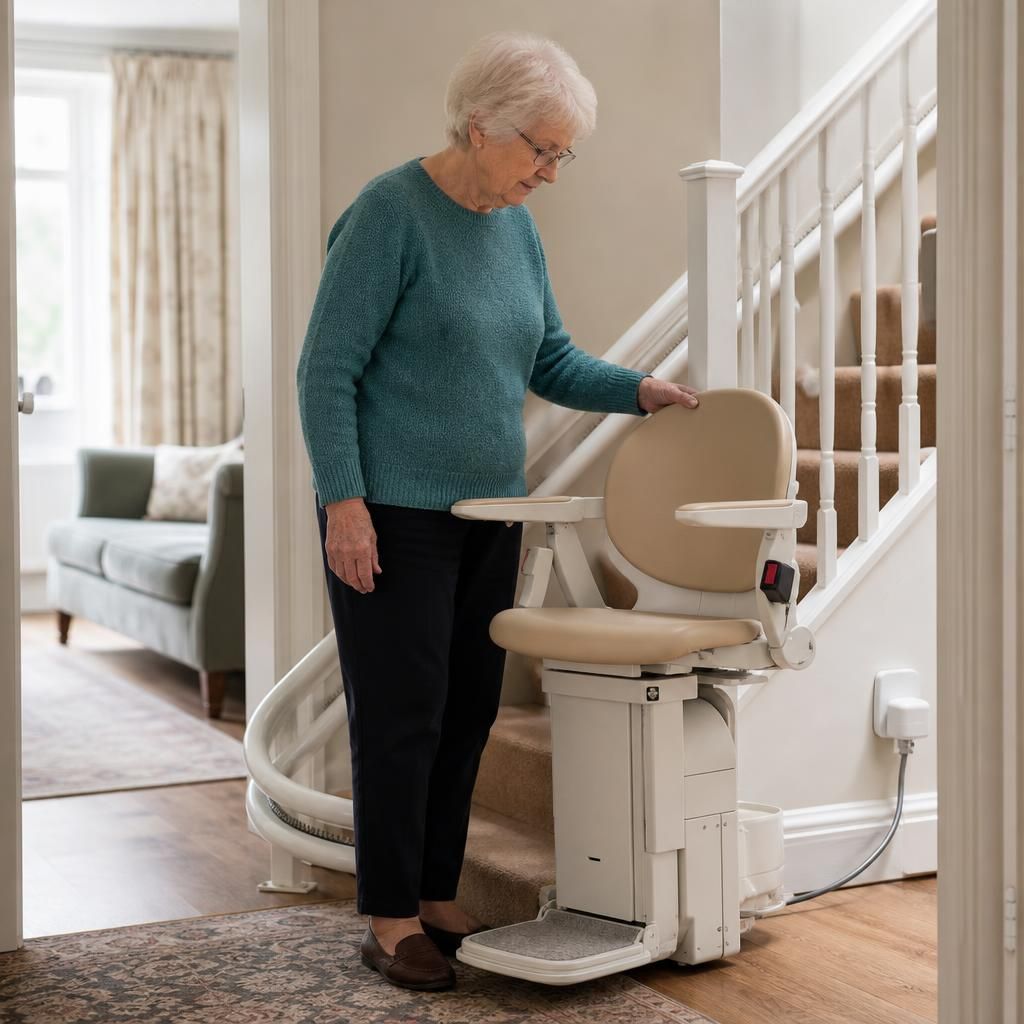
Ask us about your stairlift’s energy efficiency
Ask us about your stairlift’s energy efficiency. We can explain its charging requirements, battery condition and practical ways to support reliable, efficient operation.