
How do stairlifts accommodate different user needs?
Stairlifts accommodate different user needs through tailored choices of stairlift type, seat design, controls, safety features and installation position. A professional assessment can match the lift to the user’s mobility, comfort requirements and staircase, whether a straight, curved, outdoor or reconditioned solution is appropriate.
Stairlifts accommodate different user needs by combining an appropriate lift type with the right seat, controls, safety features and installation position. The most suitable configuration depends on the user’s mobility, balance, strength, stature and confidence, as well as the shape of the staircase and how the rest of the home is used. A professional assessment helps ensure these factors are considered together rather than choosing a standard model in isolation.
Accommodating different levels of mobility
Users may have difficulty climbing stairs for very different reasons. Reduced leg strength, painful joints, limited balance, breathlessness, neurological conditions or recovery after an injury can all affect how a stairlift should be configured. Someone who can sit and stand independently may need a conventional seated stairlift, while someone with greater difficulty transferring may benefit from features that make sitting down and standing up more controlled.
An assessment should consider how the user approaches the stairlift, whether they can turn safely into the seat, how steadily they can sit during travel and whether they can stand at the top or bottom without assistance. If a carer is involved, the available space for support should also be considered. The aim is not simply to transport the user between floors, but to make each transfer as manageable and predictable as possible.
Choosing a suitable seat and posture
Seat design has a direct effect on comfort, stability and ease of use. Options may include a standard seat, a more supportive chair-style seat or a design with additional adjustment for the user’s height and leg position. A swivel seat can help the user turn towards the landing before standing, reducing the need to twist on the stairs. A powered swivel or powered footrest may be useful where manual movement is difficult, although suitability depends on the individual assessment.
Armrests provide support while travelling and can make the user feel more secure when sitting down or standing up. A seat belt or harness should be selected according to the user’s balance and posture. For someone who tends to lean, slides forward or has limited trunk control, the installer may recommend a configuration that provides additional positioning support. The seat must also be appropriate for the user’s size and weight, with the manufacturer’s operating limits observed.
Some users need a more upright position because of limited hip or knee movement, while others require a seat that offers greater cushioning and back support. Where a standard seated stairlift is not appropriate, an assessment can identify whether another mobility solution or additional assistance is needed instead.
Matching controls to dexterity and eyesight
Controls should be usable without excessive grip strength, reach or precision. A simple armrest control may suit a user who can operate a small lever or button with one hand. If hand movement is restricted, the control arrangement may need to be positioned carefully or adapted to the user’s stronger side. Clear, tactile controls can help users who have reduced vision or difficulty distinguishing small switches.
Most stairlifts can be operated from controls at the armrest, with additional controls at the landings. Remote controls allow the lift to be called to the required floor, which can be helpful when more than one person uses the staircase or when a carer needs to move the chair. Controls should be placed where they are easy to reach without leaning dangerously from the seat or stairs.
Adapting to the staircase and home layout
A straight stairlift is designed for a staircase without a change in direction or intermediate landing. A curved stairlift is made to follow bends, corners, split-level arrangements and changes in gradient. It is manufactured to suit the individual staircase, so the rail position and parking location can be planned around doorways, radiators, hallways and available landing space.
Where space is restricted, a compact or hinged arrangement may help keep an entrance, cupboard or walkway usable. A powered hinge can be considered where manually moving the rail would be difficult, but it must be positioned so that it does not obstruct doors or create a trip hazard. Parking the chair away from the foot or top of the stairs can also help preserve access for other people in the household.
Outdoor stairs require equipment designed for external conditions, including suitable protection against rain, damp, temperature changes and debris. The route, charging position and storage arrangements should be assessed as part of the installation rather than treating an outdoor lift as an indoor model placed outside.
Providing safety for different abilities
Common safety features include a seat belt, sensors that detect obstacles, controlled starting and stopping, swivel-seat interlocks and emergency stop controls. The lift should not move unless the seat and relevant safety components are correctly positioned. Sensors can stop the stairlift if it encounters an obstruction, but the staircase should still be kept clear of loose items, pets and other hazards.
For a user who is anxious, unsteady or easily fatigued, a steady speed, smooth movement and clear operating instructions can make a significant difference. A battery-powered stairlift is designed to continue operating for a period during a mains power failure, provided it has been correctly charged and maintained. The user should know where the emergency controls are and what to do if the lift stops away from a landing.
Safety features do not remove the need for safe transfers. Users should remain seated, use the belt as instructed and avoid carrying objects that could interfere with the controls or balance. A walking aid may need to be left at the destination landing or positioned so it can be reached safely once the user has completed the transfer.
Considering changing or future needs
A stairlift should meet current requirements without making reasonable future use more difficult. If mobility is likely to change, it is useful to discuss possible developments during the assessment. For example, a user who currently manages a manual swivel may later need powered operation, or someone who can use a standard seat may eventually need more support when standing.
The staircase and landing should also be considered for future access. A configuration that leaves useful circulation space clear may be preferable to one that creates a permanent obstruction. It is important, however, not to select features solely for a possible future need if they make the lift harder to operate today. The best arrangement balances present safety and independence with practical flexibility.
Making the choice with a professional assessment
A home assessment normally reviews the staircase measurements, the proposed rail route, landing space, power supply, parking position and any doors or obstacles nearby. The assessor should also discuss the user’s physical abilities, preferred side of operation, transfer method, seating position, typical clothing and whether another person will assist them.
Before installation, explain any difficulty with knees, hips, shoulders, balance, vision, hearing or hand control, even if it seems unrelated to the staircase. These details can affect the seat, controls and safety arrangements recommended. The finished stairlift should be demonstrated at a comfortable pace, with the user given clear guidance on operation, charging, emergency procedures and routine care.
By assessing the person and the property together, a stairlift can be configured around the user rather than expecting the user to adapt to a fixed design. This approach helps provide suitable support for everyday transfers, comfortable travel and continued access between the floors of the home.
Stairlifts accommodate different user needs by allowing the seat, controls and safety features to be matched to a person’s mobility, posture, strength and confidence. A professional assessment can identify whether the user needs a swivel seat for safer transfers, additional positioning support, an easy-to-operate control or a powered feature where manual movement is difficult.
The staircase and surrounding space also influence the solution. A curved or compact installation can be planned around landings, doors and walkways, while an outdoor model requires protection from changing weather conditions. Discussing current difficulties and possible future changes during the assessment helps ensure the stairlift supports safe, practical use without making unnecessary adjustments that could complicate everyday operation.
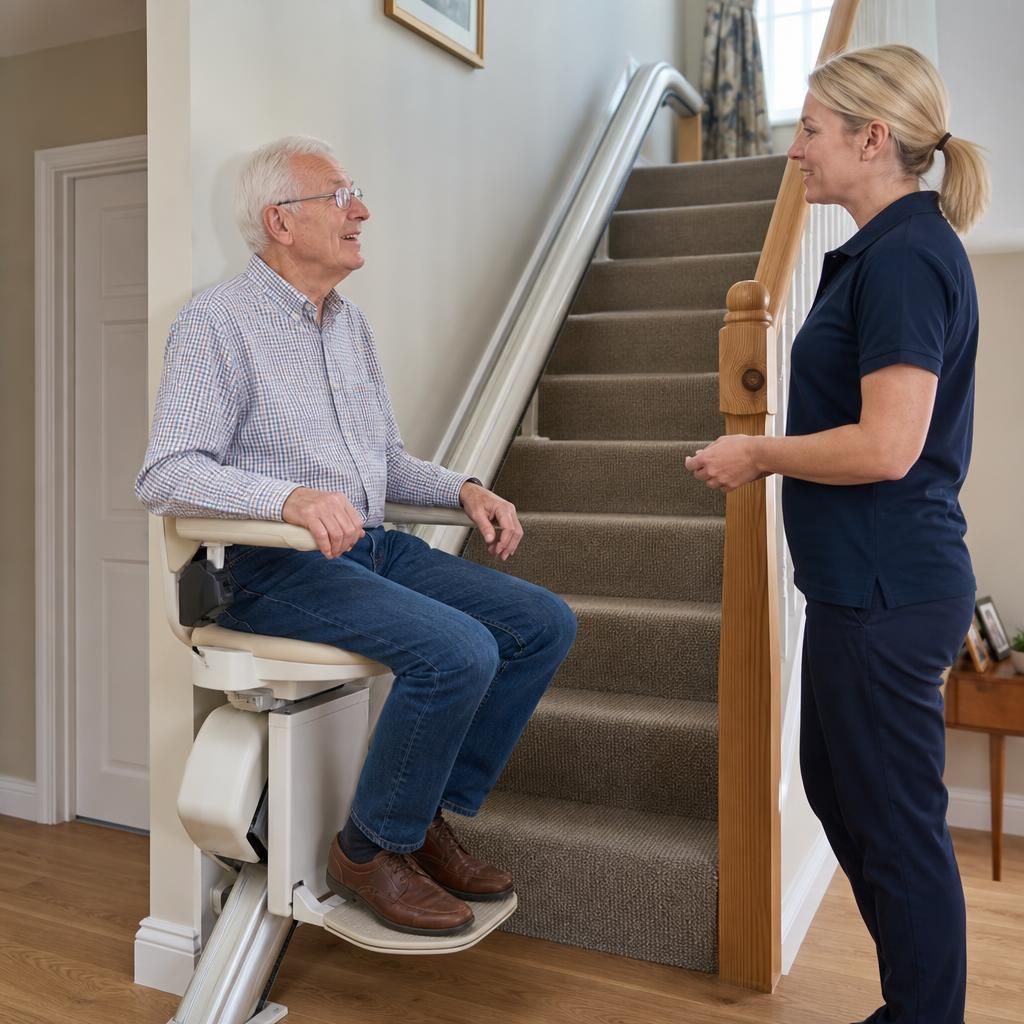
Arrange your personalised stairlift assessment
Arrange your personalised stairlift assessment to review your mobility needs, staircase layout and preferred features. Our adviser can help identify a suitable configuration for safe, comfortable everyday use.