
How can I ensure the stairlift I choose is compatible with future mobility requirements?
Choose a stairlift after considering how your mobility, balance, strength and ability to transfer may change, not only how you manage the stairs today. An expert assessment can identify suitable features—such as supportive seating, easy-to-use controls, powered options and a design that can be maintained or adapted as your needs develop.
A stairlift is more likely to remain suitable as your mobility changes when it is selected for your expected future abilities, rather than only for the way you use the stairs today. An assessment should consider balance, leg strength, transfers, posture, grip, vision, weight, likely progression of any condition and the support you may need to operate the lift safely.
Begin with a realistic assessment of future use. Discuss not only whether you can currently walk to the stairlift and sit down, but also how you may manage if standing, bending, turning or transferring becomes more difficult. An adviser should consider whether you are likely to need more support getting on and off the seat, whether you may have difficulty keeping your feet in position, and whether pain or reduced dexterity could affect your controls.
It is important to involve the person who will use the stairlift in the assessment wherever possible. An adult child, carer or occupational therapist may also provide useful information about changing needs, but the equipment should be matched to the user’s abilities, preferences and home environment.
Choose seating that supports changing posture and balance. A suitable seat should provide stable support without making it difficult to sit down or stand up. Features that may be relevant include:
- A seat height that allows a controlled transfer without excessive bending or stretching.
- Supportive cushioning and a backrest that help maintain a comfortable, upright position.
- Armrests that assist with balance when sitting down and rising.
- A powered swivel seat, where appropriate, to help turn towards the landing before leaving the lift.
- A powered or adjustable footrest if lifting or positioning the feet may become difficult.
- A seat, armrest and belt arrangement suitable for the user’s size and posture.
Powered features can reduce the physical effort required, but they should not be added automatically. Controls must remain understandable and usable, and the user should be able to operate them reliably. A practical demonstration is often the best way to check this.
Consider how hand control may change. Standard controls may be suitable when grip and finger movement are unaffected. If dexterity, strength or coordination is likely to reduce, a larger, simplified or alternative control may be more appropriate. The control should be positioned where it can be reached without leaning, twisting or releasing a secure handhold unnecessarily. Remote controls can be useful for calling the stairlift to another floor, but they do not replace a control that the user can operate safely while seated.
Ask about the ability to stop the stairlift safely, respond to an obstruction or fault, and use the equipment if a carer is not present. Any emergency or backup procedure should be explained clearly and practised where appropriate.
Match the lift to the staircase and possible changes in the home. The layout may affect which type of stairlift remains practical. A straight stairlift may be appropriate for a simple flight, while a curved stairlift may be needed for bends, intermediate landings or more than one flight. If the staircase or landing is already restricted, check that the chosen design leaves sufficient room for other household members to pass and does not create an avoidable transfer hazard.
Also consider possible changes around the stairlift. A change of furniture, flooring, doors or handrails can affect access and clearance. If a walking frame, walking stick or wheelchair is likely to be used in future, plan where it will be placed at the top and bottom of the stairs. The stairlift may make the stairs accessible, but it will not automatically solve transfers between the seat and another mobility aid.
Check weight capacity and physical support requirements. The lift must be suitable for the user’s current weight, clothing, posture and any equipment carried during the journey. Allowance should not be based on an estimated future need or treated as a substitute for a proper assessment. If weight, balance or posture is changing, tell the adviser so that the correct model and seat configuration can be considered. A harness or different seating arrangement may be appropriate in some circumstances, subject to an assessment of safe use.
Ask whether the design can be maintained or adapted. Future compatibility depends partly on continued access to servicing, replacement parts and technical support. Before installation, ask what routine servicing is recommended, how faults are reported, whether batteries and other wearing components can be replaced, and whether settings or accessories can be changed if your needs develop. Keep the operating instructions and service records in an accessible place.
Adaptability has limits. A stairlift should not be installed on the assumption that any future change can be accommodated by modifying the equipment. A substantial change in posture, weight, transfer ability or medical needs may require a fresh assessment and, in some cases, a different seating arrangement or alternative access solution.
Do not overlook reliability and backup arrangements. A dependable charging system, clear fault indicators, obstruction sensors, a seat belt and suitable braking and safety systems all contribute to continued safe use. Confirm that the lift can reach its charging points correctly and ask what happens if there is a power cut. A battery-powered stairlift will normally continue to operate for a limited period during an electrical interruption when it has been correctly charged, but the exact arrangements depend on the equipment and installation.
If a reconditioned stairlift is being considered, check that its specification is appropriate for the user’s likely future needs, not simply that it fits the staircase. Confirm the condition of the batteries, safety components, seat and controls, together with the warranty and support available. A lower initial cost is not helpful if the design cannot accommodate a foreseeable change in mobility.
Review the choice when circumstances change. Contact the installation or servicing team if you begin to have difficulty transferring, remaining upright, using the controls, keeping your feet on the footrest or wearing the safety belt correctly. Do not continue using the lift in a way that feels unsafe or requires another person to improvise support. A reassessment can identify whether an adjustment, accessory, change of technique or different solution is needed.
The most future-compatible choice is therefore a correctly assessed stairlift with supportive seating, accessible controls, suitable capacity, practical transfer space and dependable ongoing support. Be open about possible changes in mobility during the assessment, and ask for the limitations of each option as well as its features. This helps ensure the stairlift remains a safe and usable part of your home for as long as your circumstances allow.
Future compatibility means choosing a stairlift that can continue to be operated safely if your balance, strength, posture, grip or ability to transfer changes. It does not mean that every future need can be accommodated by adjusting the same lift, so an honest assessment is essential before installation.
During the assessment, explain any condition or difficulty that may affect how you use the stairlift later. The adviser should consider supportive seating, a powered swivel seat, suitable armrests, accessible controls and foot support, as well as the space needed to transfer safely at each landing. If your needs change, contact the servicing team promptly rather than adapting how you use the lift without advice.
- Review the stairlift if standing, sitting, turning or keeping your feet in position becomes more difficult.
- Ask whether controls, seating or accessories can be adjusted safely for your changing abilities.
- Confirm that servicing, replacement parts and technical support will remain available.
- Arrange a fresh assessment if your weight, posture, transfer ability or medical needs change substantially.
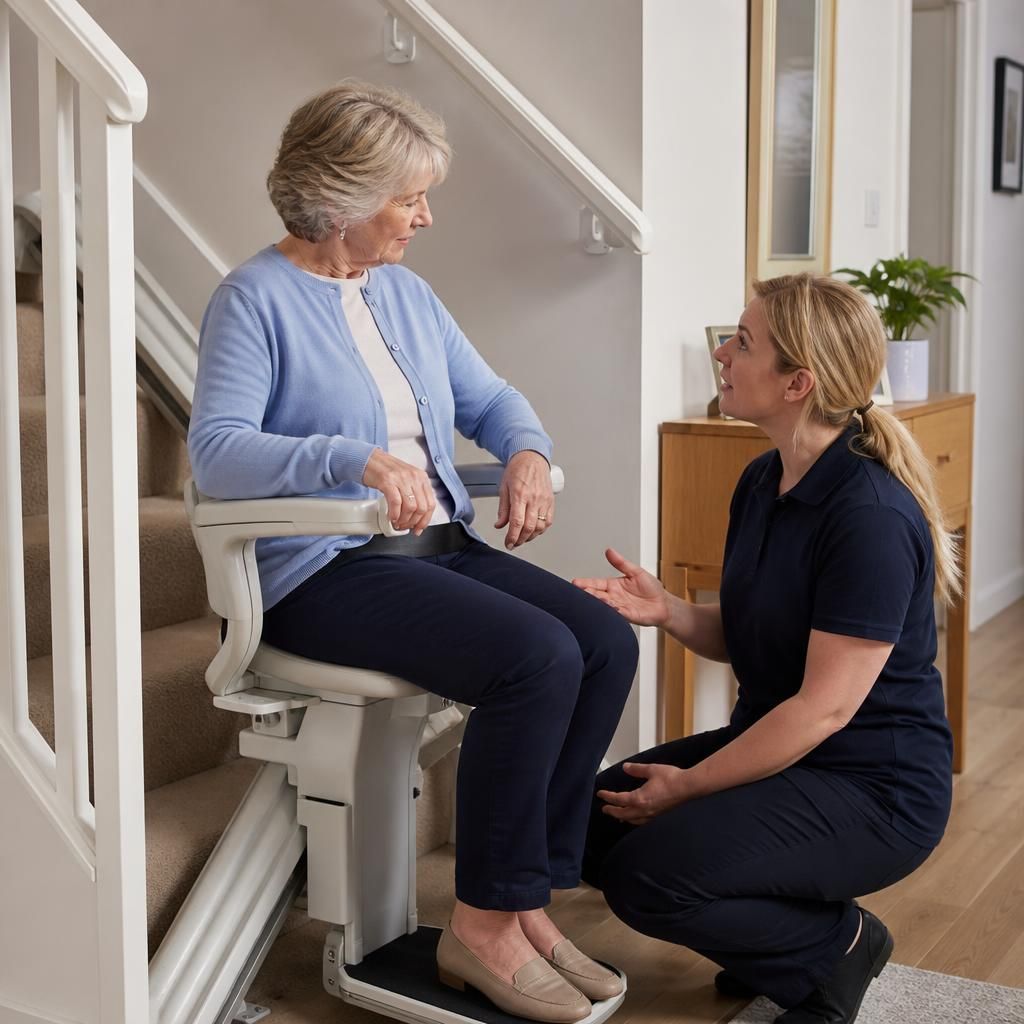
Arrange a stairlift assessment for your future mobility needs
Arrange a stairlift assessment to review your current mobility, likely future needs, transfer ability and the features that may help you continue using the lift safely. Contact Independent Stairlifts to discuss a suitable solution for your home.