
What is the average lifespan of a recliner lift chair and factors that can affect it?
A recliner lift chair has no fixed average lifespan, but a well-made chair that is used and maintained correctly can provide many years of reliable service. Heavy use, user weight, moisture, upholstery wear, and the condition of its motors, wiring and batteries can all shorten its working life.
A recliner lift chair does not have a guaranteed fixed lifespan, but a well-made chair that is correctly sized, used as intended and properly maintained can provide many years of reliable service. The actual lifespan depends mainly on how often it is used, the load placed on it, the quality and condition of its lifting mechanism, and the environment in which it is kept.
Different parts of the chair may reach the end of their useful life at different times. The upholstery may show wear before the frame or lift system, while motors, handset controls, wiring and batteries can eventually need repair or replacement. A chair that looks tired is not necessarily unsafe or beyond economical repair, but repeated mechanical or electrical faults may indicate that replacement should be considered.
Frequency and type of use
A lift chair used several times each day experiences more movement through its motors, joints and reclining mechanism than one used occasionally. Frequent transitions between sitting, reclining and standing place particular demands on the lifting system. Holding the handset down after the chair has reached its intended position, repeatedly operating the chair without allowing the mechanism to complete its movement, or using it to support sudden or uneven movements can add unnecessary strain.
Use the chair for its intended purpose: sitting, reclining and assisting with standing. It should not be used as a step, a support for climbing, or a substitute for a transfer aid unless the manufacturer specifically states that it is suitable for that purpose.
User weight and chair suitability
Every lift chair has a maximum recommended user weight and is designed around particular dimensions. Regularly exceeding the stated capacity can place excessive load on the motor, frame, scissor mechanism and reclining joints. A chair that is too small or too large for the user may also be subjected to uneven pressure, which can affect comfort, stability and wear.
When a user’s weight, posture or mobility changes, it is worth checking that the chair remains suitable. A correctly sized chair distributes weight more evenly and allows the lifting movement to operate as intended. If the chair struggles during lifting, makes unusual noises or appears to tilt, stop using it and arrange an assessment rather than continuing to test it.
Motor, mechanism and electrical components
The motor and lifting mechanism are central to the chair’s working life. Dust, loose fixings, obstruction beneath the chair and lack of clearance can make the motor work harder. The mechanism can also be affected by impacts, forced movement or objects becoming trapped underneath the footrest or frame.
Electrical parts can deteriorate through repeated use, accidental damage, poor connections or age. A handset that works intermittently, a motor that stops during movement, unusual clicking or grinding, or a burning smell should not be ignored. Disconnect the chair from the mains if there is a burning smell, visible damage or an electrical fault, and seek professional advice.
Many lift chairs include a battery backup so that the chair can be returned to a safe position during a power cut. Backup batteries are consumable components and may need replacing even when the chair’s main motor is working normally. If the battery backup no longer operates, arrange a replacement rather than assuming that the entire chair needs replacing.
Upholstery, frame and padding
Upholstery lifespan varies according to the fabric or covering, the frequency of use, contact with clothing and mobility aids, and exposure to food, drink, pets or incontinence. Leather, faux leather and fabric each have different cleaning and wear characteristics. Sunlight, heat sources and unsuitable cleaning products can cause fading, cracking or weakening.
Small tears should be dealt with promptly because they can spread when the chair reclines or lifts. Flattened padding, a damaged footrest, exposed frame parts or a loose seam can affect both comfort and safe positioning. A removable cover, where provided, should be cleaned according to the manufacturer’s instructions rather than treated with a general-purpose product.
Moisture and the surrounding environment
Moisture is particularly damaging to electrical equipment, metal components and upholstery. Keep the chair away from spills, damp rooms, condensation and direct contact with wet clothing. An outdoor or specially adapted chair has different environmental protection from a standard indoor model; an ordinary indoor lift chair should not be used outside or in a bathroom unless it is specifically designed for those conditions.
Allow sufficient space around and beneath the chair. Cables should not be trapped under the base, stretched across walkways or positioned where they can be crushed by the mechanism. Rugs, footstools and other objects can obstruct movement and increase the risk of damage or injury.
Maintenance that can extend working life
- Follow the manufacturer’s instructions for operation, cleaning and weight capacity.
- Keep the area around the base and footrest clear before reclining or lifting.
- Check the power lead, handset cable and visible connections for damage, without attempting electrical repairs yourself.
- Keep the mechanism free from dust and debris using the method recommended for the chair.
- Do not apply oil or other lubricant unless the manufacturer or a qualified technician advises it, as unsuitable products can damage components or attract debris.
- Clean spills promptly and use only products suitable for the upholstery.
- Arrange professional inspection if the chair becomes noisy, jerky, slow, uneven or unreliable.
Routine checks are especially important for a chair used by someone who may have difficulty noticing or reporting a developing fault. Family members or carers can look for changes in movement, unusual sounds, damaged cables, loose upholstery and signs that the chair is no longer reaching its normal positions.
Repair or replacement?
A single failed handset, battery, cable or other replaceable component does not necessarily mean the chair has reached the end of its useful life. Repairs may be appropriate when the frame remains sound, the chair is still suitable for the user and the fault can be identified safely. Replacement is more likely to be sensible when faults are recurring, the frame or lifting mechanism is significantly worn, suitable parts are no longer available, or the chair no longer provides stable and comfortable support.
Consider arranging an assessment if the user’s mobility or body size has changed, if standing from the chair has become more difficult, or if the chair no longer positions the user correctly. A chair that was suitable when first supplied may not remain suitable after a change in health, posture or daily routine.
There is no reliable replacement date that applies to every recliner lift chair. Safe operation, suitable sizing, sensible use and timely maintenance generally matter more than age alone. If you are unsure whether a fault requires a repair or whether the chair should be replaced, stop using it when safety is in doubt and ask for professional advice.
Regular maintenance can extend a recliner lift chair’s useful life by reducing strain on its motor, lifting mechanism and electrical components. Keep the area beneath and around the chair clear, follow the manufacturer’s operating instructions and clean the upholstery with suitable products.
Check for changes such as slow or uneven movement, unusual noises, damaged cables or a weakening battery backup. Arrange a professional inspection promptly rather than continuing to use a chair that is jerky, unreliable or no longer reaches its normal positions. Early attention may allow a replaceable part to be repaired before a larger fault develops.
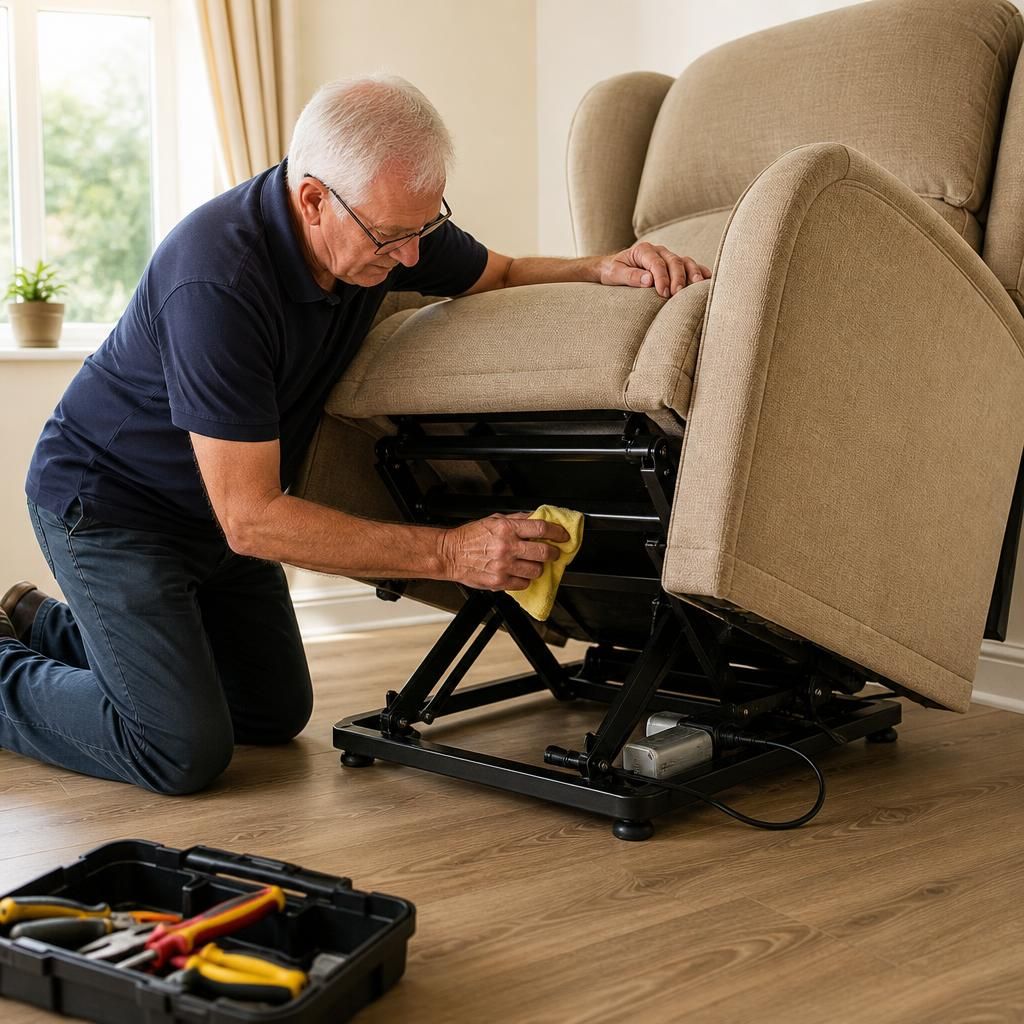
Need help deciding whether to repair or replace your lift chair?
If you are unsure whether your recliner lift chair needs a repair or replacement, arrange a professional assessment of its condition and suitability. We can help identify whether a replaceable component may resolve the fault or whether a different chair would better meet your current needs.