
What features should I look for in a recliner lift chair to ensure it meets my mobility needs?
Look for a recliner lift chair with a stable lifting mechanism, supportive and correctly sized seating, comfortable reclining positions, simple handset controls and upholstery suited to your needs. Safety features such as a controlled rise, smooth movement, emergency lowering and a suitable weight capacity should also be assessed alongside your room layout and transfer requirements.
The most important features in a recliner lift chair are a stable lifting action, supportive seating, comfortable reclining positions, simple controls and a weight capacity that safely suits the user. The chair should also fit the user’s body, the intended room and the way they transfer in and out. A properly selected model should assist with standing without forcing the user to twist, slide forwards or rely heavily on their arms.
Consider the following features before choosing a chair:
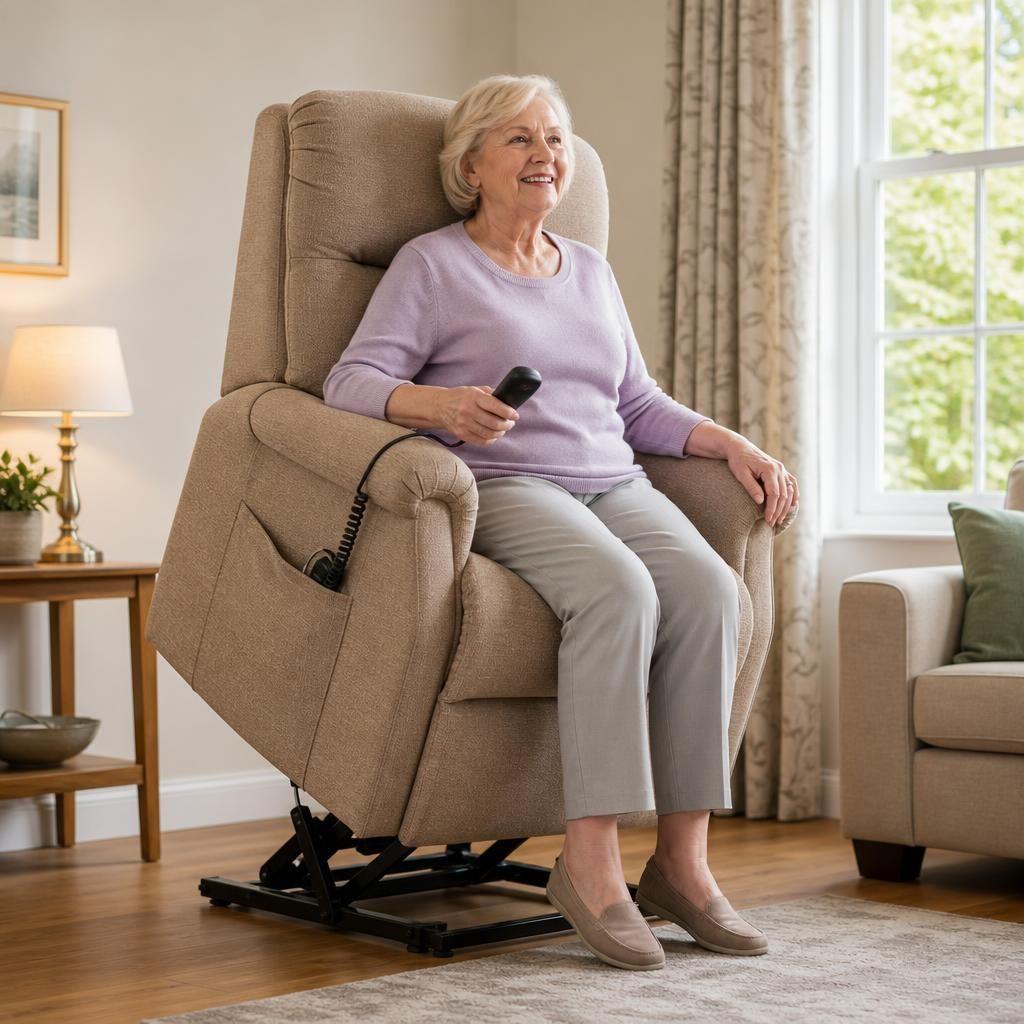
- Controlled lift and recline movement: The chair should rise steadily to bring the user into a near-standing position, then lower smoothly when returning to a seated position. Movement should feel predictable rather than sudden. Ask for the chair to be demonstrated so you can check that the lifting angle and speed feel comfortable.
- Suitable seat dimensions: Seat width, depth and height all affect posture and safety. The user should be able to sit with their back against the backrest while keeping their feet supported, without the knees being forced upwards or the legs extending too far forwards. A seat that is too deep can leave the back unsupported, while one that is too narrow may restrict movement and make transfers harder.
- Supportive cushioning and positioning: Look for cushioning that supports the pelvis, lower back and thighs without allowing the user to sink so deeply that standing becomes difficult. Some chairs have shaped backs, lumbar support or removable cushions to help achieve a better fit. If the user has arthritis, reduced muscle strength or back problems, the most comfortable position should be tested rather than judged from appearance alone.
- Reclining options: Check whether the backrest and leg rest move together or independently. A single-motor chair can offer straightforward operation, while a dual-motor model may allow the back and legs to be positioned separately. Independent adjustment can be useful when a user wants to sit upright with their feet raised, or recline their back without fully extending the leg rest.
- Easy-to-use handset: Controls should have clearly marked buttons, a suitable size and a lead that is long enough to use without stretching. The handset should be positioned where it can be reached from the normal sitting position and should not need excessive finger strength. If the user has limited dexterity, poor vision or memory difficulties, simpler controls may be more appropriate than a handset with many functions.
- Safety features: Look for smooth movement, a stable base, an anti-entrapment design and a footrest that does not create an avoidable trip hazard. The chair should stop when the control is released, where the design permits this. Check whether it includes battery backup or an emergency lowering facility in the event of a power failure, and ask how these features operate. The chair should never be used to lift someone who has fallen from the floor.
- Correct weight capacity: The manufacturer’s stated maximum user weight must not be exceeded. Allow for clothing, equipment and any changes in the user’s needs. If the user’s weight or mobility is likely to fluctuate, discuss this during the assessment rather than choosing a chair close to its limit. The base and lifting mechanism must be suitable for the person using the chair, not simply for the available space.
- Footrest and leg support: The footrest should support the legs without pressing uncomfortably behind the knees. It should close securely and remain clear of nearby furniture. A user with swelling, circulation problems or limited leg movement may need particular attention to the angle and length of the leg rest. Medical advice may be appropriate where leg elevation forms part of an existing treatment plan.
- Upholstery and hygiene: Choose a covering that is comfortable against the skin, suitable for the room and practical to clean. Wipe-clean upholstery may be useful where spills are likely, while softer fabric can offer a warmer feel. Check seams, removable covers and cleaning instructions, particularly if the chair will be used for long periods or by someone at risk of skin irritation.
- Room clearance and electrical position: A recliner lift chair needs enough space to rise and recline without striking walls, tables, radiators or other furniture. The power cable should be routed safely and kept away from walkways. Measure the intended position and consider how the user, a carer or emergency services would access the chair if needed. A chair that fits when upright may require considerably more room when reclined.
- Transfer support: The armrests should provide a firm surface for pushing up, and the chair should be positioned at an angle that allows a safe transfer to a walking aid or wheelchair. Avoid placing it where the user must turn sharply immediately after standing. If transfers are particularly difficult, a lift chair may need to be considered alongside other equipment and professional moving-and-handling advice.
Match the chair to the user’s routine. Someone who mainly needs help standing may prioritise a stable lift position and simple upright seating. Someone who rests in the chair for much of the day may need more reclining adjustment, pressure-relieving support and upholstery that remains comfortable over extended use. A person who shares the chair with a carer may need controls and access points that both people can use safely.
It is also worth checking practical details such as whether the chair can be serviced, whether replacement handset or battery components are available, and what cleaning and maintenance the mechanism requires. A demonstration should include the full lift, sit, recline and return-to-upright movements, rather than only showing the chair in a static position.
The best choice is therefore not necessarily the chair with the greatest number of functions. It is the model whose dimensions, movement, controls, support and safety features correspond to the user’s mobility, strength and living environment. An individual assessment can confirm the correct size and position, identify transfer risks and establish whether a recliner lift chair is suitable for the user’s particular needs.
The most important feature of a recliner lift chair is a correct fit for the user’s body, because seat height, width and depth affect posture, comfort and safe transfers. When seated, the user should be able to rest their back against the backrest, keep their feet supported and use the armrests when rising without leaning or twisting.
Test the chair through its full lift and recline movement. The lift should be steady and bring the user forwards into a near-standing position, while the cushioning supports the pelvis, lower back and thighs without allowing them to sink too deeply. A suitable chair should make everyday sitting and standing easier, not simply provide the greatest number of reclining functions.
Arrange a Recliner Lift Chair Assessment
Arrange a recliner lift chair assessment to check the correct seat dimensions, lift position, controls and room clearance for your mobility needs. We can help you compare suitable options and identify any transfer or positioning requirements before installation.