
How do recliner lift chairs benefit individuals with arthritis?
Recliner lift chairs can benefit people with arthritis by supporting a more comfortable seated position and helping them sit down or stand up with less strain on painful joints. Adjustable reclining, foot and back support may also make resting and everyday activities easier, provided the chair is correctly sized and set up for the individual.
Recliner lift chairs can benefit people with arthritis by reducing the effort needed to sit down and stand up, while providing adjustable support for the back, legs and feet. The lift mechanism raises and tilts the seat forwards so the user can transfer more gradually, rather than relying heavily on painful or stiff hips, knees, ankles or hands. Reclining can then help the user find a more comfortable resting position, provided the chair is correctly sized and adjusted.
Arthritis affects people differently, so a lift chair is not a treatment for the condition and cannot remove joint pain. Its purpose is to make everyday movement and seated activities more manageable. A professional assessment is important because the wrong seat height, depth, width or cushion firmness may increase discomfort rather than relieve it.
How the lift function helps
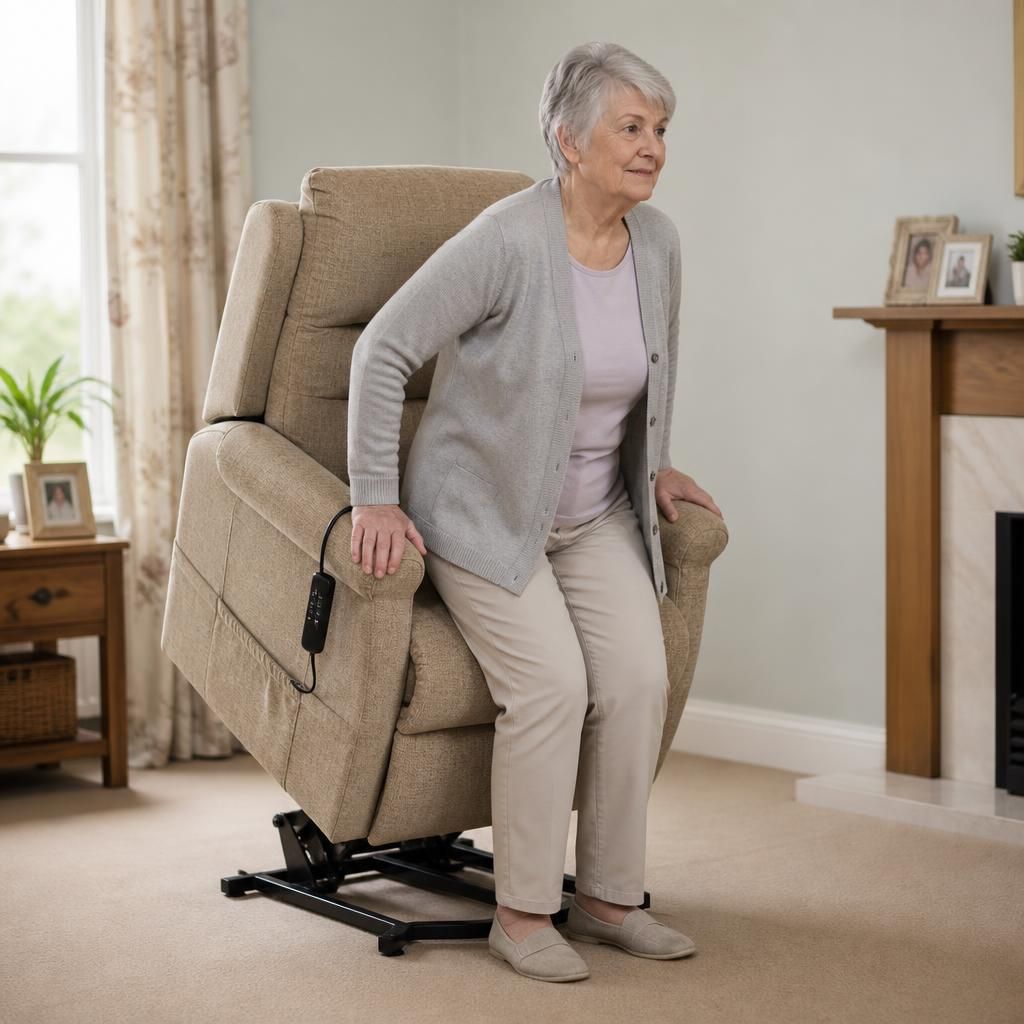
Moving from sitting to standing can be particularly difficult when arthritis causes pain, reduced strength or limited movement. A lift chair supports this transition by bringing the user into a more upright position and reducing the distance and effort involved in standing. This can be useful for people who find it difficult to:
- Push up from a low sofa or armchair without placing pressure on their knees or hips.
- Lean forwards far enough to stand safely.
- Grip firmly with their hands because of arthritis in their fingers, wrists or elbows.
- Lower themselves into a chair in a controlled way.
- Stand repeatedly during daily activities.
The chair should do most of the lifting movement. Users should avoid pulling themselves up by the armrests, as this can place unnecessary strain on the arms and may affect stability.
Adjustable positioning for comfort
Recliner lift chairs usually allow the backrest and footrest to be adjusted using a handset. This makes it possible to change position during the day instead of remaining in one fixed posture. For someone with arthritis, small changes in angle may help reduce pressure on uncomfortable joints and make reading, watching television or resting easier.
Raising the legs can also provide a more comfortable position for people who experience tired or swollen feet and ankles. However, persistent swelling, unexplained pain, skin colour changes or a sudden deterioration should be discussed with a healthcare professional rather than managed solely by changing the chair position.
Support for painful or stiff joints
A suitable chair can provide consistent support to areas that may become uncomfortable when unsupported. Important considerations include:
- Back support: The backrest should support the natural shape of the user’s back without forcing them into an uncomfortable posture.
- Head and neck position: When reclined, the head should remain comfortably supported rather than tipping forwards or backwards.
- Leg and foot support: The footrest should support the legs without pressing sharply behind the knees or leaving the feet unsupported.
- Armrests: Stable, appropriately positioned armrests can help with balance and provide support when repositioning the body.
- Seat dimensions: The user should be able to sit with their back against the backrest and their feet resting appropriately, without feeling cramped or having to stretch forwards.
Good positioning matters because remaining in an unsuitable posture for long periods may lead to additional stiffness, pressure or muscle fatigue. A pressure-relieving cushion or specialist upholstery may be appropriate for some users, but this should be considered alongside the person’s clinical needs and not as a substitute for professional medical advice.
Making everyday activities easier
Arthritis can make ordinary tasks more tiring, particularly when they involve repeated transfers. A lift chair may reduce the effort involved in getting up to answer the door, prepare a drink or move to another room. The handset can also allow the user to adjust their position without asking someone else to move the chair manually.
This may help a person remain more involved in their normal routine, although the chair should be placed where there is sufficient space to operate it safely. It should not block a doorway, obstruct a walking route or be positioned so that the footrest could strike nearby furniture.
Choosing a chair for arthritis
When selecting a recliner lift chair, consider the joints most affected, the user’s transfer technique, and how much support is needed. A single-motor chair may provide straightforward movement, while a dual-motor model can adjust the backrest and footrest more independently. Independent adjustment may be useful when a person wants to recline their back without raising their legs, or raise their legs while keeping a more upright posture.
The controls should be easy to identify and operate. People with hand arthritis may find small buttons, stiff switches or complicated handsets difficult to use. A handset with clear, tactile controls and a suitable lead position can make operation simpler. A battery backup may also be worth considering, as it can help return the chair to a safe position during a power interruption, depending on the model.
Measurements should be taken rather than choosing a chair based on appearance alone. Check the user’s height, weight, hip width, lower-leg length and preferred sitting position. The chair must also be suitable for the user’s weight and any additional support needs. A seating assessment can identify whether extra cushioning, a firmer seat or a different size would be more appropriate.
Using a lift chair safely
- Place the chair on a level floor and leave clear space around it.
- Ensure the user is sitting fully back in the seat before reclining.
- Keep feet, pets and objects clear of the footrest and moving parts.
- Return the footrest and backrest to a safe position before standing, unless the chair’s instructions specify otherwise.
- Use the lift function slowly and avoid trying to walk away before the chair has completed its movement.
- Follow the manufacturer’s weight, operating and maintenance instructions.
If the user has significant balance problems, severe weakness, recent surgery or difficulty transferring even with the lift function, advice from an occupational therapist, physiotherapist or other relevant healthcare professional may be needed. A lift chair can support a transfer, but it cannot replace supervision or other mobility equipment where those are required.
What to expect from an assessment
An assessment should consider how the user currently sits, stands and moves around the room, as well as which joints cause difficulty. The chair can then be checked for correct seat height, depth, width, support and operating position. It is useful for the user to try the lift and recline movements themselves, because comfort and ease of control cannot be judged reliably from photographs or product dimensions alone.
For people with arthritis, the most suitable recliner lift chair is usually the one that supports a stable posture, reduces effort during transfers and allows comfortable changes of position throughout the day. Independent Stairlifts can help assess the available options and identify a chair that fits both the individual and their home environment.
For someone with arthritis, a recliner lift chair can make sitting down and standing up less demanding by raising and tilting the seat forwards. This reduces the need to bend deeply, push through painful knees or hips, or rely heavily on stiff hands and wrists.
The lift function should be used as a controlled transfer aid. The user should sit fully back in the chair, keep their feet clear of the footrest and allow the chair to complete its movement before standing. They should not pull themselves up using the armrests, as this can place additional strain on the upper limbs and affect balance.
Correct sizing is essential. The seat height, depth, width and cushion support should suit the individual so that their feet are supported and their joints are not held in an awkward position. A lift chair can ease everyday movement, but it does not treat arthritis or replace advice from a healthcare professional where pain, weakness or transfer difficulties are significant.
Find the Right Recliner Lift Chair for Arthritis
Speak to Independent Stairlifts about assessing your mobility needs and finding a recliner lift chair with the right support, dimensions and controls for arthritis.