
Are recliner lift chairs suitable for individuals with back problems?
Recliner lift chairs can be suitable for people with back problems by providing adjustable seating, leg support and a powered lift to reduce strain when sitting down or standing up. They do not treat back conditions, so the chair’s position, cushioning and support should be assessed with a healthcare professional or specialist adviser where necessary.
Recliner lift chairs can be suitable for people with back problems because they provide adjustable back support, a choice of seating positions, leg elevation and powered assistance when standing. They may reduce the effort required to sit down, recline and rise from the chair, but they do not treat the underlying cause of back pain. The correct chair depends on the person’s symptoms, posture, body shape, mobility and any advice provided by a healthcare professional.
A lift chair combines a reclining mechanism with a powered lifting action. When the chair rises, it supports the user into a more upright position, reducing the need to bend deeply, push through the arms or pull on nearby furniture. This can be useful where back pain is made worse by repeated transfers or by moving between sitting and standing. The reclining function can also allow the user to change position during the day instead of remaining in one fixed posture.
However, a recliner lift chair is not automatically suitable for every back condition. Some people benefit from a relatively upright position, while others need more recline or additional support beneath the legs. A position that feels comfortable initially may become unsuitable if it causes the pelvis to slide forwards, rounds the lower back or leaves the head unsupported. A proper assessment is therefore more important than choosing a chair based on appearance alone.
When assessing a chair for someone with back problems, consider the following features:
- Adjustable back support: The backrest should support the natural curves of the spine without forcing the user into an excessively rounded or arched position.
- Suitable seat depth and height: The user should be able to sit with their back against the backrest while keeping their feet supported. If the seat is too deep, they may slide forwards or strain to maintain a comfortable posture.
- Appropriate cushioning: Cushioning should provide support without allowing the user to sink too far into the chair. Very soft padding can make transfers more difficult and may not provide consistent support.
- Leg and foot support: A supported leg position may help reduce pressure and improve comfort, but the footrest should not leave the knees or lower legs in an awkward position.
- Controlled movement: Smooth, steady lifting and reclining can help the user change position without sudden jolts or unnecessary twisting.
- Armrest position: Firm, correctly positioned armrests can assist with stability, although the powered lift should do most of the work. Users should not rely on pulling themselves up by the armrests.
- Hand control: Controls should be easy to operate and positioned where they can be reached without leaning or twisting. Simple controls may be particularly helpful where pain, weakness or limited dexterity is present.
The chair should be used on a firm, level surface with enough space for the backrest and footrest to move safely. It should not be placed so close to a wall or other furniture that the reclining action is restricted. Keeping the chair in good working order is also important: damaged upholstery, loose components or an unreliable mechanism can affect both comfort and safety.
Good positioning habits remain important when using a lift chair. The user should sit fully back in the seat, keep their feet supported and avoid leaning to one side for extended periods. Changing position regularly may help prevent stiffness. The lift function should be operated slowly, with the user’s feet clear of the footrest as it moves. A walking aid should be placed within safe reach, but not where it could obstruct the chair or create a trip hazard.
Professional advice is recommended if back pain is severe, persistent, worsening or associated with symptoms such as numbness, weakness or loss of bladder or bowel control. Advice from a physiotherapist, occupational therapist or other relevant healthcare professional may help identify the most suitable seating position and whether additional supports are appropriate. Cushions or lumbar supports should not be added without checking that they do not alter the user’s posture or interfere with the chair’s movement.
An assessment for a recliner lift chair should take account of the user’s height, weight, leg length, transfer ability, usual posture and the layout of the room. It should also consider whether the user can operate the handset safely and what assistance may be needed if the power supply fails. Trying the chair in its upright, reclined and raised positions is preferable to judging comfort from a brief test in one position.
In summary, a recliner lift chair may improve comfort and independence for an individual with back problems when it offers suitable postural support and makes transfers less strenuous. It should be selected as part of an individual assessment rather than as a treatment for back pain. If the person’s condition or seating requirements are complex, obtain clinical advice alongside a specialist assessment before making a decision.
For someone with back problems, a recliner lift chair is most suitable when its seat, backrest and lifting movement support a stable, comfortable posture. The chair should allow the user to sit fully back with their feet supported, without sliding forwards, twisting or rounding the lower back.
Check the chair in its upright, reclined and raised positions before choosing it. Seat depth, cushioning, lumbar support, armrest height and footrest position can all affect comfort and ease of transferring. If back pain is persistent, worsening or linked with numbness or weakness, seek advice from a healthcare professional alongside a specialist seating assessment.
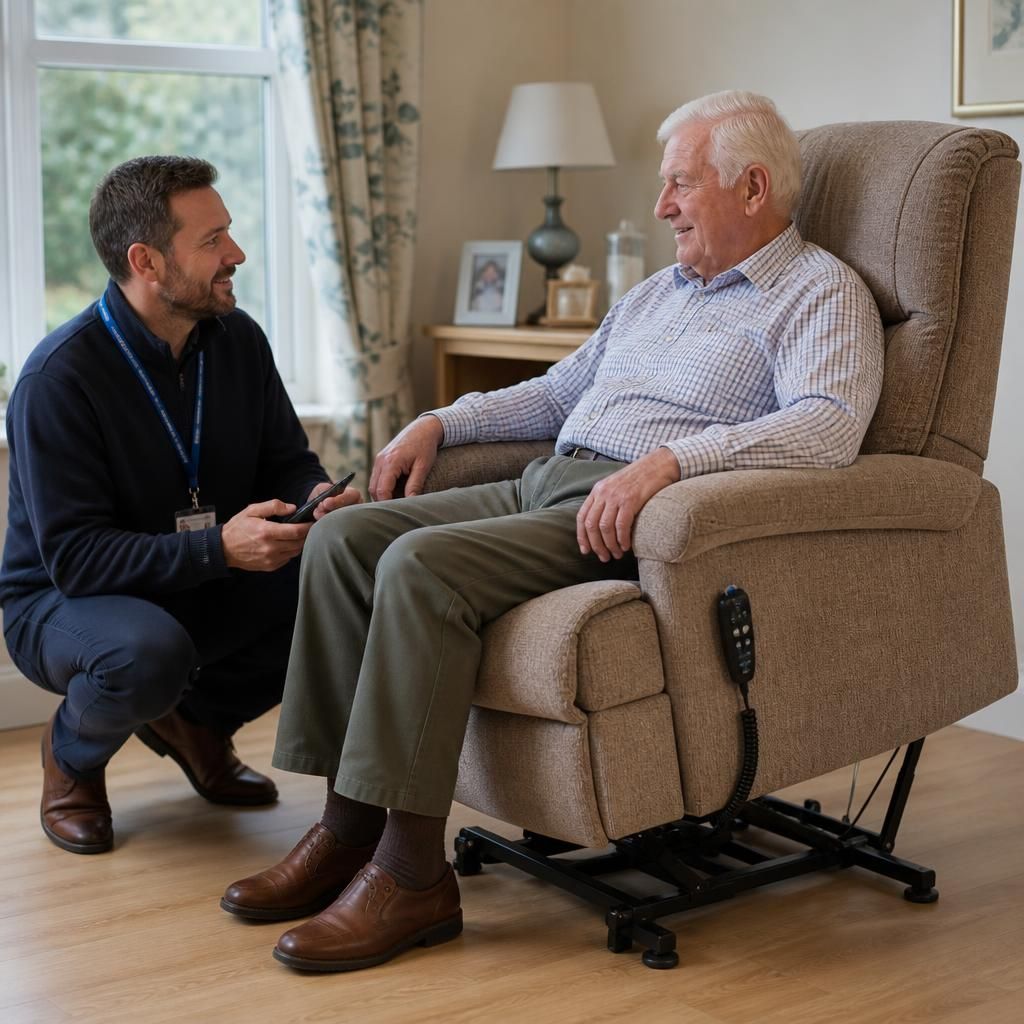
Discuss your back support needs with our seating specialists
Discuss your back support needs with our seating specialists, who can help assess the chair size, posture and features suited to your mobility requirements. Contact Independent Stairlifts to arrange personalised guidance before choosing a recliner lift chair.