
Are recliner lift chairs easy to maintain and care for over time?
Yes, recliner lift chairs are generally straightforward to maintain with regular cleaning, careful use and simple checks of the upholstery, handset, power cable and moving parts. Following the manufacturer’s care guidance and arranging professional help for electrical or mechanical faults will help keep the chair safe, comfortable and reliable over time.
Recliner lift chairs are generally easy to maintain over time. Regular cleaning, sensible use and simple checks of the upholstery, handset, power cable and moving mechanism will help keep the chair safe, comfortable and reliable. Always follow the care instructions supplied with your specific model, as upholstery materials, motors and removable covers can require different treatment.
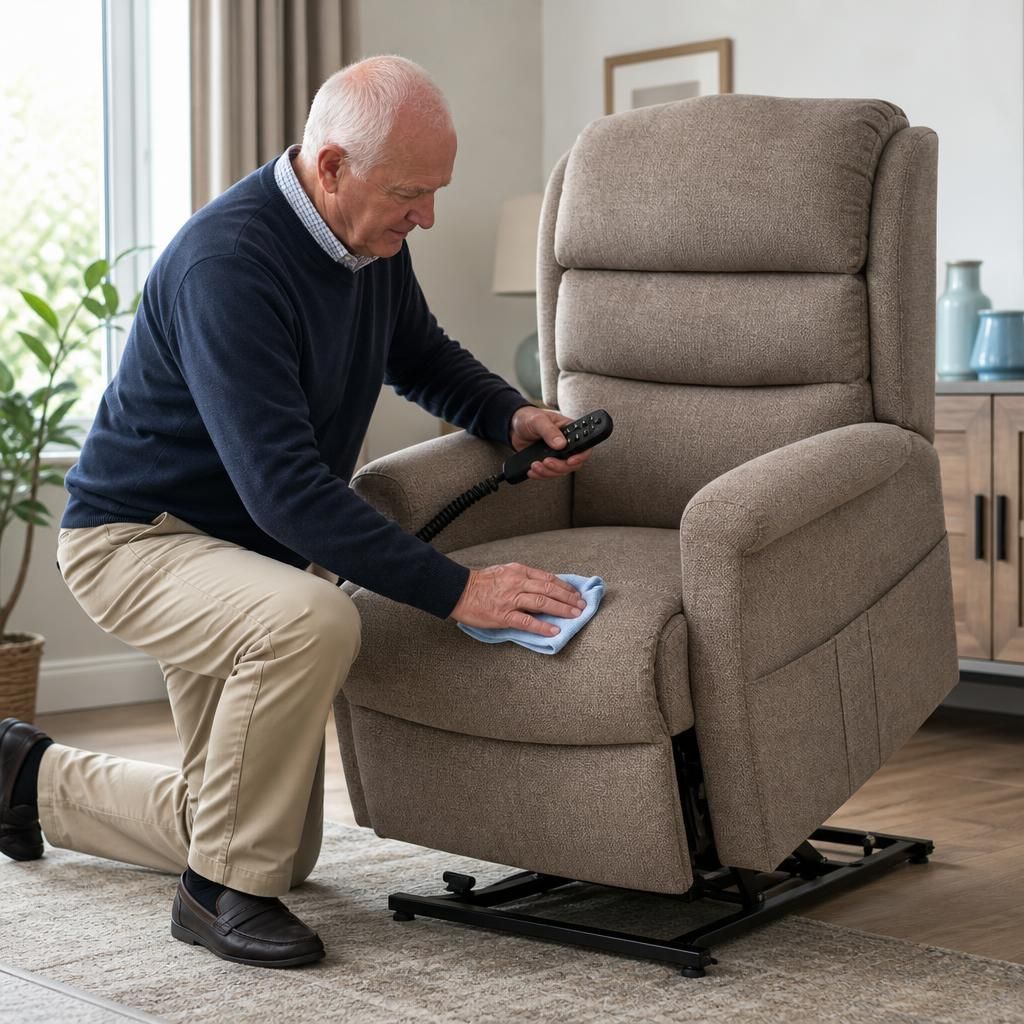
Routine cleaning is the main part of ongoing care. Remove dust and crumbs with a suitable vacuum attachment, taking care around seams, controls and the gap beneath the seat. Deal with spills promptly using the method recommended for the fabric or leather. Avoid soaking the chair, using abrasive products or applying household cleaning chemicals without checking that they are suitable. Excess moisture can damage upholstery, electrical components or the chair’s internal structure.
- Check the manufacturer’s instructions before washing or removing any covers.
- Use a clean, slightly damp cloth for approved wipe-clean surfaces.
- Do not steam-clean the chair unless the manufacturer specifically permits it.
- Keep pets, sharp objects and sources of excessive heat away from the upholstery.
- Allow any cleaned area to dry fully before using the chair.
Leather and faux-leather coverings may need an appropriate conditioning or cleaning product, while fabric coverings may need a fabric-specific cleaner. Test any product on an inconspicuous area first. If a cover is removable, refit it correctly so it does not interfere with the reclining or lifting action.
The electrical parts should be checked without being opened or modified. Inspect the plug, cable and handset for visible damage, crushing or loose connections. Keep the cable clear of the chair’s moving sections and do not allow it to become trapped beneath the base. The plug should be accessible and connected to a suitable socket in accordance with the manufacturer’s instructions. Do not use the chair if you notice a burning smell, scorch marks, exposed wires, unusual buzzing or repeated electrical cut-outs. Switch it off and arrange professional advice.
The handset should be kept dry and used gently. Avoid pulling it by its cable, placing heavy items on it or allowing it to fall onto hard surfaces. If the chair stops responding, check the obvious connections described in the user instructions, but do not dismantle the handset, motor or control box. Electrical repairs and replacement components should be handled by a suitably qualified technician.
Moving parts need clear space rather than routine user lubrication. Keep the area around and beneath the chair free from rugs, cables, furniture, toys and other objects that could obstruct the lift or recline movement. Do not sit on the footrest, force the chair beyond its normal positions or move it while occupied unless the model is specifically designed for that use. Lubricating the mechanism without guidance can attract dust or affect components, so only do this if the manufacturer’s instructions expressly require it and specify the correct product.
Pay attention to changes in operation. Slower movement, unusual noises, jerky lifting, an uneven footrest, a handset that works intermittently or a chair that does not return to its normal position can indicate wear or a fault. Stop using the affected function if it appears unsafe. Continuing to operate a chair with a mechanical or electrical problem may worsen the damage and create a safety risk.
Good everyday habits also help reduce wear:
- Use the lift function as instructed, keeping your weight centred and your feet clear of the footrest.
- Avoid exceeding the chair’s stated user weight capacity.
- Do not drag the chair across the floor or lift it by the arms, footrest or handset.
- Keep the chair away from persistent damp, condensation and direct heat.
- Make sure the chair is positioned on a stable, level surface with sufficient clearance to recline and lift safely.
- Keep the user guide and model details available when arranging advice or replacement parts.
A professional inspection may be appropriate if the chair is used frequently, has developed a fault, has been moved, or has been stored for a prolonged period. A technician can assess the motor, frame, wiring, control system and moving components more safely than a user attempting to access them. The need for servicing depends on the model, usage and condition, so use the manufacturer’s recommended schedule rather than relying on a universal timetable.
With appropriate care, most maintenance is straightforward and can be incorporated into normal household cleaning. The important exceptions are electrical faults, damaged wiring, abnormal movement and internal mechanical problems: these should not be repaired by trial and error. If you are unsure whether a problem is minor or requires attention, stop using the relevant function and contact Independent Stairlifts or the appropriate service provider for guidance.
Regular visual checks are one of the simplest ways to care for a recliner lift chair. Look over the upholstery, handset, power cable and area around the base for signs of damage, obstruction or unusual wear.
- Vacuum dust and crumbs from the seams and beneath the seat using a suitable attachment.
- Wipe approved surfaces with a slightly damp cloth and deal with spills promptly, following the upholstery manufacturer’s guidance.
- Keep cables, rugs and furniture clear of the lifting and reclining mechanism.
- Do not use the chair if you notice exposed wires, a burning smell, unusual noise, jerky movement or repeated electrical cut-outs. Switch it off and arrange professional advice.
Routine cleaning can be carried out at home, but electrical, motor and internal mechanical faults should be assessed by a suitably qualified technician.
Need help maintaining your recliner lift chair?
If you need advice about cleaning, servicing or a fault with your recliner lift chair, contact Independent Stairlifts for practical guidance or to arrange professional assistance.