
Are electric recliner lift chairs difficult to maintain over time?
Electric recliner lift chairs are generally straightforward to maintain over time, provided you keep the upholstery clean, check the cables and handset regularly, and follow the manufacturer’s operating guidance. Most issues can be avoided with routine care, although electrical or mechanical faults should be assessed by a qualified technician rather than repaired at home.
Electric recliner lift chairs are generally straightforward to maintain over time. Routine care usually involves keeping the upholstery clean and dry, checking the handset and cables, keeping the mechanism clear, and using the chair in accordance with the manufacturer’s instructions. Electrical or mechanical faults should not be investigated or repaired at home; they should be assessed by a suitably qualified technician.
Most day-to-day maintenance is simple. The lifting and reclining mechanisms are designed for regular use, but they still need sensible care. Avoid placing objects under the footrest or seat, as these can obstruct the mechanism when it operates. Keep pets, blankets and loose furnishings away from moving parts, and do not allow the chair to be operated if someone or something is in its path.
Regularly check that the chair is standing securely on a level floor and that it has sufficient clearance to recline and rise safely. Do not move the chair while it is occupied, and avoid dragging it by the handset cable, footrest or armrests. If the chair needs to be moved, follow the manufacturer’s instructions or ask for professional assistance.
Cleaning the upholstery depends on the covering. Fabric upholstery can usually be vacuumed using a suitable attachment and treated promptly for small spills, while leather or wipe-clean coverings should be cleaned with products recommended for that material. Test any cleaning product on an inconspicuous area first, and avoid soaking the upholstery or using abrasive chemicals. Allow damp areas to dry fully before the chair is used.
For hygiene and comfort, pay particular attention to areas that receive frequent contact, including the seat, armrests and headrest. A removable cover may be washable, but it should only be cleaned according to its care instructions. Incorrect washing or drying can cause shrinkage or damage to the fabric.
Inspect the handset and power cable regularly. Look for damaged insulation, exposed wiring, loose connections, scorch marks or a handset that is becoming unreliable. Make sure the plug is fully inserted and that the cable is not trapped beneath the chair or stretched across a walkway. Do not use the chair if the cable or plug is damaged, or if there is a burning smell, unusual heat, sparking or repeated electrical tripping.
Some lift chairs include a battery backup system, while others rely solely on mains power. If your chair has backup batteries, follow the supplied guidance on checking and replacing them. Batteries can lose capacity over time, so a backup system should not be assumed to work unless it has been maintained as instructed. Never substitute an unsuitable battery or power supply.
Mechanical noises can provide an early warning. A slight operating sound is normal, but grinding, knocking, clicking, jerking, uneven movement or a footrest that does not close properly may indicate a developing fault. Stop using the chair if its movement becomes unpredictable or if it does not complete the lift or recline cycle correctly. Continuing to operate it may worsen the fault or create a safety risk.
Do not apply oil, grease or other lubricants unless the manufacturer specifically recommends doing so. Incorrect products can damage components, attract dust or interfere with the electrical and mechanical systems. Internal covers should not be removed by the user, as this can expose moving parts and live electrical components and may affect warranty cover.
Professional servicing is appropriate when:
- the chair will not lift, recline or return to its normal position;
- the motor stops, struggles or operates unevenly;
- the handset or power supply is not responding consistently;
- there is unusual noise, heat, smell or visible damage;
- the chair has been exposed to liquid or suffered an impact; or
- you are unsure whether it is safe to continue using it.
A technician can inspect the motors, wiring, control system, frame and moving components, and can identify whether a repair or replacement part is needed. Do not attempt to bypass a safety feature, alter the wiring or dismantle the chair, even if the fault appears minor.
How much maintenance a chair needs can also depend on how frequently it is used, the user’s weight, the operating environment and whether it is exposed to moisture, dust or excessive heat. Correct sizing and installation help reduce strain on the motors and frame, so report any change in stability, alignment or operating performance rather than waiting for a complete failure.
In practical terms, an electric recliner lift chair should not be difficult to maintain. Keep it clean, protect its cables, keep the mechanism unobstructed and respond promptly to signs of a fault. Retain the operating manual and service information, and contact Independent Stairlifts if you need advice about safe use, inspection or arranging qualified support.
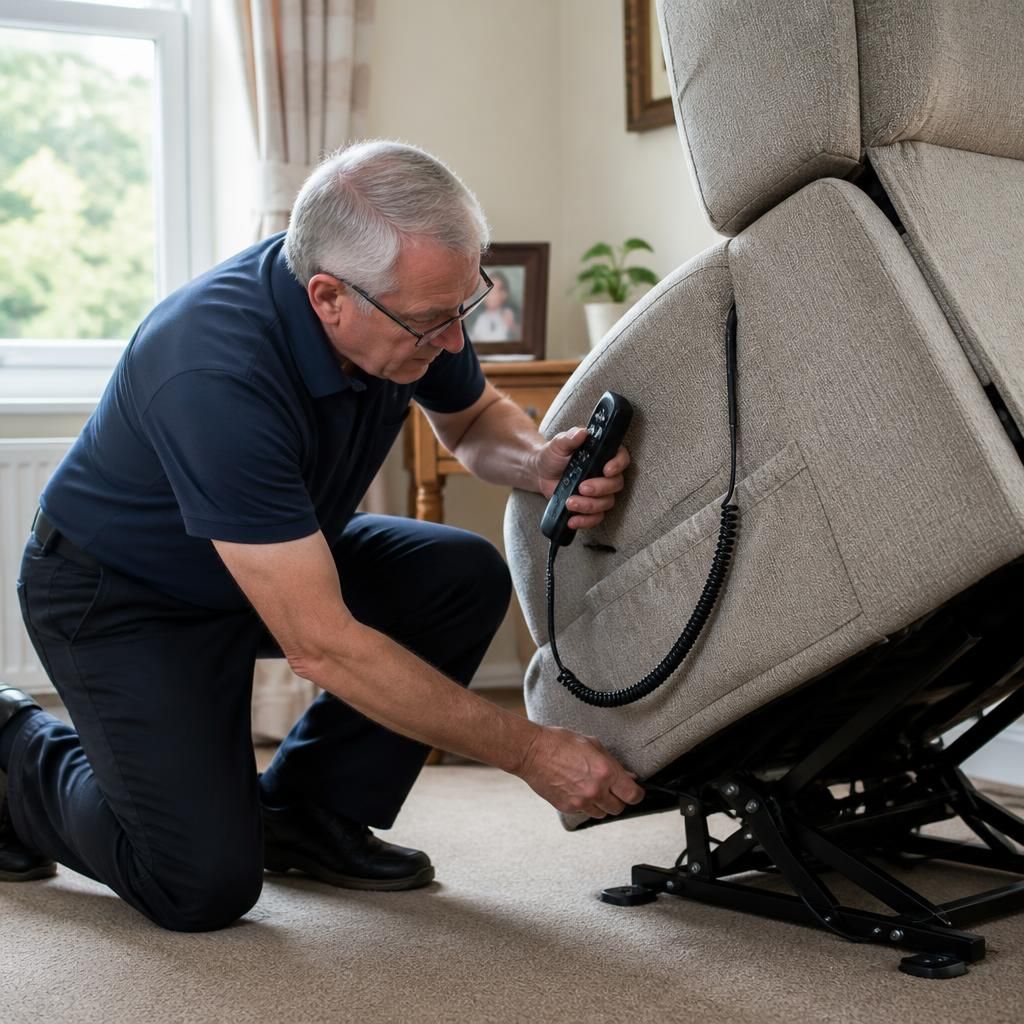
Routine checks help keep an electric recliner lift chair safe and reliable. Keep the area beneath the seat and footrest clear of pets, blankets and other objects, and make sure the chair has enough space to rise and recline without obstruction.
Inspect the handset and power cable regularly for trapped sections, loose connections, damaged insulation or exposed wiring. Stop using the chair if you notice unusual noises, jerky movement, a burning smell, excess heat or repeated electrical tripping. Do not dismantle the chair or attempt electrical repairs; contact a qualified technician for inspection and support.
Need advice about maintaining your lift chair?
If you need advice about maintaining your electric recliner lift chair, contact Independent Stairlifts for guidance on safe use, routine checks or arranging qualified support.