
What factors should I consider when choosing a stairlift for my home?
When choosing a stairlift for your home, consider your staircase design, the user’s mobility and comfort needs, available safety features, installation requirements, and your budget. A professional assessment can help identify whether a straight, curved, outdoor or reconditioned stairlift is the most suitable option.
Choosing the right stairlift depends on the staircase, the person who will use it, the home and the level of support required. The main factors are whether the stairs are straight or curved, the user’s mobility and physical needs, the available safety and comfort features, the space around the staircase, the installation process and the total cost of ownership. A professional home assessment is the most reliable way to confirm which stairlift will be suitable.
Assess the staircase design
The shape and layout of the staircase usually determine which type of stairlift can be installed. A straight stairlift is designed for a single, uninterrupted flight with no bends or intermediate landings. A curved stairlift is made to follow one or more bends, curves, landings or changes in direction. Where the staircase includes several sections, a bespoke rail may be needed to provide a continuous journey.
Consider the position of the top and bottom landings as well as the stairs themselves. The stairlift may need to swivel, fold or park in a particular direction so that the user can get on and off safely without obstructing a doorway, hallway or passage. If the staircase is narrow, the folded seat, armrests and footrest should be checked to make sure other people can still use the stairs. Stairlift suitability for narrow staircases depends on the specific model, the stair width and the available space at each end.
External stairs require equipment designed for outdoor conditions. An outdoor stairlift should be able to cope with exposure to rain, cold, sunlight and changing temperatures, with suitable protection when it is not in use. The surrounding surface, drainage, power supply and position of the controls also need to be assessed.
Match the stairlift to the user
The user’s current and expected mobility should guide the choice. Think about whether they can walk to the stairlift, sit down and stand up independently, bend their knees, remain seated for the journey and use the controls. Someone who can manage these movements may need a standard seated stairlift, while a person with limited flexibility, balance problems or difficulty transferring may need additional support or a different seating arrangement.
Discuss any relevant conditions with the assessor, including arthritis, reduced strength, joint stiffness, balance difficulties, visual impairment or the effects of a stroke. The stairlift should not be selected on weight capacity alone. Seat height, seat width, back support, armrest position, footrest dimensions and the movement required to use the controls can all affect safety and comfort.
It is also sensible to consider who will use the stairlift in the future. If more than one person may use it, the controls and seating position should be practical for everyone. Where a user’s condition is changing, ask whether the proposed stairlift can accommodate likely changes or whether additional equipment, such as a powered swivel seat, would be appropriate.
Prioritise safe transfers and operation
A stairlift should make getting between floors safer, but it does not remove the need for careful transfers. Look for features that support a stable sitting position and controlled use, such as a secure seat, armrests, a seat belt, a footrest and clear controls. A swivel seat can help the user turn towards the landing before standing, although the required movement should still be manageable for that individual.
Useful safety features may include obstruction sensors, a braking system, a safety belt, a lockable or removable control and controls on both the stairlift and the armrest or remote handset. The stairlift should stop if it detects an obstruction, and the user should be able to operate it without confusing or overly small controls. Ask how the lift behaves during a power cut, how it is stopped in an emergency and whether a battery-powered journey or charging system is included.
Keep the wider environment in mind. Loose rugs, poor lighting, furniture, pets and clutter near the top or bottom of the stairs can create hazards even when the stairlift itself is suitable. An assessment can identify whether the stairlift will leave enough clear space for safe access and whether small changes to the surrounding area are advisable.
Consider comfort and everyday usability
A stairlift is likely to be used regularly, so comfort should be assessed rather than assumed. Check the seat support, padding, backrest angle, armrest position and footrest. The user should be able to sit upright, keep their feet supported and reach the controls without leaning or twisting.
For a longer or curved staircase, ride comfort and the position of the seat while travelling may be particularly important. A powered swivel, folding or adjustable feature can make the lift easier to use, but each additional feature should have a clear practical benefit. The controls should be simple enough for the user to operate confidently, including when they are tired or wearing glasses.
Consider how the stairlift will fit into daily routines. Remote controls can allow the lift to be called to another floor, while a folding design may leave more room for other people on the stairs. If the user has hearing or sight difficulties, ask about audible alerts, visual indicators and the clarity of the control buttons.
Choose the appropriate stairlift type
The main choices are usually straight, curved, outdoor and reconditioned stairlifts. The correct option is determined by the staircase and the user’s requirements rather than by the product label alone.
- Straight stairlifts: suitable for a straight flight where the rail does not need to follow a bend or landing.
- Curved stairlifts: designed for stairs with bends, curves, intermediate landings or more complex layouts, usually with a rail made for that staircase.
- Outdoor stairlifts: designed for external staircases and made with protection suitable for outdoor exposure.
- Reconditioned stairlifts: previously used equipment that has been inspected, refurbished and tested before being installed. Confirm what work has been completed, what warranty is provided and whether the equipment is suitable for the specific user and staircase.
A reconditioned stairlift can be a practical option where the layout is straightforward and budget is a significant consideration. For a curved staircase, the rail is generally specific to the property, so ask how the proposed equipment will be matched, adapted and supported.
Check installation requirements
Most stairlifts are installed on the staircase rather than fixed to the wall, but the stairs, landings and surrounding structure must still be inspected. The installer should check the condition of the steps, the available width, the location of power points, the position of doors and the space needed for safe transfers. Any unusual features, such as a narrow landing, a doorway close to the stairs or a change in floor level, should be discussed before installation.
Ask where the stairlift will park when it is not being used and whether the rail or seat will affect doors, radiators, furniture or access to the upper and lower floors. Installation is normally planned to minimise disruption, but the exact work depends on the staircase and the type of lift. You should receive clear information about preparation, access, expected installation time and any work needed after fitting.
Compare the full cost
Price should be considered alongside suitability, reliability, warranty and aftercare. A straight stairlift is often less complex to install than a curved model, while outdoor and bespoke installations may involve additional requirements. The quotation should make clear whether it includes the assessment, installation, VAT where applicable, delivery, removal of an existing lift, warranty and ongoing servicing.
Do not compare equipment on the initial price alone. Ask about call-out charges, battery replacement, maintenance, repair arrangements and what happens if the stairlift is no longer needed. If finance, rental or a reconditioned option is being considered, check the terms carefully and make sure the arrangement remains suitable for the expected period of use.
Consider reliability, warranty and aftercare
Before choosing, establish who will provide servicing and repairs, how faults are reported and what support is available outside normal working hours. Ask how batteries and other wear components are handled, whether servicing is recommended and what the warranty covers. A clear aftercare arrangement is particularly important if the user depends on the stairlift to access essential rooms.
Keep the operating instructions and contact details in an accessible place. Everyone who may assist the user should understand the basic controls, charging requirements and emergency procedure. The stairlift should be used in accordance with the manufacturer’s instructions and kept free from objects that could trigger its obstruction sensors.
Use the home assessment to make the final decision
A home assessment should consider the staircase, the user’s transfer ability, the position of doors and furniture, the available power supply and the most practical parking points. Take the opportunity to demonstrate how the user will approach the seat, operate the controls, travel, swivel at the landing and get off. If a family member will provide assistance, they should be included in the discussion.
The best choice is the stairlift that the user can operate safely and comfortably every day, while fitting the home without creating unnecessary obstruction. An assessment by Independent Stairlifts can help compare suitable straight, curved, outdoor or reconditioned options and identify the features that are genuinely useful for the user’s needs.
A professional home assessment confirms whether a stairlift is suitable for both the staircase and the person who will use it. The assessor should review the shape and width of the stairs, the space at the top and bottom, nearby doors or furniture, and how the user will approach the seat, operate the controls and transfer safely.
The assessment should also consider practical features such as a swivel seat, folding footrest, adjustable controls or extra support. These features are only useful if they match the user’s strength, balance, flexibility and visual or hearing needs. A demonstration can help confirm that the proposed stairlift is comfortable to use and will leave sufficient space for other people to move around the staircase.
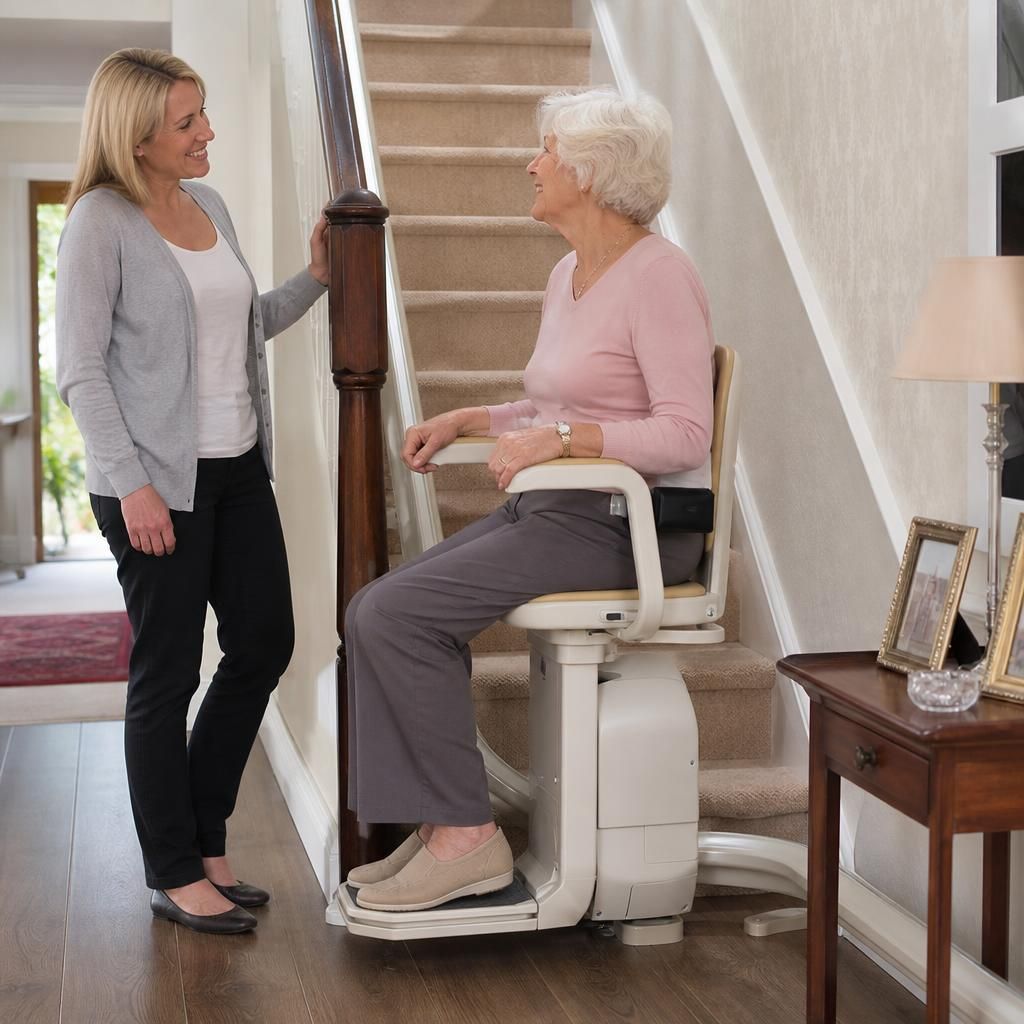
Arrange a home assessment for your stairlift needs
Arrange a home assessment with Independent Stairlifts to check your staircase, transfer needs and the most suitable stairlift features. We can help you compare straight, curved, outdoor or reconditioned options for your home.