
What are the maintenance requirements for a stairlift?
A stairlift should receive routine checks and professional servicing to keep its batteries, drive system, safety sensors, seat and controls working reliably. Keep the lift clean, follow the manufacturer’s instructions, report unusual noises or movement promptly, and arrange servicing at the recommended intervals.
Stairlift maintenance involves routine cleaning and user checks, correct charging, and professional servicing at the intervals specified by the manufacturer or installer. These checks help keep the batteries, drive system, safety sensors, seat, controls and track operating safely and reliably. If the lift develops unusual noises, jerky movement, a loss of power or any other change in performance, stop using it if it is unsafe to do so and arrange an inspection.
Routine checks for the user
Before using the stairlift, check that the staircase and track are clear of objects, clothing and other obstructions. Confirm that the seat is correctly positioned, the armrests and footrest are secure, and the seat belt is available and undamaged. If your model has a swivel seat, check that it locks into the travel position before moving.
- Keep the track, footrest and seat free from dust, pet hair and other debris.
- Wipe surfaces with a soft, slightly damp cloth, following the cleaning instructions supplied with the lift.
- Do not pour or spray cleaning products onto the controls, motor, charging points or other electrical components.
- Check that the control buttons, remote controls and direction switches respond normally.
- Make sure the lift parks fully at its charging point when it is not in use.
- Keep the charging contacts clean and report damage, corrosion or looseness.
Battery care
Most stairlifts use rechargeable batteries, including when the lift is connected to the household electricity supply. Regularly returning the stairlift to its designated charging position allows the batteries to recharge and helps the lift remain ready for use. If the lift is left unused for a period, follow the manufacturer’s advice about leaving it on charge or arranging checks.
Battery performance can gradually reduce with age. Signs that the batteries may need attention include the lift travelling more slowly than usual, stopping before reaching the end of the track, sounding a low-battery warning repeatedly or failing to hold a charge. Battery replacement should be carried out with the correct specification by a qualified engineer. Do not attempt to open the battery compartment or alter the electrical system yourself.
What professional servicing involves
A service visit normally includes an inspection and functional test of the complete stairlift. The engineer may check the track and fixing points, drive mechanism, gearbox, motor, batteries, charging system, seat, swivel and folding mechanisms, seat belt, armrests, footrest, controls and remote units. Safety sensors and switches are tested to confirm that the lift responds correctly to obstacles, obstructions and operating controls.
The engineer will also look for wear, loose fittings, damage or changes in alignment. Where appropriate, moving components are cleaned, adjusted or lubricated according to the manufacturer’s instructions. Any parts requiring replacement should be explained to you before repair work is completed, particularly if they are not covered by an existing service agreement or warranty.
How often should a stairlift be serviced?
The appropriate service interval depends on the model, how often it is used, the age and condition of the equipment, and the environment in which it is installed. Follow the schedule in your user manual, warranty documents or service agreement, and contact us if you are unsure when the next service is due. A service may also be advisable after the stairlift has been unused for an extended period, moved, exposed to unusual conditions or repaired.
Routine user checks do not replace professional servicing. They help identify visible problems early, while a trained engineer can inspect internal components and test safety systems that should not be adjusted by the user.
When to stop using the stairlift
Arrange advice promptly if you notice a new grinding, clicking or buzzing noise, jerky or unusually slow movement, repeated stopping, a burning smell, damaged wiring, a loose seat or footrest, a faulty safety belt, error messages or controls that do not respond correctly. Do not bypass a safety sensor, force the seat or track, or continue using the lift if a component appears damaged.
If the stairlift stops between floors, remain seated with the belt fastened if it is safe to do so and use the supplied emergency or communication procedure. Do not try to climb out on the staircase unless there is an immediate danger and you have been given appropriate instructions. Contact the service team or the emergency contact provided with your installation.
Outdoor and reconditioned stairlift considerations
Outdoor stairlifts need particular attention because rain, frost, damp, dirt and temperature changes can affect the track, controls, charging points and protective covers. Keep the lift covered as instructed, remove standing water when safe, and report signs of corrosion or water ingress. Never use outdoor equipment in a way that conflicts with its weather-protection guidance.
Reconditioned stairlifts should have their maintenance history and any remaining warranty or servicing arrangements explained at installation. Their maintenance requirements are still determined by the specific model and its condition, so keep the documentation and arrange servicing as recommended rather than relying on age alone.
Keeping useful maintenance records
Keep the user manual, installation details, service reports and records of battery or parts replacement together. Note the date of any fault, the warning displayed and what the stairlift was doing at the time. This information can help an engineer diagnose intermittent problems more efficiently and confirms which maintenance has already been completed.
Good day-to-day care does not require specialist tools. Keep the stairlift clean, charge it correctly, avoid overloading it, follow the operating instructions and report changes promptly. Professional servicing then provides the detailed inspection and safety testing needed to keep the lift dependable for everyday use.
Professional stairlift servicing is a detailed safety check of the lift’s mechanical, electrical and seating components. An engineer examines the track and fixings, drive system, batteries, charging points, seat, belt, controls, switches and safety sensors, then tests the lift under normal operating conditions.
Routine servicing can identify wear, loose fittings, battery deterioration or alignment problems before they affect reliability. Arrange servicing in line with the manufacturer’s instructions or your service agreement, and contact us sooner if the stairlift becomes noisy, jerky, unusually slow or repeatedly stops. Do not attempt to adjust internal parts or bypass a safety sensor yourself.
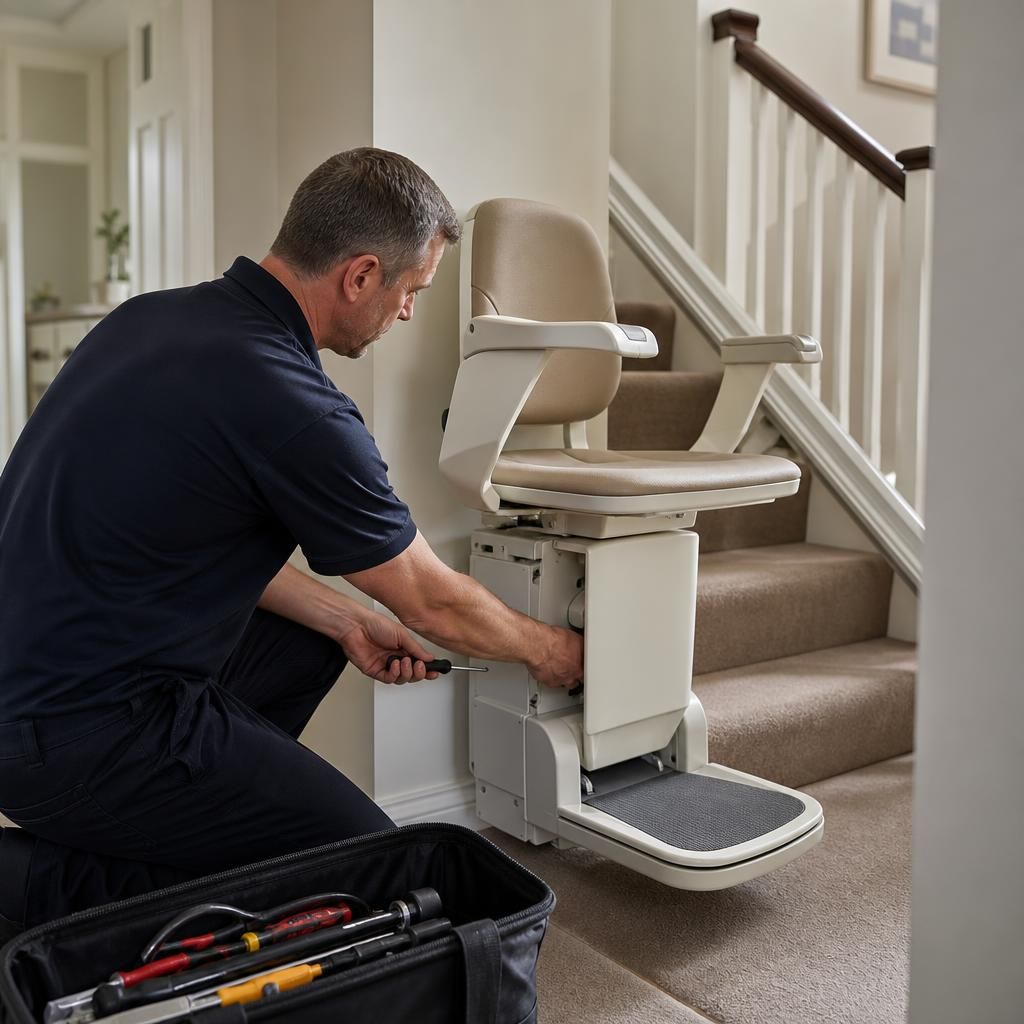
Arrange a stairlift service or maintenance check
If your stairlift is due a service or showing signs of reduced performance, contact Independent Stairlifts to arrange a maintenance check with a qualified engineer.