
Do stairlifts require regular maintenance, and if so, what does it involve?
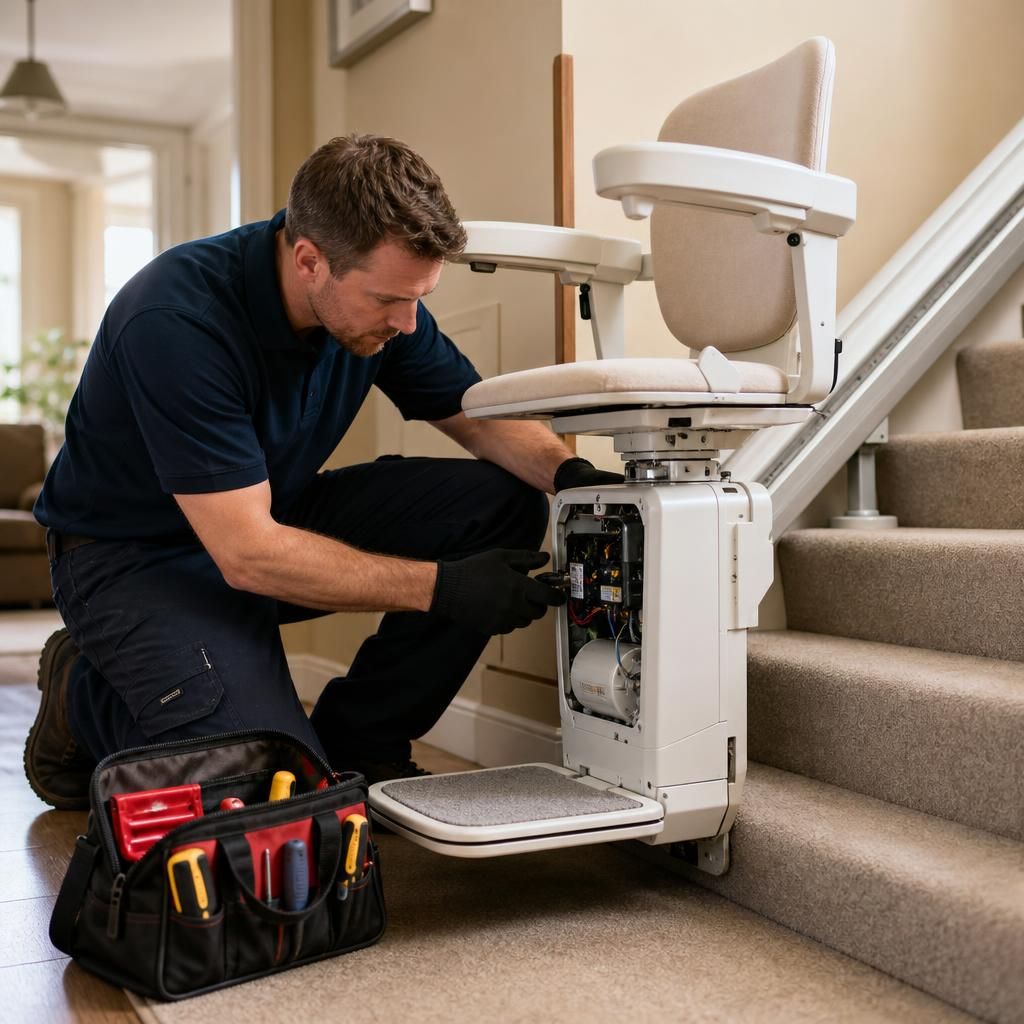
Yes, stairlifts require regular maintenance to remain safe, reliable and comfortable to use; servicing should follow the manufacturer’s guidance, with a professional check typically arranged at least annually. This involves inspecting the rails, drive system, seat, controls, safety sensors, brakes and batteries, as well as cleaning, testing and replacing worn parts where necessary.
Yes. A stairlift should receive regular maintenance to keep it safe, dependable and comfortable to use. Servicing should follow the manufacturer’s instructions, with a professional inspection commonly arranged at least once a year. A service is more than a quick visual check: it assesses the lift’s mechanical parts, electrical systems, safety features and battery performance, then identifies any adjustment, cleaning or replacement required.
What professional stairlift servicing involves
- Rail and drive system: The engineer checks that the rail is secure, correctly aligned and free from obstructions. The drive mechanism, rollers, gears and other moving parts are inspected for wear, unusual noise and smooth operation. Parts may be cleaned, adjusted or lubricated where the manufacturer permits it.
- Seat and safety equipment: The seat, swivel mechanism, armrests, footrest, seat belt and locking features are checked to ensure they operate correctly and support a safe transfer on and off the lift.
- Controls and switches: The engineer tests the controls on the armrest, remote controls, call-and-send points and any key switches. They check that the lift responds correctly and that controls are accessible for the user.
- Safety sensors and brakes: Obstacle sensors, safety edges, overspeed protection and braking systems are tested. These features should stop or control the stairlift if it encounters an obstruction or detects an unsafe condition.
- Battery and charging system: Batteries, charging contacts, wiring and the charger are inspected. The stairlift is tested both on and off its charging point, where applicable. Batteries are consumable components and may eventually need replacing, particularly if the lift struggles to complete a journey, stops before reaching the top or bottom, or loses charge quickly.
- Electrical and structural checks: Connections, fuses, wiring, brackets and fixings are examined for damage or signs of loosening. The engineer also checks that the stairlift remains securely attached to the staircase or supporting structure.
- Functional testing: The lift is operated through its full travel to confirm that it starts, stops, charges and parks correctly. Any fault codes, unusual vibration or changes in performance should be investigated rather than simply reset.
How often should a stairlift be serviced?
The correct interval depends on the model, how frequently it is used, its age and the environment in which it operates. The manufacturer’s servicing schedule takes priority. Annual servicing is a common arrangement for a domestic stairlift, while a lift used heavily, installed outdoors or showing signs of wear may need attention sooner. A reconditioned stairlift should also be maintained in line with its specific model and service requirements.
Servicing should not be postponed because the stairlift appears to be working normally. Wear can develop gradually, and a professional check may identify an issue before it causes a breakdown. Keeping service records is useful for tracking repairs, battery replacement and other maintenance, particularly if the stairlift is covered by a warranty or service agreement.
What can you check between services?
Routine user checks do not replace professional servicing, but they can help identify problems early. Keep the rail, steps and landing clear of objects, clothing and pet toys. Wipe dust from accessible surfaces with a dry or slightly damp cloth and keep the charging contacts clean, following the manufacturer’s instructions. Do not apply household oil, grease or cleaning products to the rail or drive system unless specifically advised, as unsuitable products can affect the mechanism.
Check that the seat belt fastens, the footrest is secure and the controls operate as expected. Listen for new grinding, clicking or squeaking noises and note any hesitation, jolting, unexpected stopping or reduced battery performance. If the stairlift has a diagnostic display or warning light, record the message so it can be reported accurately.
When should you request assistance?
Contact a qualified stairlift engineer if the lift stops unexpectedly, moves unevenly, fails to charge, makes an unfamiliar noise, shows a fault warning or does not respond reliably to its controls. Do not continue using a lift that has a damaged seat belt, loose rail, exposed wiring, braking problem or other safety-related fault. Switch it off if this can be done safely and arrange an inspection.
Users should not remove covers, alter wiring, bypass safety sensors or attempt repairs to the drive system. These components require appropriate knowledge and replacement parts. Unauthorised work can create a safety risk and may affect the manufacturer’s warranty or service arrangements.
Does outdoor use require additional maintenance?
Outdoor stairlifts are exposed to rain, moisture, temperature changes and dirt, so their covers, seals, charging equipment, rail and fixings need particular attention. The lift should be kept as clean and dry as the design allows, and its protective cover should be used when provided. Regular professional inspections can identify corrosion, water ingress or weather-related deterioration before it affects reliability.
In short, regular servicing combines inspection, cleaning, adjustment, safety testing and replacement of worn or consumable parts. Following the manufacturer’s schedule, carrying out sensible visual checks and reporting faults promptly helps keep the stairlift safe and reliable throughout its working life.
Regular stairlift servicing is a professional safety check that confirms the lift’s mechanical, electrical and safety systems are working correctly. An engineer will usually inspect the rail, drive mechanism, seat, controls, sensors, brakes, wiring and batteries, then test the lift through its full journey.
Between services, keep the stairs and rail clear, check that the seat belt and controls work properly, and report unusual noises, jolting, stopping or charging problems promptly. Do not remove covers, bypass safety features or apply household lubricants unless the manufacturer specifically advises it.
Arrange Your Stairlift Maintenance Check
Arrange your stairlift maintenance check with Independent Stairlifts to confirm that your lift remains safe, reliable and ready for everyday use. Contact us to discuss servicing or report any performance concerns.