
What features should I consider when selecting a stairlift for disabled individuals?
When selecting a stairlift for disabled individuals, consider the user’s mobility needs, stair layout and ability to operate the controls safely. Key features include a supportive seat, adjustable footrest and armrests, easy-to-use controls, reliable safety sensors, a suitable weight capacity, battery backup and a track designed for the staircase.
The most important features when selecting a stairlift for disabled individuals are those that support safe transfers, comfortable positioning and straightforward operation. The right specification depends on the person’s disability, strength, balance, posture, weight, hand control and the shape of the staircase, so a professional assessment should guide the choice rather than relying on the model alone.
Seat support and transfer features
- Suitable seat design: Choose a seat that provides stable support and allows the user to sit upright without excessive pressure or discomfort. A firmer, more supportive seat may be helpful for someone with reduced trunk control, while the available seat width and depth must allow safe positioning without obstructing the controls.
- Swivel seat: A powered or manual swivel seat can turn the user towards the landing, reducing the need to twist while getting on or off. This is particularly useful for people with limited hip movement, poor balance or difficulty standing up straight.
- Adjustable seat height: The seat should allow the user’s feet to reach the floor securely at the top and bottom of the stairs. The correct height can make transfers easier, although the best setting depends on the person’s leg length, strength and the surrounding space.
- Armrests and back support: Secure armrests provide stability during travel and transfers. Some designs have adjustable or folding armrests, which can help where space is restricted or where the user needs assistance from a carer.
- Seat belt: A correctly positioned restraint helps keep the user securely seated. The buckle and release should be simple for the user or carer to operate, and the belt should not cause discomfort or restrict necessary movement.
- Footrest: Look for a footrest that supports both feet and helps prevent them from moving towards the steps or track. A powered folding footrest may be useful for someone who cannot bend down easily, while a hinged or retractable design can help keep a hallway clear.
Controls that match the user’s abilities
Controls should be usable without stretching, gripping tightly or relying on fine finger movements. A simple joystick, paddle or push control is often easier than small buttons, but the best option depends on the person’s hand strength, coordination, vision and cognitive ability. Controls are commonly positioned on an armrest, and additional remote controls may allow a carer to bring the stairlift to a different floor.
Check that the direction of travel is clear, the control cannot be activated accidentally and the user can stop the lift easily. If the person has a progressive condition, it is sensible to consider whether they may need a different control method or more assistance in the future.
Safety systems
- Obstruction sensors: Sensors should stop the stairlift if the footrest, carriage or another part of the lift meets an object on the stairs. The stairs should still be kept clear, as sensors are a safeguard rather than a substitute for good housekeeping.
- Safety belt and interlocks: The lift should not travel unless key components, such as the seat, armrests or belt, are in the required position. Ask how the interlocks work and what the user should do if the lift stops.
- Braking and controlled movement: The stairlift should start, stop and travel smoothly, without sudden movement that could affect balance or cause discomfort.
- Swivel and safety sensors: A swivel mechanism should lock securely for travel and only release when appropriate. This reduces the risk of the seat being turned towards the stairs while the lift is moving.
- Emergency stop and alarm: An accessible stop control and an alarm or communication method can be important if the user becomes unwell or the lift stops between floors.
Weight capacity and physical fit
Confirm that the stairlift’s permitted user weight includes the person’s clothing, any essential equipment and normal changes in weight. Do not assume that a heavy-duty model is automatically the best choice: the seat, track, footrest and available stair width must also suit the home and the user’s body shape.
Measure the staircase, landings, doorways and nearby furniture as part of the assessment. A lift that leaves adequate clearance for other people to use the stairs may be preferable to a larger seat, while a wider or reinforced design may be necessary where the user needs additional support.
Track and staircase features
The track must follow the staircase safely and allow the user to get on and off at a suitable position. Straight staircases generally use a simpler track, whereas curved, split-level or unusually shaped stairs require a bespoke design. Important options can include a hinged track where a doorway or walkway is close to the bottom, or a parking position that keeps the lift away from a landing.
For narrow stairs, compare the folded dimensions of the lift as well as its operating width. Folding seats, armrests and footrests can preserve access for other household members, but they must remain manageable for the user or carer.
Power supply and battery backup
Most domestic stairlifts use rechargeable batteries so that the lift can continue to operate during a mains power cut, provided the batteries are charged and maintained. Check where the charging points are located, whether the lift charges at more than one end of the track and what happens if it is left away from a charging point. The user should know how to report a fault and how to obtain assistance if the batteries become depleted.
Comfort, environment and additional options
- Powered options: Powered swivel seats, footrests or folding mechanisms can reduce the physical effort needed, but they add controls and may require more explanation. Select only the powered functions the user can operate reliably.
- Weather protection: An outdoor stairlift needs materials and controls suited to rain, temperature changes and other external conditions. The parking position and charging arrangements should also protect the equipment where possible.
- Remote controls: These can help a carer move the stairlift when the user is not on it, but they should be stored where they cannot be confused with the user’s controls.
- Diagnostic and service information: Clear fault indicators, accessible user instructions and an appropriate maintenance arrangement make it easier to deal with routine checks or a breakdown.
Accessibility should also include the whole journey, not just the lift. Consider whether the user can approach the staircase, transfer onto the seat, reach the controls, use the landing safely and move away from the lift at the destination. Lighting, handrails, floor surfaces and space for a walking aid may affect the overall safety of the installation.
Before choosing a model, discuss the person’s diagnosis and practical limitations with the assessor, including pain, fatigue, involuntary movements, visual or hearing impairment, memory difficulties and whether a carer will provide assistance. A trial or demonstration can reveal whether the user can operate the controls, maintain a safe seated position and complete transfers confidently. The final choice should combine the required safety features with a track and seating arrangement that fit the home and can continue to meet the user’s needs as their mobility changes.
A stairlift for disabled individuals should be selected around the user’s ability to transfer, sit securely and operate the controls, rather than by the staircase shape alone. Features such as a swivel seat, supportive armrests, a correctly positioned seat belt and an adjustable or powered footrest can make getting on, travelling and getting off safer and less physically demanding.
Controls also need to match the user’s hand strength, coordination, vision and cognitive ability. A simple joystick or paddle may be easier than small buttons, while remote controls can help a carer position the lift. During an assessment, check that the user can:
- Approach the seat and transfer without twisting or losing balance
- Reach and operate the control without stretching or gripping tightly
- Remain comfortably supported throughout the journey
- Stop the stairlift and respond if an obstruction or fault occurs
- Move safely away from the lift at the landing
If the user’s condition is progressive, discuss how their needs may change over time. A demonstration can identify whether powered features would provide useful assistance or introduce controls that are difficult to manage.
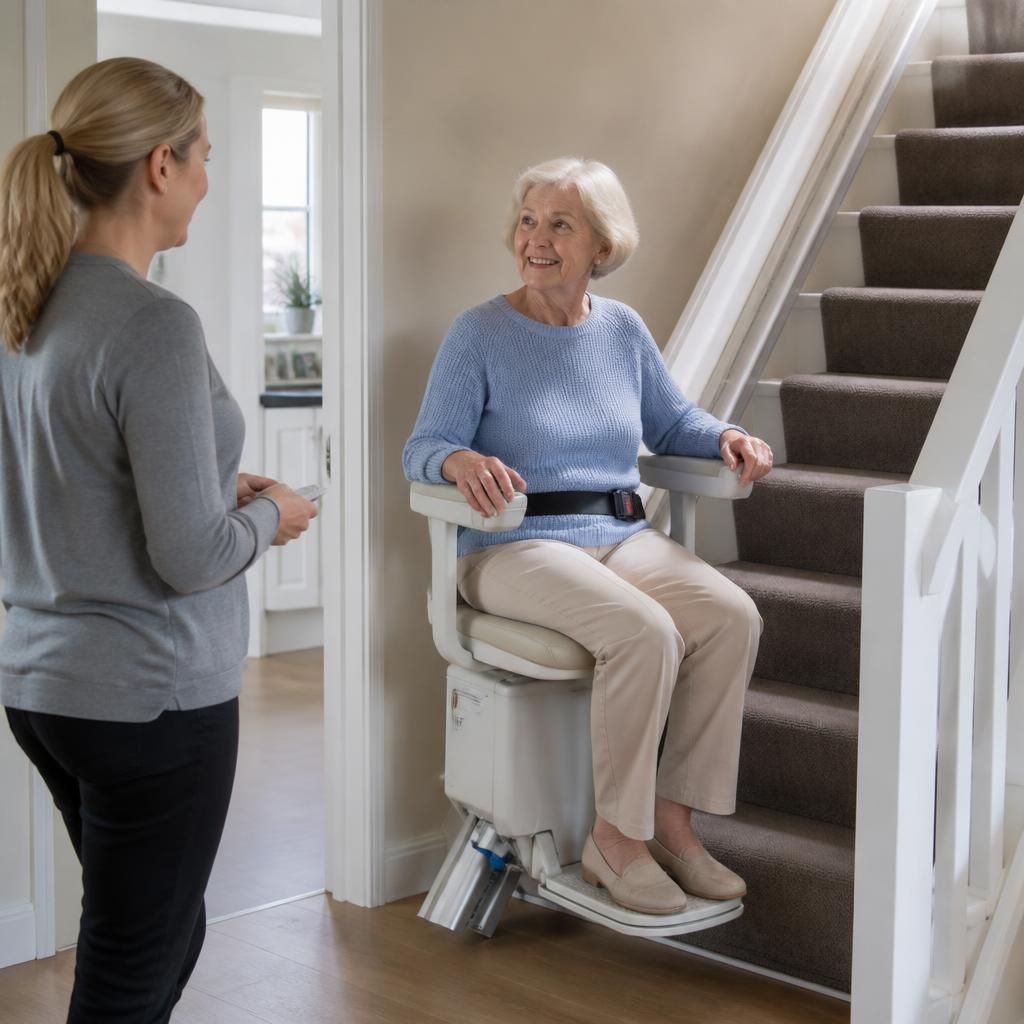
Arrange a stairlift assessment for your needs
Arrange a stairlift assessment with Independent Stairlifts to discuss the user’s mobility needs, staircase layout and the features that will provide safe, comfortable operation.