
How does a stairlift installation impact my utility bills?
A stairlift usually has a minimal effect on utility bills because it uses a small amount of electricity, mainly when its rechargeable battery is being topped up. The exact running cost depends on the model, how often it is used and your electricity tariff, but it is generally modest compared with typical household energy use.
A stairlift normally has only a small effect on your utility bills. Most of its electricity is used to recharge the built-in battery, while the lift is parked on its charging point. The installation itself does not create a significant ongoing cost, although the exact amount depends on the stairlift model, how often it is used, the condition of its batteries and your electricity tariff.
How a stairlift uses electricity
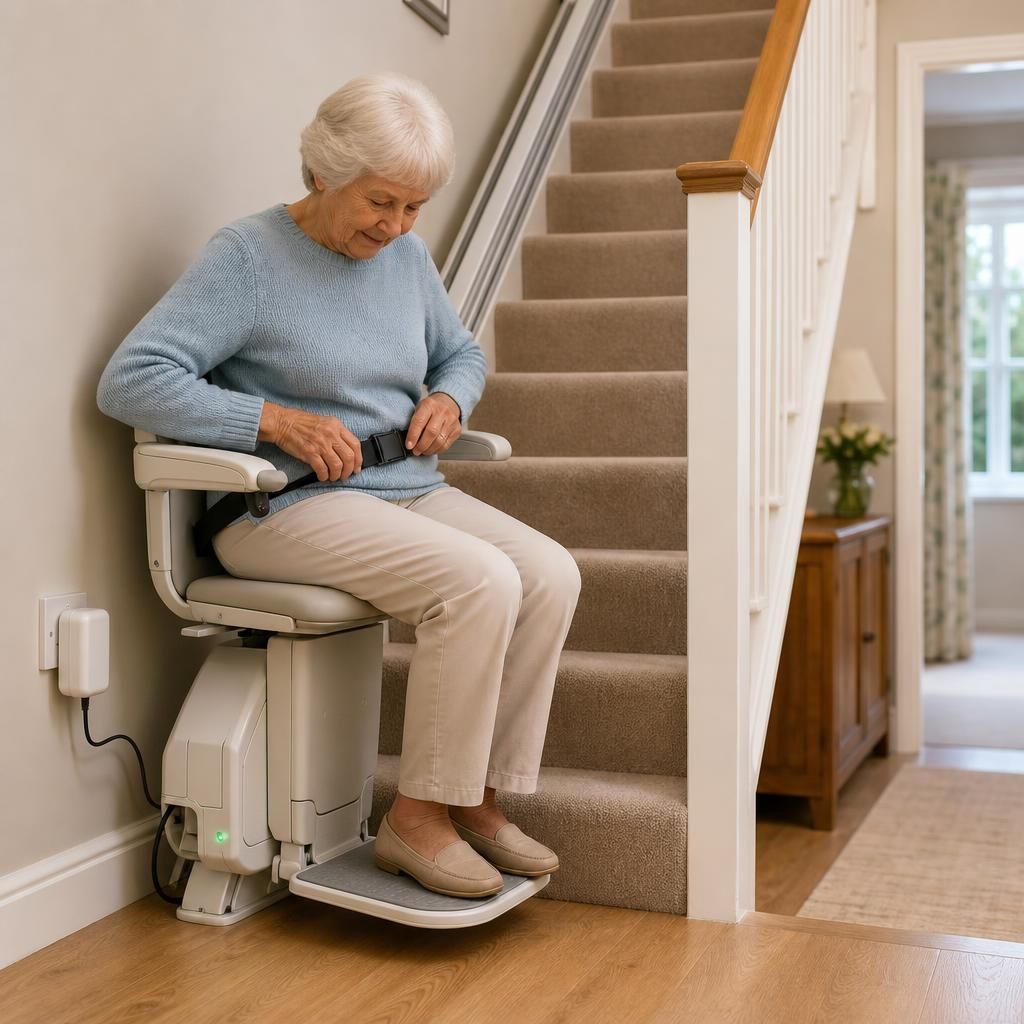
Modern stairlifts are generally battery-powered rather than powered directly from the mains while travelling. The charger keeps the batteries topped up at a charging point, usually positioned at the top or bottom of the staircase. When you use the stairlift, it draws energy from the batteries, which are then recharged when the lift is parked.
This means that energy use is spread over time rather than occurring only during a journey. A person who uses the stairlift several times each day will normally use more electricity than someone who uses it occasionally, but the difference is generally modest in the context of overall household consumption.
What affects the running cost?
- Frequency of use: Frequent journeys require the batteries to replace more of the energy they have supplied.
- Staircase design: A curved stairlift may travel further than a straight model, but the running cost is influenced by several factors, including journey length, motor efficiency and how often the lift is used.
- User and load: The weight carried and the demands placed on the motor can affect the energy used during a journey.
- Battery condition: Older or worn batteries may not hold their charge efficiently. They may need to recharge more often or may indicate that replacement is required.
- Electricity tariff: Your unit price determines how much the electricity consumed by the charger costs.
- Charger and standby consumption: The charger uses electricity while maintaining the battery, including when the stairlift is not being used.
To make a rough estimate, multiply the stairlift’s power consumption in kilowatts by the time it actively uses electricity, then multiply the result by your electricity price. The appliance rating, however, does not always represent continuous consumption: a battery charger may switch between charging and maintaining the battery. For a more accurate assessment, ask us or the manufacturer for the model’s typical energy-use information.
Does the installation itself increase electricity use?
In most homes, installation involves connecting the charger to a suitable existing electrical supply. Once the stairlift is installed, there is no separate fuel, water or heating requirement. A standard installation should not require changes to your wider electrical system, provided that the supply and socket are suitable and safely positioned.
Occasionally, additional electrical work may be needed. This could apply if there is no suitable socket near the proposed charging point, the existing supply is unsafe or inaccessible, or remedial work is needed to comply with current electrical requirements. Any such work should be identified during the assessment and explained before installation. It is separate from the stairlift’s normal running cost.
Should the stairlift be left plugged in?
Rechargeable stairlift batteries are designed to remain maintained by their charger when the lift is parked correctly. Follow the instructions supplied with your particular model, including where to leave the stairlift so that it remains connected to its charging contacts. Regularly disconnecting the charger may leave the batteries undercharged and can reduce reliability, particularly if the lift is needed during a power cut.
A stairlift with a properly maintained battery can usually continue to operate for a limited period during a mains power failure. The available journeys depend on the model, battery condition and how much charge was present before the outage. The charger itself will not recharge the batteries until the electricity supply is restored.
Ways to keep energy use and costs under control
- Use the stairlift when it is needed, but avoid unnecessary journeys.
- Park it fully on its charging point after use, in line with the manufacturer’s instructions.
- Keep charging contacts clean and report charging faults promptly.
- Arrange servicing when recommended so that battery, charger and motor problems are identified early.
- Replace batteries when they no longer hold a reliable charge rather than repeatedly allowing the charger to work around a failing battery.
- Do not alter, cover or relocate the charger without professional advice.
Energy use is only one part of the total cost of owning a stairlift. You should also allow for routine servicing, replacement batteries when required and any repairs outside the warranty or service agreement. These costs are not added to your electricity bill, but they are relevant when planning the long-term household budget.
If your bills have risen noticeably after installation, the stairlift is unlikely to be the sole cause without another issue being present. Check whether the charger is operating continuously, whether the batteries are ageing, and whether there are warning lights or unusual sounds. Contact us for an assessment rather than disconnecting the equipment or attempting electrical repairs yourself. We can check the charging system, batteries and installation, and explain whether any work is needed.
A stairlift installation usually has only a minor effect on your utility bills because the lift uses electricity mainly to recharge its built-in batteries. The charger is connected to a suitable existing socket and maintains the batteries while the stairlift is parked on its charging point.
Installation does not normally add any separate fuel, water or heating costs. Electricity use varies with the model, journey frequency, battery condition and your tariff, but it is generally modest. Keep the stairlift parked correctly on its charging point and arrange professional checks if the charger appears to run continuously, warning lights show or the batteries no longer hold their charge reliably.
Need advice about your stairlift’s running costs?
If you are concerned about your stairlift’s electricity use or running costs, contact Independent Stairlifts for practical advice. We can check the charger, batteries and installation and explain whether any attention is needed.