
Are there any safety features included with the stairlift?
Yes. Stairlifts include safety features such as a secure seat belt, swivel seat, obstruction sensors, safety edges, a controlled start and stop, and battery backup to help you travel safely and remain protected if the power supply fails.
Yes. A properly specified stairlift includes several safety features designed to keep you secure during travel, reduce the risk of injury and help the lift operate reliably if it encounters an obstruction or a power interruption. The exact equipment depends on the model, your staircase and your individual needs, so it should be confirmed during your assessment.
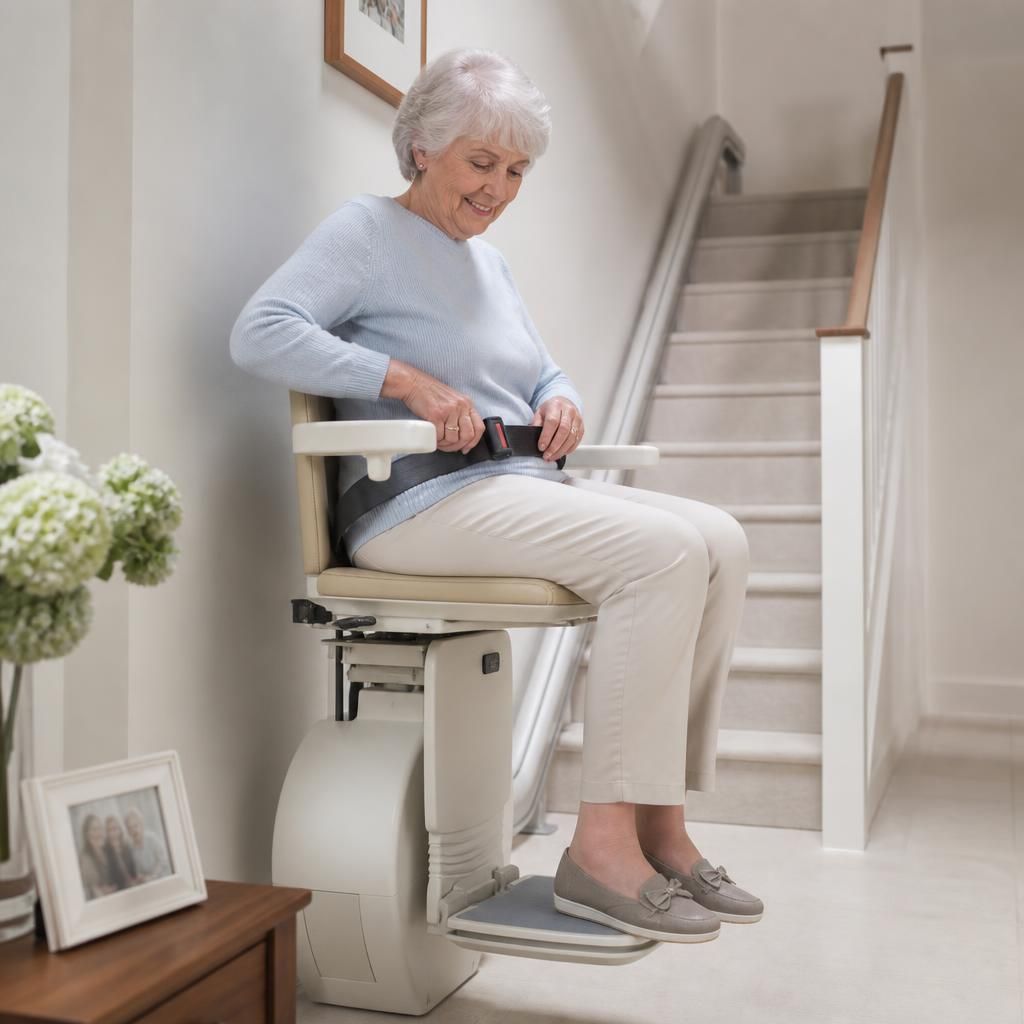
Seat belt or safety harness
A seat belt helps keep you positioned securely in the chair while it is moving. Most stairlifts use a lap belt, while some models can be fitted with a harness or alternative restraint where additional support is needed. The belt should be fastened before the lift starts and adjusted so it is secure without restricting comfortable breathing or movement.
Swivel seat and safety interlocks
A swivel seat allows you to turn towards the landing when getting on or off the stairlift. This can reduce the need to twist or step sideways at the top of the stairs. A safety interlock prevents the lift from travelling unless the seat is correctly positioned, and many models also prevent movement if the armrests, footrest or other safety components are not in their required position.
Obstruction sensors and safety edges
Sensors around the footrest, carriage and other vulnerable areas detect objects in the lift’s path. If the stairlift meets an obstruction, it is designed to stop rather than continue pushing against it. Clear the stairs of items such as footwear, toys, pets and shopping bags before use, even when sensors are fitted. Sensors are an important safeguard, but they do not remove the need to keep the staircase clear.
Controlled starting and stopping
Stairlifts are designed to start and stop gradually rather than moving abruptly. This helps reduce jolting and can make transfers more comfortable for people with limited balance, strength or joint movement. The control is normally operated from the armrest, and remote controls may allow the stairlift to be called to a different level when required.
Speed control and secure movement
The stairlift follows a fixed rail and has controls intended to maintain a steady speed around the staircase. Curved models are designed to follow the shape of the stairs and landings, while straight models travel along a direct rail. The chair should remain stable throughout the journey, but you should sit back in the seat, keep your feet on the footrest and avoid leaning out or attempting to stand while the lift is moving.
Battery backup
Most powered stairlifts charge their batteries while parked at a charging point. If the mains electricity fails, the battery normally provides enough power to complete a journey or return the stairlift to a suitable position, depending on its charge level and model. A power cut can still affect operation if the batteries are not charging correctly, so report warning sounds, fault messages or repeated low-battery indications promptly.
Manual lowering or emergency arrangements
Some stairlifts include a manual lowering facility or other arrangements for use if the user cannot complete a journey. The available option varies by model. Your installer should explain what to do if the lift stops, how to use the controls safely and who to contact for assistance. Do not attempt to force the chair along the rail or dismantle electrical components.
Diagnostic and warning systems
Stairlifts commonly provide audible alerts or visual indicators for conditions such as an unfastened belt, a charging problem, an obstruction or a low battery. These warnings should not be ignored. Check the user manual for the meaning of each alert, and contact the service team if the cause is not clear or the warning continues after the basic issue has been corrected.
Safety on landings and at transfers
Safety features protect you while the stairlift is travelling, but getting on and off still requires care. Use the swivel seat correctly, wait until the lift has stopped completely, apply the brake if the model requires it and keep the landing area well lit and free from clutter. If transferring remains difficult, discuss alternative seat designs, powered swivel options, grab rails or other adaptations during your assessment.
Safety standards and installation
Safety depends on more than the features fitted to the chair. The stairlift must be suitable for the staircase, installed correctly and maintained in line with the manufacturer’s instructions. A professional assessment should consider the width and shape of the stairs, landing space, access points, the user’s posture and transfer ability, and whether additional adaptations are required. Ask for information about the model’s conformity with relevant UK requirements and for the operating and maintenance instructions after installation.
Before using the stairlift, make sure you understand the seat belt, controls, swivel mechanism, charging points and emergency procedure. Arrange servicing if performance changes, unusual noises develop, the lift stops unexpectedly or any safety feature appears not to work. Never use a stairlift with a damaged belt, loose seat, defective sensor or other known fault. If your mobility or transfer needs change, request a reassessment so the equipment and its safety settings remain appropriate.
Obstruction sensors and safety edges help prevent a stairlift from continuing to travel if an object is detected in its path. They are commonly positioned around the footrest, carriage and other exposed areas, and are designed to stop the lift when they come into contact with an obstruction.
These features are an important safeguard, but they do not replace basic care. Keep the stairs clear of footwear, pets, toys, shopping bags and other items before travelling. If the stairlift stops unexpectedly, check for an obstruction and follow the instructions in your user manual. Do not force the lift to move or attempt to bypass a sensor; contact the service team if the problem remains or a sensor appears damaged.
Arrange Your Stairlift Safety Assessment
Arrange a stairlift safety assessment with Independent Stairlifts to review your staircase, mobility needs and the safety features most suitable for you. Contact our team to discuss your requirements and the next steps.